
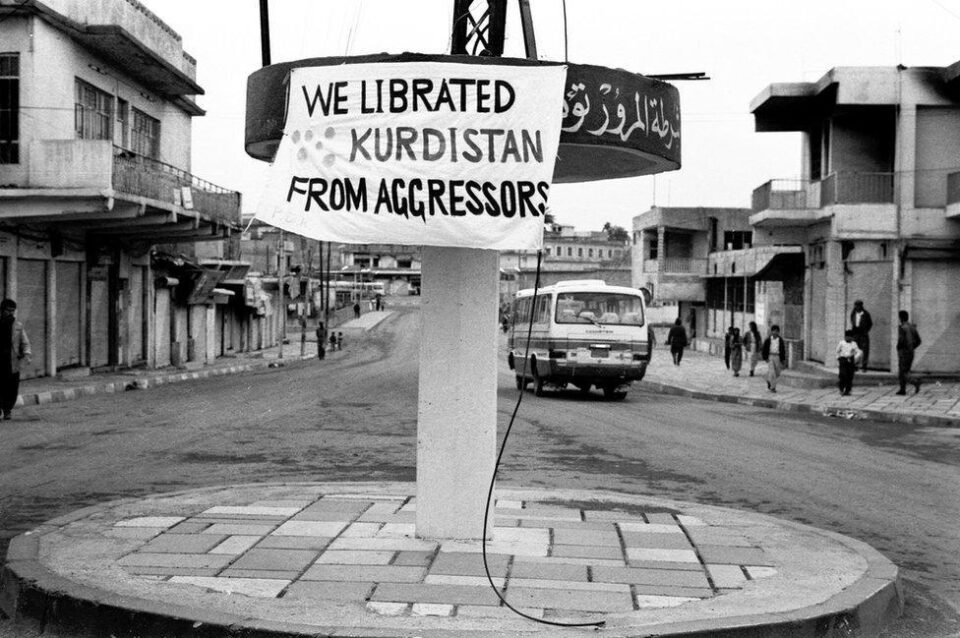
This week marks the 35th anniversary of the March 1991 Kurdish Uprising, a pivotal moment that transformed oppression into autonomy for the people of the Kurdistan Region. What began as a spontaneous popular revolt against Saddam Hussein’s Ba’ath regime after the Gulf War ceasefire has become a cornerstone of Kurdish identity, celebrated with official statements, tributes to martyrs, and renewed calls for unity.
The Spark That Lit the Flame: Ranya’s Historic Revolt
On March 5, 1991, the uprising ignited in the small town of Ranya, long remembered in Kurdish sources as “the gateway to the revolt”. Locals, joined by Peshmerga fighters, stormed Ba’ath Party offices, police stations, and military posts. By afternoon, Ranya was free. The news spread like wildfire through mosques, radio broadcasts, and word of mouth.
Within days, the revolt swept across Sulaymaniyah, Erbil, Duhok, and beyond. By March 21—Newroz—Kirkuk had been liberated. Iraqi army units defected or fled. For nearly three weeks, the Kurdish people controlled virtually the entire north, ending decades of Ba’athist repression that included the Anfal genocide and chemical attacks of the 1980s. Kurdish accounts describe crowds pouring into streets, tearing down portraits of Saddam, and declaring an end to fear. It was not a planned military campaign but a mass popular explosion fueled by exhaustion with dictatorship and inspiration from the Shia uprising in the south.
Crushed but Unbroken: Repression, Refugees, and Global Intervention
The regime’s response was swift and merciless. Using helicopters, artillery, and ground forces—tanks and infantry—Saddam’s troops retook the cities one by one. Estimates put Kurdish deaths at around 20,000. Hundreds of thousands more were executed or disappeared. By early April, nearly two million Kurds fled toward the Turkish and Iranian borders in what became known as the “great exodus.”
Images of families freezing in mountain passes shocked the world. International pressure mounted. UN Security Council Resolution 688 condemned the repression. The U.S., UK, and France established a no-fly zone north of the 36th parallel and a “safe haven.” Iraqi forces withdrew. The uprising, though militarily defeated on the ground, achieved de facto Kurdish self-rule.
By 1992, the first Kurdish regional elections were held, laying the foundation for the Kurdistan Regional Government (KRG). The sacrifices of 1991 turned a humanitarian catastrophe into political victory.
Unity in Remembrance: Leaders Honor Sacrifices Amid Today’s Challenges
On March 5, 2026, Kurdish leaders marked the 35th anniversary with statements that blended pride and warning. President Masoud Barzani described the revolt as “the result and continuation of the struggle and sacrifices of the masses and forces of Kurdistan over decades,” urging peaceful solutions to regional tensions and pledging to keep Kurdistan “away from wars, tragedies, and calamities.”
Kurdistan Region President Nechirvan Barzani declared: “The uprising marked a pivotal moment and a resolute reaction from the people of Kurdistan against oppression, steering towards freedom and prosperity.” He stressed that safeguarding the Region’s constitutional achievements “can only be realized through unity, solidarity, and a collective national responsibility.”
Kurdistan Region Prime Minister Masrour Barzani called the uprising “one of the most glorious milestones in Kurdistan’s history,” achieved through “the unity and solidarity of the various components of Kurdistan.” He added: “At this moment in time, the people of Kurdistan must protect and defend their national and patriotic achievements more than ever before.”
Across Erbil, Sulaymaniyah, and Ranya, ceremonies honored Peshmerga veterans and families of the fallen. Streets filled with flags and portraits of martyrs. In a region facing complex external pressures, the message was consistent: the unity that sparked the 1991 uprising remains its greatest legacy.
Thirty-five years later, the Kurdistan Region stands as a beacon of relative stability and democracy in a turbulent Middle East. The 1991 revolt did not merely topple statues—it built institutions, revived a language and culture long suppressed, and proved that a people’s will for freedom can reshape history. As leaders and citizens gather this week, the anniversary is not just remembrance; it is a reaffirmation that the sacrifices of Ranya and beyond must be guarded through continued solidarity and vigilance.
By Jawad Qadir