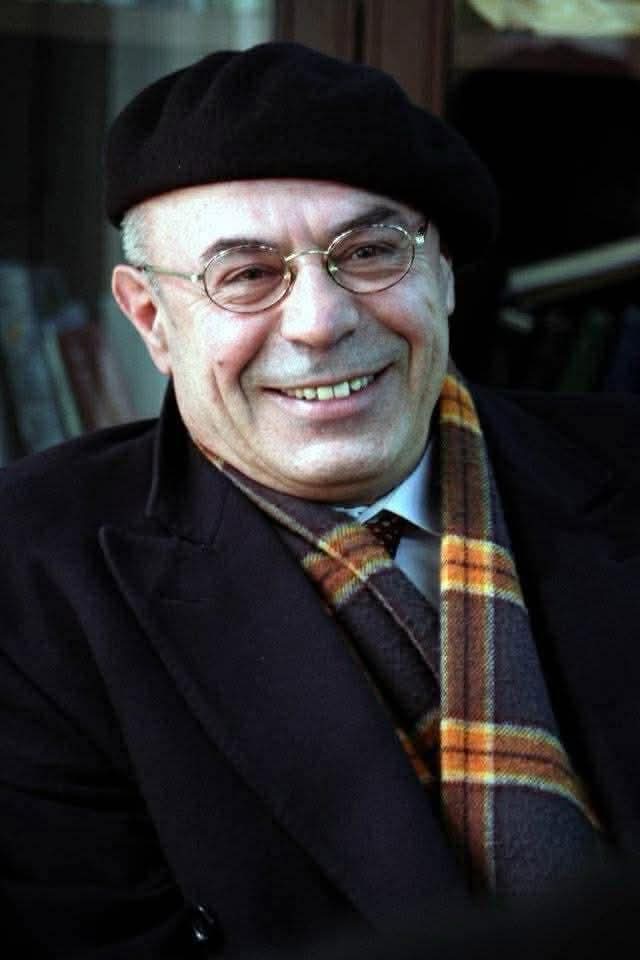
Dr Rafiq Sabir, a renowned Kurdish writer, poet, and researcher, died on 28 February at the age of 76 in a hospital in Stockholm, Sweden. His passing marks a profound loss for Kurdish literature and the intellectual community.
Born in 1950 in Qaladze, Dr Sabir was a modernist poet whose works include numerous literary masterpieces. His most famous poem commemorates the tragic chemical attack on Halabja and is performed annually as a sorrowful anthem. Many of his works have been translated into English, Swedish, Arabic, and French.
Dr Sabir studied Kurdish Language and Literature at the University of Baghdad from 1970 to 1974 and worked as a journalist at Biri Nwe newspaper until 1978. His first poetry collection, The Chicks Are Growing, was published in Baghdad in 1976. In 1981, he co-founded the Kurdistan Writers’ Union and published the journal Nusay Kurdistan.
Following internal conflict in Kurdistan, he moved to Bulgaria in 1982, completing his doctorate in Philosophy in 1987 with a dissertation titled The Role of Culture in Forming Kurdish National Consciousness. He settled in Sweden in 1989 and participated in publishing the journal Rabun until 2001.
Dr Sabir headed the Kurdology Association in Sulaymaniyah in 2006 and served as a member of the Kurdistan Parliament from 2009 to 2010. He received the Swedish literary prize Klas de Vylde in 2001 and the Bla – Ibrahim Ahmed literary prize in 2007.
His literary works include poetry collections Burning in the Rain, Season of the Tent Dwellers, and Caravanserai, as well as the analytical book Empire of Laughter. Dr Sabir began his political career with the Iraqi Communist Party but withdrew in 1990 to focus fully on writing and intellectual pursuits.
Over the past year, he battled a serious illness and remained under continuous medical care. His death in Stockholm closes a chapter in Kurdish literature, leaving behind a legacy of cultural and intellectual contributions that will endure for generations.