
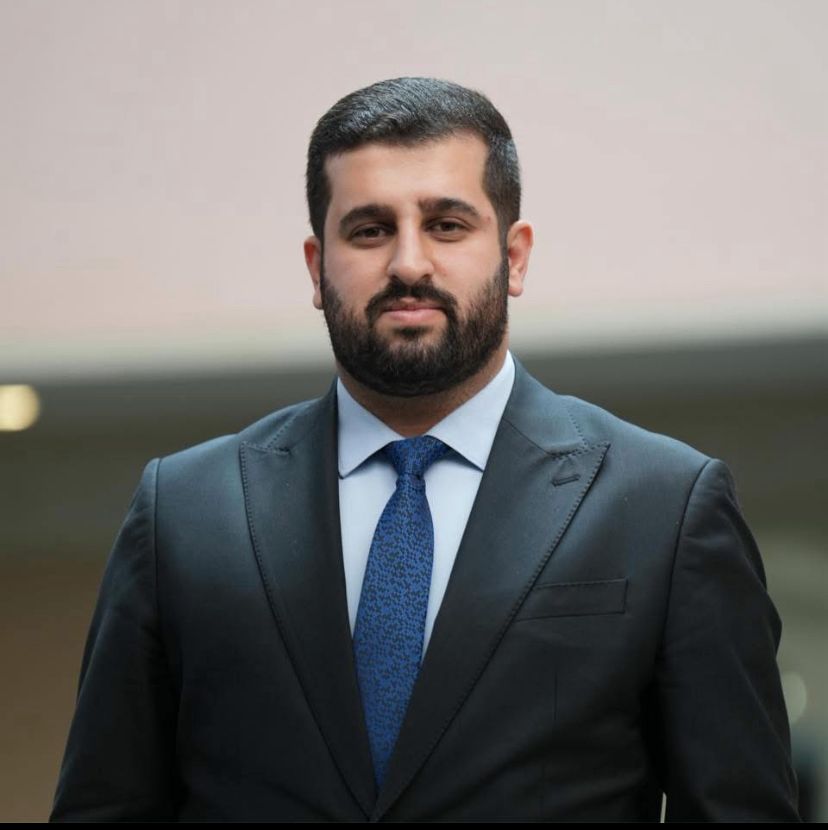
By Frsat Said Shkur
The Middle East is currently traversing a critical historical juncture, a period during which the maps of power and interests are being fundamentally redrawn. In the heart of these intense transformations, the Kurdistan Region has emerged as an influential and significant geopolitical actor. Today, the Kurdistan Region is a strategic pivot; regional balances cannot be fully stabilized without taking its position into account.
In the realm of political philosophy and international relations theories—particularly within the concept of “Rational Realism”—”self-preservation and survival” represent a high political art for a non-state entity like the Kurdistan Region. When major powers are engaged in a cold or hot war, the strength of regional entities lies not in becoming fuel for the fire, but in how they can protect their status from the surging storms. Kenneth Waltz emphasizes that in times of instability, political actors must seek “security” rather than “increasing offensive power.” This is precisely the strategy the Region pursues: striving to protect the internal home and transforming it into an area insulated from external conflicts.
One prominent political scholar notes that
“during times of war, the most successful actor is the one who strives to ensure that no sparks of fire touch them, rather than becoming a part of the expansion of the conflagration.” The Kurdistan Region has handled complexities with this vision. Although it has been targeted by missiles and drones from opposing sides, these attacks are not a sign of weakness; rather, they are evidence that Kurdistan possesses an economic infrastructure and a level of stability that has a direct impact on global energy markets and regional security. Adversaries aim, through these attacks, to undermine the successful model of coexistence and development that exists in Erbil and its surroundings.
On another front, the world stands befor.a new triangle of conflict involving the United States, China, and Russia. In this competition, where Israel is also intensely focused on self-preservation and defense, the consequences often fall upon regional actors. This is where the Region’s “soft and effective” diplomacy manifests. For instance, the diplomatic efforts undertaken by President Barzani with the United States and European countries were instrumental in distancing the sparks of the Great Fire in Syria and Rojava, thereby protecting the region from a comprehensive catastrophe.
At the heart of these complexities, President Masoud Barzani’s role as a national and political reference (Marja) has bestowed a decisive weight upon the Kurdistan Region. While emphasizing the principle of “non-interference” in the affairs of other parts of Kurdistan, he has remained a protective umbrella for all Kurds. Whether in the North or other parts, President Barzani’s diplomatic efforts have consistently aimed to ensure that Kurds do not become victims of war and that peace processes replace the sound of guns.
With political equanimity, President Barzani seeks to resolve issues through dialogue. This vision has led the Kurdistan Region—as the only official Kurdish entity—to become a source of stability for the entire region. Kurdistan is not a party to any side in these wars; rather, it is the side of “solution” and “peace.” Preserving this status is a historical duty, because Kurdistan is not only the homeland of the Kurds but also the final refuge for peace and coexistence in a Middle East engulfed in fire and storms.