
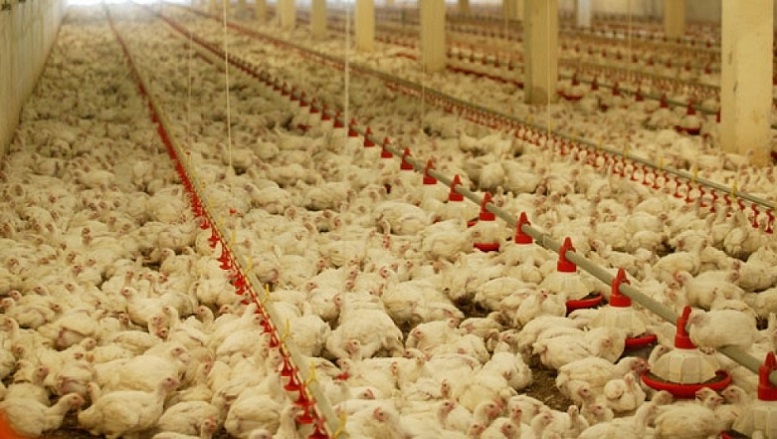
KRG says growth in agriculture and investment has doubled chicken production and boosted exports to Iraqi markets.
The Kurdistan Regional Government (KRG) says the poultry sector has become a key pillar of the Kurdistan Region’s economy, contributing to food security, job creation, and the diversification of income sources.
According to the Ministry of Agriculture and Water Resources of the Kurdistan Regional Government, the sector has expanded significantly under the government program of the ninth cabinet led by Prime Minister Masrour Barzani. The government’s strategy focuses on reducing dependence on oil revenues by strengthening sectors such as agriculture.
Officials note that investment in agriculture through the Kurdistan Board of Investment has increased from just 1 percent in previous years to around 10 percent today, reflecting the government’s increased attention to the sector.
The Kurdistan Region currently produces around 300,000 tons of chicken meat annually, while local demand is estimated at 150,000 tons. As a result, more than 150,000 tons of surplus chicken are exported each year to other parts of Iraq.
Government officials say the expansion of poultry farming and modern production techniques have helped increase output and improve efficiency. Authorities also emphasize that protecting economic stability and public safety remains a priority for the KRG.
According to official figures, the Kurdistan Region now has more than 2,000 poultry farming projects producing approximately 105 million chickens annually. The sector also includes 44 hatcheries, eight slaughterhouses, and 23 feed production factories.
These developments have enabled the Region to produce nearly twice its domestic demand for white meat, allowing roughly 50 percent of total production to be exported to markets outside the Region.
Rebaz Ismail, Director of Animal Wealth in Erbil, said the poultry sector has witnessed rapid growth in recent years.
“The poultry sector in the Kurdistan Region has seen significant progress,” he said. “Local production now not only meets the Region’s needs but also allows large quantities to be exported to the central and southern provinces of Iraq.”
Ismail added that the number of poultry projects has increased from around 1,400 to more than 2,000 over the past five years, largely due to support from the KRG’s ninth cabinet.
Government support measures include reducing electricity tariffs for agricultural projects, removing taxes and customs duties on feed production materials, and easing trade barriers to help local poultry products reach markets across Iraq.
Officials say these policies are expected to further strengthen the poultry industry and enhance the Kurdistan Region’s role as a key agricultural producer in the country.