
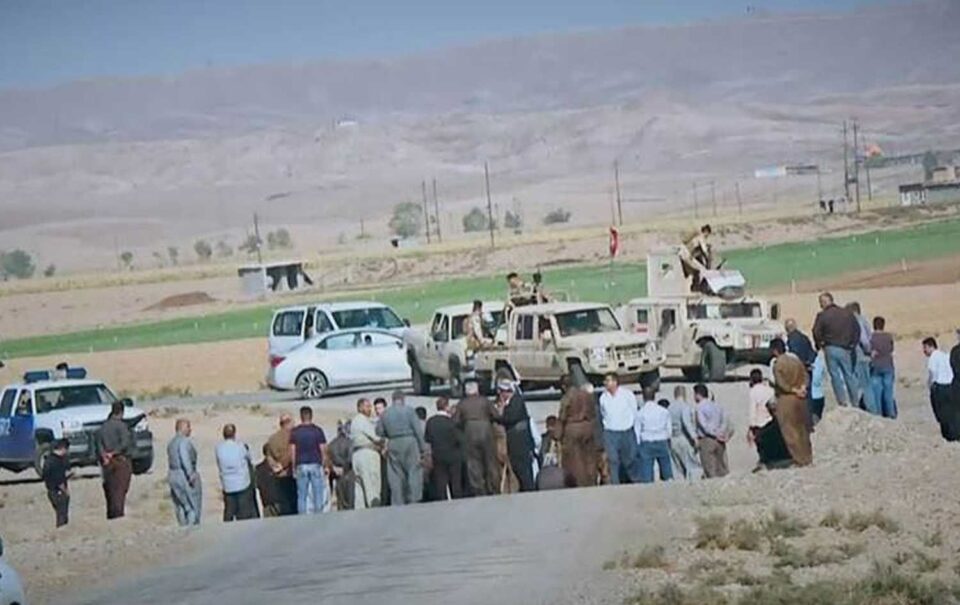
Kirkuk, long considered the heart of Iraq’s disputed territories, continues to face demographic and administrative pressures that many Kurdish officials say threaten the city’s national identity. Since the events of October 16, 2017, Kurdish leaders warn that a new phase of Arabization has emerged, one that relies less on force and more on legal and administrative measures.
According to Kurdish officials, these policies are being implemented through administrative decrees, demographic changes, and what they describe as the sidelining of constitutional provisions, particularly Article 140 of the Iraqi Constitution.
The issue has become increasingly sensitive as new administrative changes and the movement of people from central and southern Iraq into Kirkuk raise concerns about the political and social future of Kurds in the province.
To examine these developments, Kurdish Globe spoke with Hassan Majid, head of the Kurdistan Democratic Party (KDP) bloc in the Kirkuk Provincial Council.
Majid said the recent administrative changes are part of a broader political strategy.
“These administrative changes are part of a political strategy to weaken the Kurdish position in the disputed territories,” Majid told Kurdish Globe. “Replacing Kurdish officials with others ensures that administrative and legal decisions favor other components. This makes the implementation of Article 140 and the return of these areas to the Kurdistan Region more difficult, ultimately altering the national identity of the region.”
Article 140 of the Iraqi Constitution outlines a process intended to resolve the status of disputed territories, including Kirkuk, through normalization, a census, and a referendum.
Majid also warned that the lack of balance in administrative positions has deepened tensions among the city’s communities.
“The lack of balance and the marginalization of Kurds in Kirkuk has eroded trust between the various components,” he said. “When a primary component like the Kurds feels they are not adequately represented in the administration of their city, it leads to public alienation from government institutions and increased political tensions.”
According to Majid, Arabization policies in recent years have taken on new forms that are less visible but still impactful.
“The current Arabization is being carried out in a ‘soft’ but dangerous and continuous manner,” he said.
He identified several mechanisms behind these changes.
One of the most concerning developments, he said, is agricultural Arabization, which involves reviving agricultural contracts dating back to the Ba’ath Party era and allocating farmland belonging to Kurdish farmers to Arab settlers.
Another mechanism is demographic change, which Majid says includes facilitating the residency of thousands of Arab families from central and southern Iraq in Kirkuk and issuing them residency permits and official identification cards.
Majid also pointed to administrative pressure, including the use of military and administrative authority to prevent Kurdish residents from returning to their original villages.
Kurdish officials say these policies could have long-term consequences for the province’s political balance and the implementation of constitutional provisions meant to resolve the status of disputed territories.
By Fursat Said Shakur