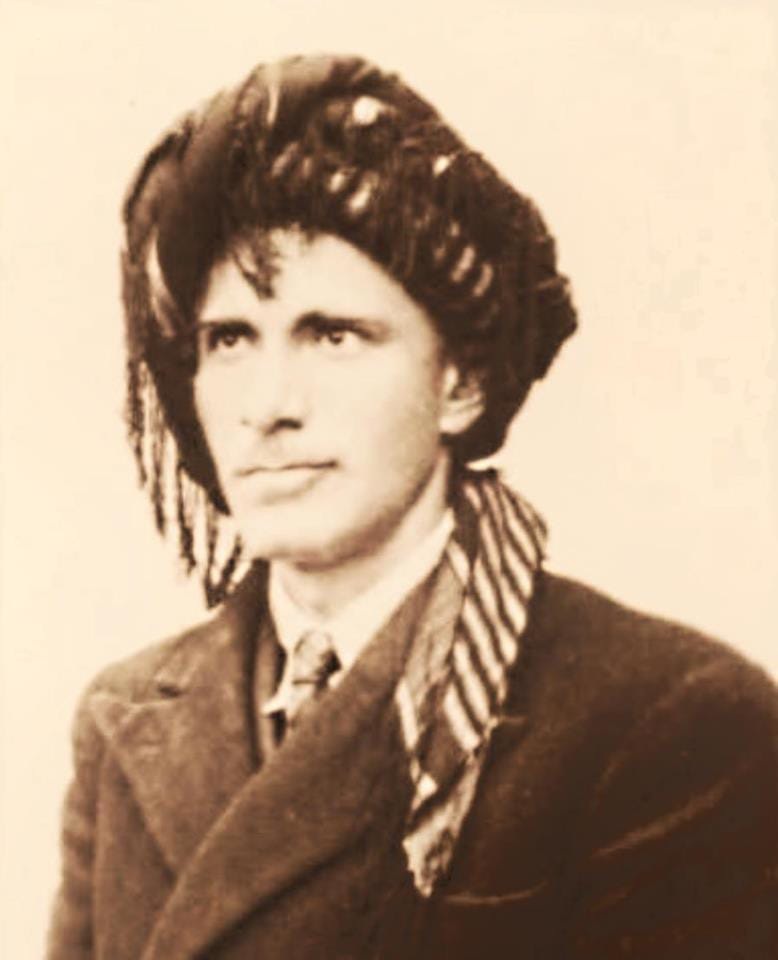
Dildar, whose full name was Yunis, son of Mela Reouf Mela Mehmood Efendi, was born in 1918 in the city of Koya. His father, Mela Reouf, was the son of Saedi Khadim al-Sajjad.
Dildar was his poetic pseudonym, and the name later became a legendary one in Kurdish literature and culture. Because his father worked as a census official in the town of Rania, he spent part of his childhood there. Despite often being ill during that period, he developed a deep affection for the town, its natural scenery, and the surrounding mountains. Whenever his health allowed, he would spend time swimming in the river and wandering through the willow groves.
He began school at the age of ten and completed the first and second grades of primary education in Rania. After his father lost his position, the family returned to Koya, where he finished his primary studies. In 1940, he graduated from secondary school in the city of Kirkuk. He later moved to Baghdad to study law at the College of Law. In 1945, he received his law degree and began working as a lawyer.
During his time in Baghdad, Dildar became involved in political life and joined the Hiwa Party. Because of his political activities and national views, he was later imprisoned for a period.
Dildar possessed a strong love for Kurdistan and a deep sense of national identity, which greatly influenced his poetry. He wrote his first poem in 1935, and it was published in the second issue of Runaki magazine the same year. His early poetic development was strongly influenced by classical Kurdish poets. During his youth, he closely studied the works of Nali and Haji Qadir Koyi, whose poems inspired his literary ambitions and encouraged him to express his thoughts and ideas through poetry.
Dildar’s most famous work is the anthem Ey Reqîb, which later became the national anthem of the Kurdistan Region. The poem reflects the spirit of resistance, dignity, and determination that characterized the Kurdish national movement.
His contributions were not limited to poetry. Among his published works are several literary studies and writings, including An Essay on Omar Khayyam, Kurdish Language and Literature, and The Memoirs of Yunis Reouf Dildar, in addition to other works related to Kurdish literature and culture.
Dildar passed away on the evening of November 12, 1948, in Erbil due to heart disease. His body was returned to his hometown of Koya and buried in the Kekon cemetery behind the Koya Citadel. Although he lived a short life, his literary legacy and national influence remain deeply rooted in Kurdish cultural history.