
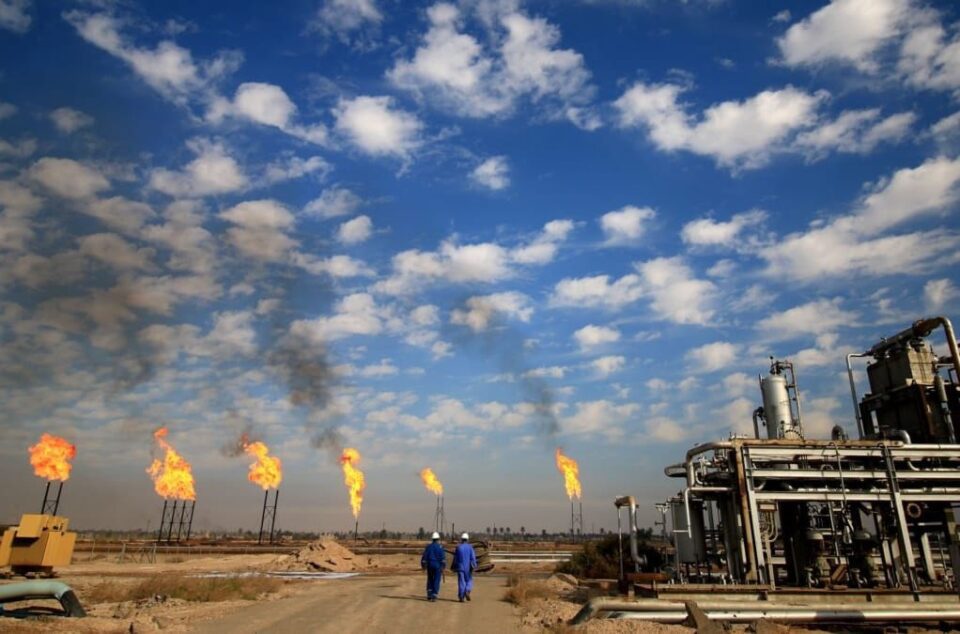
Renewed disruptions to oil exports raise concerns over growth and government revenues
Iraq’s economy is facing renewed uncertainty as escalating regional tensions continue to disrupt oil exports, placing increasing pressure on government revenues and economic growth.
For several months, instability across the region has weighed heavily on Iraq’s economy, forcing the government to rely on foreign currency reserves to finance public spending and salary payments.
The economic downturn began following the outbreak of conflict involving the United States, Israel, and Iran earlier this year. The resulting instability has had a significant impact on Gulf energy markets, with Iraq among the countries most affected.
Before the crisis, Iraq exported around 3.5 million barrels of oil per day. However, repeated disruptions to shipping through the Strait of Hormuz sharply reduced export volumes, with only limited quantities reaching international markets through alternative routes, including the Kurdistan Region’s pipeline and tanker shipments via Syria.
Hopes of a recovery emerged after Iran and the United States signed a memorandum of understanding in mid-June, leading to the temporary reopening of the Strait of Hormuz. Oil exports briefly improved, raising expectations that Iraq could recover some of the substantial revenue losses suffered during the first half of the year.
Those expectations were short-lived. Renewed tensions earlier this month again disrupted shipping through the strategic waterway, severely restricting the movement of oil tankers and threatening Iraq’s primary source of income.
Oil accounts for more than 90 percent of Iraq’s government revenue, making the country’s economy highly vulnerable to prolonged export disruptions. Reduced oil sales translate directly into lower public revenues, fewer foreign currency inflows, and increased pressure on state finances.
Before the latest escalation, the International Monetary Fund (IMF) had projected that Iraq’s economy would rebound strongly during the second half of 2026, forecasting growth of nearly 6 percent after economic expansion slowed to below 2 percent during the first half of the year because of regional instability.
However, the renewed deterioration in regional security and the apparent collapse of the Iran-U.S. understanding have cast doubt on those projections, increasing the risk of a deeper fiscal and economic crisis if export restrictions continue.
The IMF has repeatedly urged Iraq to accelerate structural reforms, reduce its dependence on oil revenues, and invest more heavily in productive sectors such as agriculture and industry to build a more diversified and resilient economy.
The current challenges echo those experienced during the COVID-19 pandemic, when collapsing oil prices sharply reduced government revenues and exposed the risks of Iraq’s heavy reliance on the energy sector.