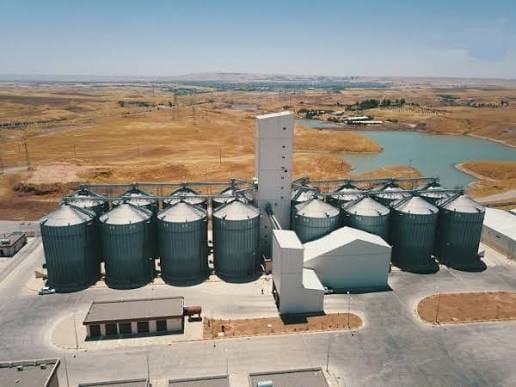
Agricultural investment in the Kurdistan Region has experienced significant growth under the Ninth Cabinet of the Kurdistan Regional Government (KRG), becoming a key pillar in efforts to diversify the economy and strengthen food security.
According to a report by the Kurdistan Region Board of Investment titled “Structural Transformation Toward Sustainable Economic Diversification,” agricultural investment has increased from 2 percent to nearly 12 percent of total public capital investment.
The report highlights the transformation of the agricultural sector through expanded production, industrial development, and investment projects aimed at increasing local production and opening new opportunities for exports.
As part of efforts to develop the agricultural and food industries, the Region has established 13,943 companies, 1,341 industrial factories, 30,000 greenhouses for seasonal crops, and 319 cold storage facilities.
These developments have significantly increased the capacity of local producers, allowing agricultural goods from Kurdish factories and farms to reach markets in Central and Southern Iraq in large quantities, estimated at hundreds of thousands of tons. In addition, for the first time, tens of thousands of tons of agricultural products from the Kurdistan Region have been exported to Gulf countries and international markets.
To protect wheat production and strengthen grain storage capacity, four new silos have been constructed with a combined capacity of 160,000 tons. Each silo has a storage capacity of 40,000 tons, with a total investment cost of 90 billion Iraqi dinars.
The projects include the Qushtapa silo in Erbil, built at a cost of 21 billion Iraqi dinars; the Kalar silo in Sulaymaniyah, costing 21 billion Iraqi dinars; the Roviya silo in Duhok, costing 20 billion Iraqi dinars; and the Halabja silo, costing 28 billion Iraqi dinars.
The government is also planning additional silo projects in Duhok, Zakho, Kifri, Koya, and Harir to further increase storage capacity and ensure greater stability in grain production.
These investments mark a major step toward strengthening the Kurdistan Region’s agricultural infrastructure, supporting farmers, and advancing long-term food security.