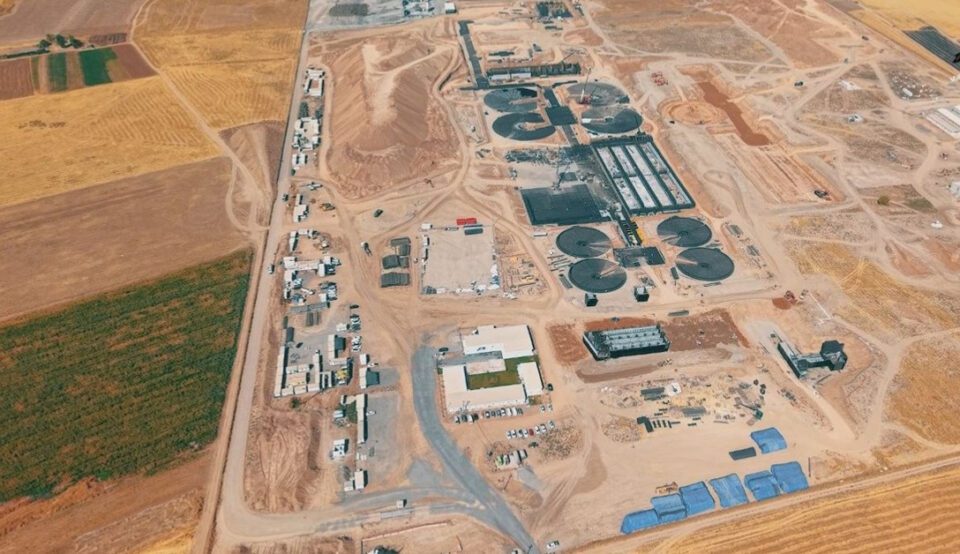
One of the Kurdistan Region’s largest environmental projects will treat up to 840,000 cubic meters of wastewater daily and support agriculture, green spaces, and renewable energy.
Preparations are underway for the second phase of the Erbil Wastewater Treatment Plant, one of the Kurdistan Region’s major environmental projects.
The first phase of the project, covering 56 dunams, has reached approximately 14 percent completion since work began in April. The plant is expected to become operational ahead of schedule, before the end of the planned 720-day construction period.
The project is being developed west of Erbil using a local workforce and will be implemented in four phases across a total area of 225 dunams.
Once completed, the facility will have a total treatment capacity of 840,000 cubic meters of wastewater per day. A 22-kilometer pipeline network will collect wastewater from six outlets across Erbil and transport it to the treatment plant.
The wastewater will undergo more than 20 treatment stages using biological, chemical, and mechanical processes in accordance with international environmental and health standards.
Rather than being discharged, the treated water will be reused to irrigate agricultural lands, the city’s green belt, green spaces, and parks.
The treatment process will also generate useful by-products, including chemical fertilizer for supporting and restoring green areas. Gas produced during treatment will be converted into energy through a dedicated power facility, helping meet part of the plant’s electricity needs.
The project is expected to play an important role in protecting the environment, conserving water resources, expanding green areas, and contributing to a cleaner and more sustainable future for Erbil.