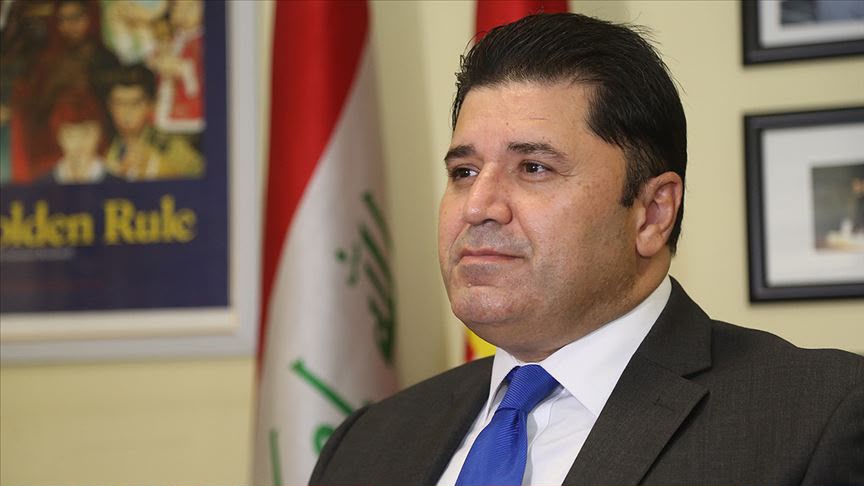
On the International Day of the Victims of Enforced Disappearances, Dr. Dindar Zebari, Coordinator for International Advocacy, told The Kurdish Globe that the issue of enforced disappearances carries particular humanitarian importance for the Kurdistan Region, where the fate of thousands of people remains unknown.
Zebari said the Kurdistan Region has experienced numerous cases of enforced disappearance over several decades. He highlighted the enforced disappearances of Faili Kurds under the former Iraqi regime, the Anfal campaign, which resulted in the disappearance of thousands of people, and the genocide committed against Yazidi Kurds by ISIS. The ISIS genocide led to the abduction of thousands of people, many of whom remain unaccounted for.
Coordination with Baghdad and mass graves
Zebari said coordination with relevant authorities in the federal government is continuing, particularly through national committees established to follow up on cases involving missing persons and mass graves.
According to Zebari, 16,428 people are registered as victims of enforced disappearance from the era of the former Iraqi regime. He said the exchange of information and coordination with relevant authorities is ongoing, including efforts concerning disappearance cases that occurred after 2014.
Regarding mass graves and the recovery of remains, Zebari said 93 mass graves, along with numerous individual graves, have so far been discovered in and around Sinjar.
The remains of 296 people, including 41 women and 255 men, have been exhumed, identified through DNA testing, and returned to their families. However, Zebari noted that many other mass graves have yet to be opened, excavated, and investigated, requiring continued cooperation and coordination among the relevant authorities.
KRG measures to support victims
Zebari also outlined the legal and institutional measures taken by the Kurdistan Regional Government (KRG) to support victims and their families.
These measures include the Missing Persons Law in the Campaign of Mass Extermination of the People of Kurdistan-Iraq No. 3 of 1999, the Law on the Rights and Privileges of Families of Martyrs and Anfal Victims in the Kurdistan Region No. 9 of 2007, and the Law on the Rights and Privileges of Genocide Victims in the Kurdistan Region-Iraq No. 9 of 2015.
Following the ISIS attacks, the KRG also took various measures to assist victims and their families, including rescuing 3,595 abductees and providing psychological and financial support to survivors.
Despite these efforts, Zebari said the fate of 2,526 Yazidi Kurds remains unknown, including 1,215 women and 1,311 men.
International efforts and accountability
Zebari said the KRG has continued to coordinate with the United Nations Investigative Team to Promote Accountability for Crimes Committed by Daesh/ISIL (UNITAD) to document ISIS crimes and preserve evidence digitally.
He revealed that more than 57 gigabytes of documents and evidence related to ISIS crimes have been transferred by UNITAD to the KRG for use in legal proceedings and efforts to hold perpetrators accountable.
Zebari stressed that justice cannot be achieved until the truth is fully uncovered and the fate of missing persons is determined. He called for stronger national and international efforts to locate missing people, document crimes, investigate and prosecute perpetrators, and guarantee families’ right to know the truth and the fate of their loved ones.
He also emphasized the importance of strengthening international cooperation with the KRG and Iraq to search for missing persons, exhume and identify remains, and develop legal and institutional mechanisms to prevent enforced disappearances in the future.