
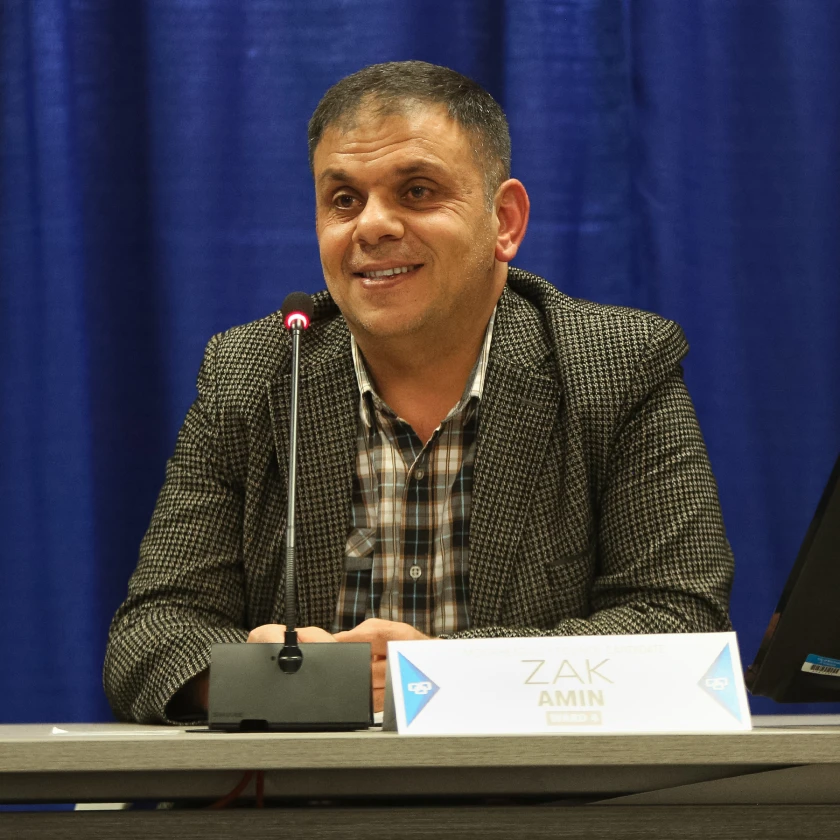
Zak Amin
For many Kurdish families in the United States, American elections have always meant more than choosing a president, governor, or member of Congress. They have also been about the future of Kurdistan.
For older generations of Kurds who came to America after years of war, persecution, displacement, and political uncertainty, what happens in Washington has often been closely connected to what happens back home. Many remember the American decisions that helped shape modern Kurdish history, particularly the establishment of the no-fly zone in 1991 and the removal of Saddam Hussein in 2003. These events created opportunities for the Kurds in Iraq to build their own political institutions and gain constitutional recognition.
Living in Minnesota, I have seen how deeply these memories remain part of the Kurdish community. For many older Kurds, American politics is not simply about domestic issues. It is also about protecting the people and homeland they left behind. Their political choices are often influenced by which American leaders they believe will stand with the Kurds in the Middle East.
Over the years, many older Kurdish-Americans have tended to support Republican candidates, believing that Republican administrations have been more willing to make major changes in the region. However, that support has not always remained the same. The 2019 withdrawal of American troops from parts of northern Syria under President Donald Trump was a turning point for many Kurds. Watching Kurdish forces, who had fought alongside the United States against ISIS, face a new threat left many feeling disappointed and uncertain about America’s commitments.
This experience reminded many in the community that support for the Kurds cannot be measured simply by party labels.
A New Generation, Different Priorities
While older Kurds often look at American elections through the lens of Kurdistan, younger Kurdish-Americans are developing a different relationship with politics.
Many were born or raised in the United States. They grew up attending American schools, making friends from different backgrounds, working, and building their lives here. They still care about Kurdistan, but their daily concerns are often closer to home.
For younger Kurds, issues such as education, healthcare, immigration, employment, housing costs, civil rights, and equal opportunities matter greatly. They want to see their communities represented and respected. They want their voices heard, not only when the subject is the Middle East, but also when decisions are made about their neighborhoods, schools, and future.
This change is not surprising. As Kurdish families become more established in American society, their political interests naturally expand. They are no longer simply immigrants following American foreign policy. They are voters, workers, business owners, students, teachers, and parents who have a direct stake in the country’s future.
One Community, More Than One Political View
The difference between the generations does not mean that one cares more about Kurdistan than the other. It means that their experiences have shaped different priorities.
An older Kurdish immigrant who remembers Saddam Hussein’s campaigns may judge an American administration by its policies toward Baghdad and Erbil. A young Kurdish-American who grew up in Minnesota may be more concerned about the cost of college, healthcare, or the future of public education. Both concerns are legitimate, and both reflect the experiences of people who share the same identity.
The Kurdish-American community is also becoming more politically diverse. Republicans, Democrats, and independent voters all have a place in it. No single political party represents every Kurdish-American, and no party should take the community’s support for granted.
There is also an important opportunity here. Kurdish-Americans can become more involved in local and national politics, build relationships with elected officials, encourage younger generations to vote, and make sure Kurdish issues remain part of discussions about American foreign policy.
Ultimately, being Kurdish-American means carrying two responsibilities: remembering where our families came from and helping shape the country where we are building our future.
Our parents and grandparents brought their memories, struggles, and hopes to America. The younger generation is building on that foundation in its own way. Their priorities may be different, but their Kurdish identity remains a shared bond.
The future of the Kurdish-American community should not be defined by a political party or a single election. It should be defined by a stronger voice, greater participation, and a shared commitment to both our heritage and our future in America.