
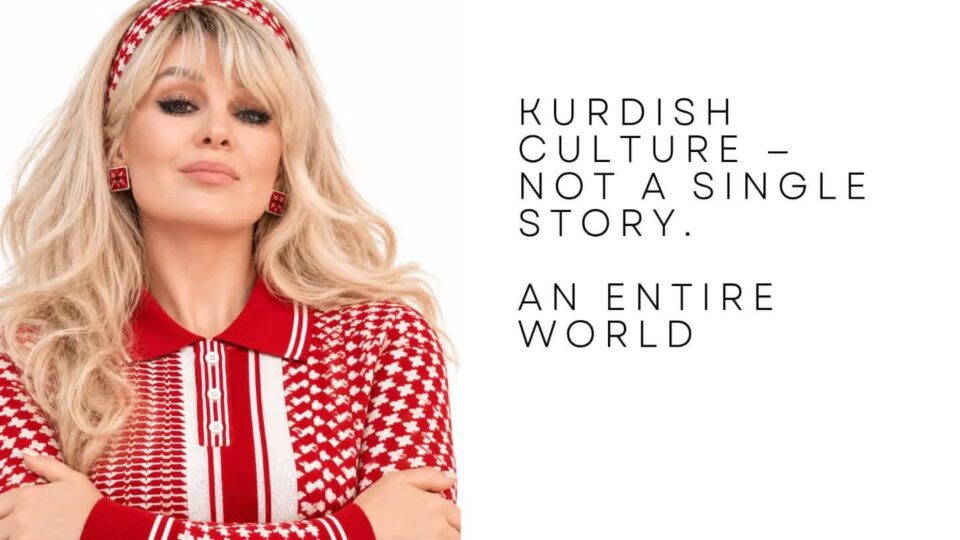
From southern Russia to the heritage of Kurdistan, cultural researcher and designer Julia Romanova is building ZAGROS—a contemporary fashion and design brand rooted in years of archival research into Kurdish ornaments, textiles, and ancient motifs. In this interview with Kurdish Globe newspaper, she discusses the origins of the project, why heritage belongs in everyday life, and her plans for the brand’s upcoming launch and future in Kurdistan.
Could you introduce yourself and tell us what first drew you to Kurdish heritage?
My name is Julia Romanova. I am a Russian designer, cultural researcher, and the founder and creative director of ZAGROS, a contemporary fashion and cultural brand inspired by Kurdish heritage. Based in southern Russia, I have spent years studying Kurdish history and decorative traditions through ornaments, symbols, textiles, architecture, and historical objects.
When I first began exploring Kurdish culture, I was deeply struck by its richness, beauty, and diversity. At the same time, I noticed a surprising gap: it was very difficult to find a comprehensive collection of books or research devoted specifically to Kurdish ornaments and decorative traditions. That realization pushed me to start my own investigation—studying family archives, antique carpets, traditional clothing, museum collections, and archaeological artifacts. What began as personal curiosity gradually evolved into a long-term research and creative endeavor, and ultimately became the foundation of ZAGROS.
Why is it so important to you to bring Kurdish culture to an international audience through modern design?
I believe culture should not exist solely behind glass in museums or inside history books—it should remain a living part of everyday life. When people encounter a heritage through contemporary fashion, design, and well-crafted objects, it becomes relevant to new generations. For me, that is one of the most meaningful ways to preserve cultural identity: not merely by looking back at the past, but by allowing it to inspire the future.
How did ZAGROS evolve from a research project into a fashion and design brand?
ZAGROS developed step by step. Initially, I began making traditional Kurdish costumes simply because they were difficult to find in Russia. From there, I moved into photography projects and started designing jewelry inspired by elements of the traditional Hawri scarf. Over time, I realized my interest went far beyond garments alone—I wanted to decode the cultural language behind these patterns, symbols, and objects and reinterpret them for today. Today, ZAGROS is taking shape as a premium fashion and cultural brand where scholarly research and original contemporary design meet.
How does your research process inform what you design?
Research sits at the heart of everything I do. I am currently building a structured library of Kurdish ornaments and motifs organized across all four regions—Bashur, Bakur, Rojava, and Rojhelat—alongside studies of ancient Mesopotamian symbols and archaeological discoveries. Every motif is carefully studied, documented, and interpreted before entering the design studio. My goal is to build an archival foundation that will serve not only ZAGROS, but also future designers, artists, and researchers drawn to Kurdish heritage.
What products are you developing, and how will people be able to purchase them?
We have already created original textile designs and prints drawing on antique carpets, traditional ornaments, the distinctive architecture of Hawraman, and archaeological motifs. Our first commercial release will be a line of polo shirts, which we will introduce through our official website, currently in development, with launch details announced on Instagram. Over time, we plan to expand into knitwear, apparel, accessories, home textiles, ceramics, and design objects—establishing a unified visual language recognizable across every category.
How has your work been received in Russia so far?
Since the project is still at an early stage, much of the initial enthusiasm has come from Kurdish people and diaspora communities. However, when people in Russia see my designs and learn about the history behind them, they are often genuinely surprised by the depth and artistry of Kurdish heritage. One question I hear quite often is: “This is beautiful! Where can I buy it?” That response is a major reason we are now preparing for our first commercial launch.
Do you see ZAGROS as a cultural bridge between Russia, Kurdistan, and the wider world?
Absolutely. Culture has a remarkable power to bring people closer through curiosity, creativity, and mutual respect. I am Russian, and I do not claim a Kurdish identity. My role is to approach Kurdish heritage with humility and care, research it rigorously, and offer a contemporary interpretation that can resonate internationally. In that sense, ZAGROS is a cultural bridge built through design.
Who is behind ZAGROS today, and are you planning a physical presence in Kurdistan?
At present, I lead the creative direction and research while collaborating with external specialists and manufacturing partners as needed, alongside ongoing discussions with potential business partners. Long term, I envision ZAGROS as an international company bringing together Kurdish and international researchers, designers, architects, artists, artisans, and business leaders.
Opening a physical store in Kurdistan is also an important priority. We are currently discussing the possibility of opening a ZAGROS boutique in Erbil with a business partner. Erbil feels like a deeply meaningful home for the brand—a place where our contemporary design language can meet the very culture and people that inspired it. Still, our immediate focus is launching our website, releasing our first collection, and building a solid operational base before expanding into brick-and-mortar retail.
Looking ahead, what is your long-term vision for ZAGROS, and what message would you share with the people of Kurdistan?
I see ZAGROS as much more than a clothing label; my ambition is to build a cultural ecosystem connecting research, design, education, commerce, and social impact. Alongside growing the brand, I hope to publish books on regional decorative traditions and eventually support museums, digital archives, Kurdish language schools for diaspora children, cultural centers, and fellowships for young Kurdish artists and designers. A successful commercial brand can—and should—serve as a platform that gives back to the culture that inspires it.
To the people of Kurdistan, I want to say that Kurdish heritage deserves to be seen, studied, and celebrated across the globe. My dream is for children in Kurdistan to discover their heritage not only in textbooks, but also in museums, exhibitions, and internationally recognized design. Their culture is not a relic of the past—it is alive, inspiring, and has a vibrant future. If ZAGROS can play even a small part in that journey, every year of research and creative work will have found its true purpose.