
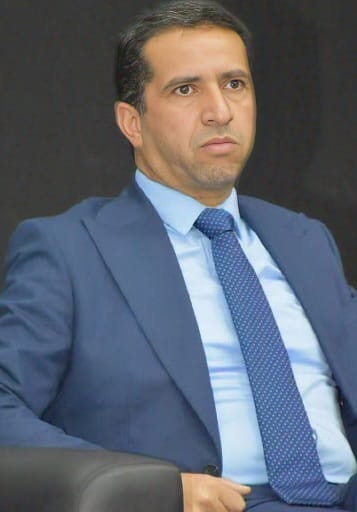
Dr. Hiwa M. Khalil
Since the Kurdistan Parliament resumed its work, officials from the Patriotic Union of Kurdistan (PUK) serving in the cabinet and across the Region’s institutions have suspended their duties and stopped going to work. Under the law, civil servants who abandon their posts in this way would ordinarily have their salaries cut. The crisis deepened when the PUK’s leader, in a speech lasting just four minutes, announced the party’s intention to establish a separate administration in Sulaymaniyah.
The Kurdistan Region is less than four decades old, so its history is short and its lessons are fresh. Half of that history was spent under two genuinely separate administrations, from 1994 to 2005, a period of more than a decade. That experience offers a clear verdict: a divided administration brought the Kurdish people nothing. An experiment that has already been tried and has already failed should not be repeated.
Supporters of the idea might argue that Sulaymaniyah could become an independent federal region under the Iraqi constitution, with all the rights the constitution grants to federal regions. If that were achievable, it would be a historic gain for the PUK. Kurds would then hold two constitutional regions within Iraq, and they could tell the states among which the Kurdish nation is divided that Iraq’s Kurds have two federal regions, so those states should guarantee Kurdish rights at home too.
But can the PUK actually deliver this? Almost certainly not. Even if the constitution allowed it, the Shia-majority government in Baghdad and Iraq’s neighbors would not. They know that if Sulaymaniyah becomes a region, Sunni areas will demand the same status, and Basra will renew its own demand for federal-region status. No one in Baghdad or the capitals of neighboring states wants to open that door.
There is also the question of cost. A new region would need its own president, its own council of ministers and its own parliament, and all of this requires capital. Who would pay? Baghdad will certainly not finance a new Kurdish region, and the Kurdistan Region’s existing budget is already under strain.
What the PUK has done is a naive game, but a dangerous one. The party is a principal partner in the Kurdistan Regional Government’s cabinet. It cannot walk away from a government it helped build and still expect to be absolved of responsibility for how that government performs.
More fundamentally, the form of a political and administrative system, whether good or bad, should never be confused with questions of nation and homeland. Unfortunately, the PUK has repeatedly merged these two concepts in its political disputes with the Kurdistan Democratic Party (KDP). Political disagreements over power-sharing, revenue and appointments are normal in any democracy. They are settled through negotiation, elections and institutions, not by threatening to split the territory. Treating every dispute with the KDP as a matter of national survival turns ordinary politics into an existential crisis.
A two-administration system fuses the question of political power with the question of the nation itself. That is a political error, and it risks becoming a historical one that Kurds will not forget. The people of Sulaymaniyah, Erbil, Duhok and Halabja share the same salaries, the same services and the same uncertain future. They deserve leaders who resolve their differences within the institutions they have, not leaders who deepen divisions that cost ordinary people the most.
The way forward is dialogue, return to work, and respect for the parliament and the law. Kurdistan has already paid dearly for division once. It cannot afford to pay again.