
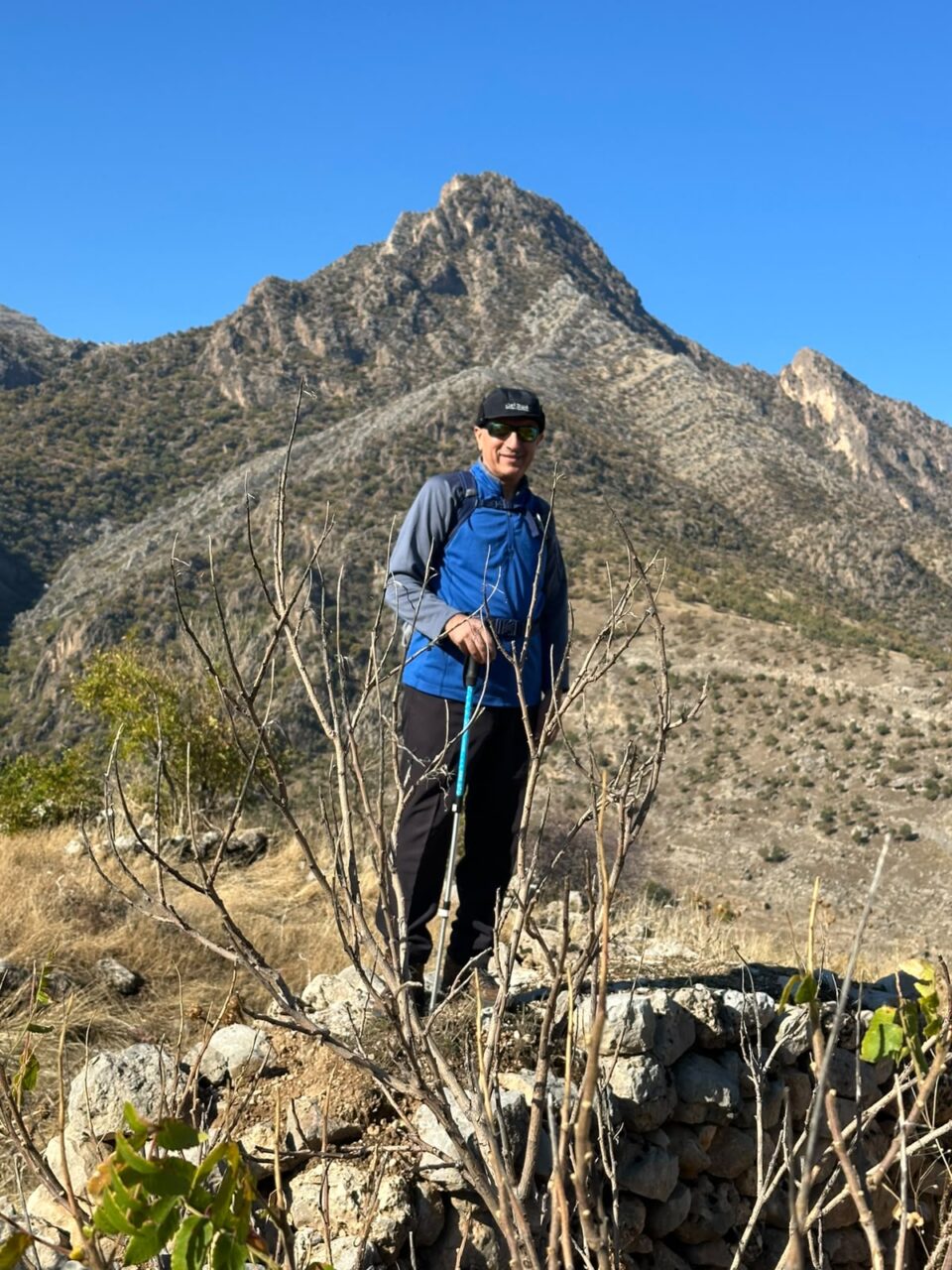
Hundreds of fortresses were built across various eras, under different rulers, and in diverse locations throughout the Kurdistan Region for several purposes over past centuries. A large portion of these fortresses were constructed for defense and to maintain authority in mountainous areas and rugged terrain. The remains of these fortresses mostly date back to the era of the Kurdish emirates, from after the 8th century AD up until the last emirate of Kurdistan. We must recognize the fact that any fortress reached by the hands of occupiers was destroyed, yet the walls and foundations of some of them have survived due to their ruggedness and remoteness. The Dimdim Fortress of the Pasha of Soran, or Akoyan Fortress, was the first fortress that the Pasha of Soran built during his reign; in this field trip, we present some information about it.
Geographical Location of the Fortress
Akoyan Fortress is located within the boundaries of the town of Rawanduz in the Soran Independent Administration in Erbil Governorate. It lies east of the village of Akoyan, which is 18 km east of Rawanduz, on the right side of the road leading from Rawanduz to the village of Garoyan. The fortress sits atop a hill overlooking the villages of Akoyan and Faqiyan, as well as the Garoyan and Akoyan valleys. The hill on which the fortress is built lies at the northern foot of the Korek mountain range and is connected to the heights of that range, while on the other three sides the site of the fortress consists of steep elevations, cliffs, and rugged terrain. The main path to the fortress is on its western side, connecting to the Akoyan and Faqiyan valleys. The height of the fortress on the northern side is estimated at 60 to 100 meters.
Why Was It the First Fortress of the Era of the Pasha of Rawanduz?
Mir Muhammad, known as the Great Pasha (Pasha-i Gawra), built dozens of fortresses within his realm during his reign (1813–1836 AD). The names of more than 20 of these fortresses survive, the ruins of over 15 are visible, and I have personally visited 8 of them. As recorded in historical sources, the information regarding this fortress is taken from Dr. Ross, who was in the region during that period. He states that after Mustafa Beg, the father of Mir Muhammad, handed over his authority to his son in 1813, Mir Muhammad—known as the Great Pasha, or the Pasha of Soran and Rawanduz—built a fortress for his father on a hill in their own village (Akoyan) and named it Dimdim Fortress. This was a reference to the greatness and resilience of Khan-i Lapzerin’s Dimdim Fortress, which in the 15th century withstood the Safavid attacks and did not surrender. Thus, the fortress had two names (Dimdim and Akoyan), with Akoyan coming from the name of the village within whose boundaries the fortress is situated.
It appears that the purpose of building Akoyan (Dimdim) Fortress was to protect Mustafa Beg and his family, especially after Mustafa Beg agreed to his son’s conditions, handed over the rule of the emirate, went to the village of Akoyan, and settled there.
Structure of the Fortress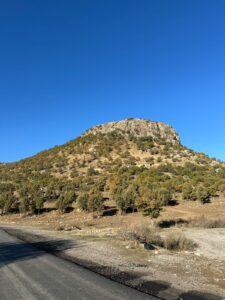
As we mentioned earlier, the fortress sits atop a mountain height overlooking the surrounding villages, orchards, valleys, and roads. The area of the fortress on that elevation is roughly 2,000 square meters, surrounded by wild and cultivated trees as well as vineyards. Water for the fortress was brought from a distance of 2 km near the village of Faqiyan through a stone channel running across the mountain heights to the fortress site; in some places, the channel was built up with walls along the mountainside, and its traces remain to this day. However, of the fortress itself, only the foundation walls of a number of rooms, halls, and basements remain. What can be seen most clearly and distinctly are two rooms thought to be basements or stables for keeping horses, with walls visible up to a height of one and a half meters. To properly determine how many rooms it consisted of, cleaning and archaeological inspection are required. Around the fortress, there are foundations of watchtowers and guard posts (qula). In some parts of the fortress, newer walls and rooms have been built with dry stone, which appear to have been constructed by soldiers in past years and used as fighting trenches during the wars between Saddam’s fallen regime and the Peshmerga, or during internal conflicts. The path connecting the fortress to the Akoyan and Faqiyan valleys was paved with stones, and part of the road and its stone paving still remains.
Remains of the Built-Up Water Channel
As I noted, the water channel ran for a length of 2 km up to the fortress. Because the path of the channel passed through high elevations and mountains, in some places the rock of the mountain was carved out to form the channel, while in other places—along cliffs and mountain heights 20 to 30 meters high—the channel was built onto the mountain for lengths of 20 to 40 meters using stone, lime, and gypsum mortar. Working in such a location was extremely difficult and required skilled and experienced master builders. I tried to reach the top of the channel myself, but due to the ruggedness of the terrain, I could not get up to it and see it completely.
Akoyan Is a Tourist Area
The nature of the Akoyan Valley features very fresh, pure water. The valley is covered with tall trees that cast shade underneath. From the village of Akoyan to the village of Faqiyan, along the entire length of the valley—more than 3 km—it is filled with planted and wild trees, numerous fruit orchards, and vineyards, with tall walnut trees covering the valley and the village. Currently, several simple, rustic arbors and resting spots for tourists have been built beneath the shade of the trees and beside the clear water streams. In the summer season, locals and tourists flock to this valley. In addition, the village of Faqiyan has preserved its traditional houses in their old architectural design, which attracts tourists for sightseeing and photography; wedding parties are also frequently brought into this beautiful nature and traditional village.
From the city of Rawanduz all the way to near the fortress, and along the Akoyan Valley and the village of Faqiyan, the road is paved with asphalt; however, to reach the top of the fortress, one must hike on foot up the mountain for 25 minutes.
Nader Rusti