
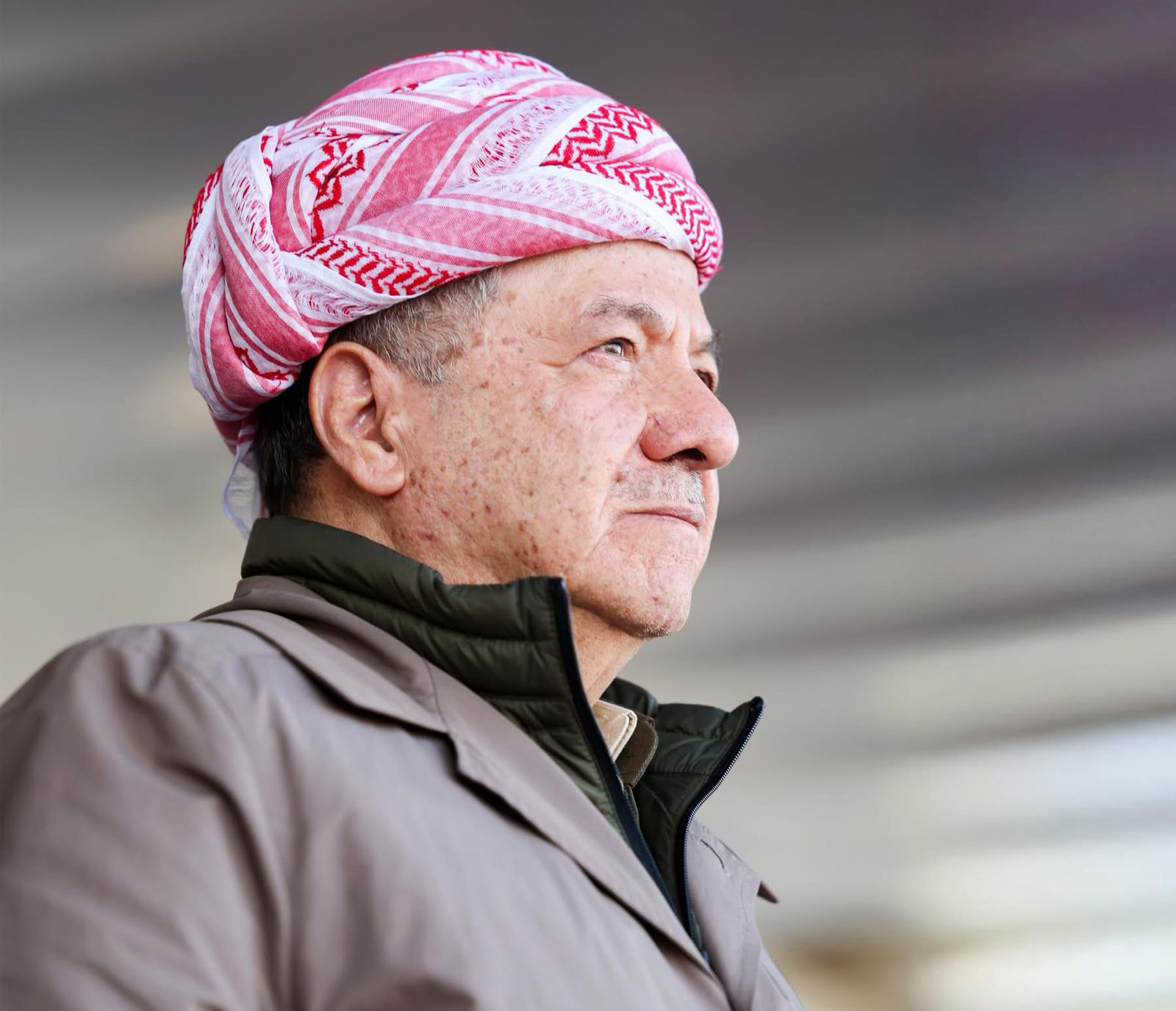
President Barzani leads diplomacy as Syria attacks Aleppo Kurds.
Syrian forces bombard Aleppo Kurdish areas, displacing civilians, as President Barzani presses urgent regional de-escalation.
The Aleppo flashpoint
The recent military assault on the Kurdish-inhabited neighborhoods of Sheikh Maqsoud and Ashrafieh in Aleppo, Syria, represents a significant escalation in the Syrian conflict and a critical first test for the country’s new leadership.
These districts, home to a large and historically significant Kurdish population, have become a flashpoint, with the Syrian government’s actions threatening to provoke a wider ethnic conflict and trigger a severe humanitarian disaster. The unfolding crisis is now a focal point for regional stability, drawing intense scrutiny from international actors.
Beginning around January 7, 2026, the Syrian Arab Army, under the command of President Ahmed al-Sharaa, launched a sustained military operation against the two districts. By January 9, the offensive had been underway for four days, with reports from the ground confirming the use of heavy weapons and tanks in an indiscriminate bombardment targeting civilian areas.
This marks a sharp turn towards violence, contradicting the new government’s initial overtures of national reconciliation and inclusiveness. The immediate humanitarian consequences have been devastating. The attacks have forcibly displaced an estimated 150,000 civilians, creating a new wave of internally displaced persons in a region already ravaged by years of war.
According to initial casualty reports, the bombardment has resulted in the deaths of at least 23 civilians and left another 98 wounded, with figures expected to rise as the violence continues.
Among the most vulnerable are the approximately 1,200 Yazidi families residing in Sheikh Maqsoud and Ashrafieh. This community has issued an urgent appeal for immediate intervention, expressing profound fear that they face a repeat of past massacres. Their plea is directed at the Yazidi Spiritual Council and Yazidi representatives in the Iraqi Parliament, as well as international human rights organizations, calling for urgent action to prevent a potential genocide against their besieged and displaced members.
President Masoud Barzani’s pivotal role
In response to the escalating violence, President Masoud Barzani has emerged as a central mediator, leveraging his considerable regional influence and stature to spearhead de-escalation efforts. His intervention is strategically significant, positioning him as a crucial arbiter capable of engaging directly with all sides, the new Syrian leadership, and key international partners.
The primary objectives of his diplomatic push are to halt the bloodshed, prevent the conflict from spiraling into a full-blown ethnic war, and secure a path toward a peaceful resolution.
President Barzani’s initial public statement on January 7, 2026, set a clear and firm tone. He expressed “deep concern” over the dangerous situation in Aleppo and warned explicitly that the attacks constituted a threat of “ethnic cleansing against the Kurds.” Critically, his appeal was balanced, calling on the Syrian authorities to cease their offensive while also urging the Kurdish-led Syrian Democratic Forces (SDF) to do everything in their power to stop the fighting and prevent further bloodshed.
By addressing both sides, he underscored the necessity of resolving political disagreements through dialogue, framing the military action not only as a humanitarian crisis but as a potential crime against humanity. This public stance was followed by direct diplomatic engagement.
On January 9, 2026, President Barzani held a telephone conversation with Syrian President Ahmed al-Sharaa. During the call, al-Sharaa offered conciliatory assurances, stating that Kurds are a “fundamental component” of the Syrian people and pledging his government’s full commitment to guaranteeing “all national, political, and civil rights” for Kurds.
This rhetoric stands in stark contrast to his army’s simultaneous military offensive. President Barzani, in turn, expressed his appreciation for this stated vision and voiced his support for building an inclusive Syrian state where all communities are partners.
To ensure the crisis received international attention, President Barzani also coordinated with the United States. In a phone call on January 9 with Tom Barrack, who serves in the dual capacity of US Special Envoy for Syria for President Donald Trump and US Ambassador to Turkey, both leaders discussed the latest developments in Aleppo.
Barrack’s position in Turkey, a key regional power with deep involvement in Syria, adds significant weight to this coordination. They reached a shared conclusion on the urgent need for all parties to de-escalate tensions and commit to a process that ensures security, stability, and peace. This high-level diplomacy has been complemented by a unified and robust response from within the Kurdistan Region itself.
The Kurdistan Region’s unified response
The crisis in Aleppo has prompted a multi-pronged and unified response from the Kurdistan Regional Government (KRG) and its people, demonstrating a powerful combination of political resolve, humanitarian action, and public solidarity.
This collective effort underscores the deep connection felt across the Kurdistan Region for the Kurds in Syria and signals a determination to provide both political and material support in a time of crisis.
Masrour Barzani, Prime Minister of the KRG, issued a strong statement condemning the attacks and framing them as a challenge to both regional and international order. He argued that targeting Kurds with the aim of demographic change “calls into question the authority of Damascus and the conscience of the international community.” Echoing President Masoud Barzani’s call, he emphasized that violence is not a solution and urged the Syrian government to pursue dialogue over military force, reinforcing the KRG’s official position in favor of a peaceful, negotiated settlement.
In parallel with these political declarations, the Barzani Charity Foundation (BCF) has mobilized a significant humanitarian relief operation. The organization provides immediate aid to those displaced by the fighting by distributing hot meals to approximately 3,000 families and deploying mobile medical teams to provide urgent treatment for the sick and injured.
The public within the Kurdistan Region has also demonstrated its solidarity. On January 9, 2026, large public demonstrations were held in the cities of Erbil and Rania. Citizens took to the streets to condemn the attacks by the Syrian army and express unwavering support for the residents of Sheikh Maqsoud and Ashrafieh, chanting slogans such as “Long live the Rojava resistance.” This public outcry has amplified the political calls for action and moves the focus toward how the crisis is being perceived and covered by international actors and media.
International dimensions and media scrutiny
Religious leaders in the Kurdistan Region have been swift to condemn the violence. The Union of Islamic Scholars of Kurdistan, led by Mullah Abdullah Weisi, issued a statement denouncing the attacks as a “great injustice” against the Kurdish people. He asserted that the violence is fundamentally contrary to the principles of Islam and called on international Islamic centers, particularly those within Syria, to break their silence.
Simultaneously, the media coverage of the crisis has come under intense scrutiny. A large group of journalists, intellectuals, and media institutions from the Kurdistan Region sent an open letter to the Al Jazeera network, formally criticizing its reporting on the events. The letter levels serious accusations against the channel for what it describes as biased and unprofessional coverage that deviates from journalistic ethics. It claims the network promotes a “discourse of hatred and incitement” against the Kurdish population, following a perceived pattern of biased reporting previously seen in its coverage of Syria’s Alawite and Druze communities.
The signatories called on Al Jazeera to revise its editorial policy and adopt a more balanced approach that contributes to peace rather than fueling ethnic tensions. The intersecting political, humanitarian, and media pressures are now converging to shape the trajectory and ultimate outcome of the Aleppo crisis.
The Kurdish Globe