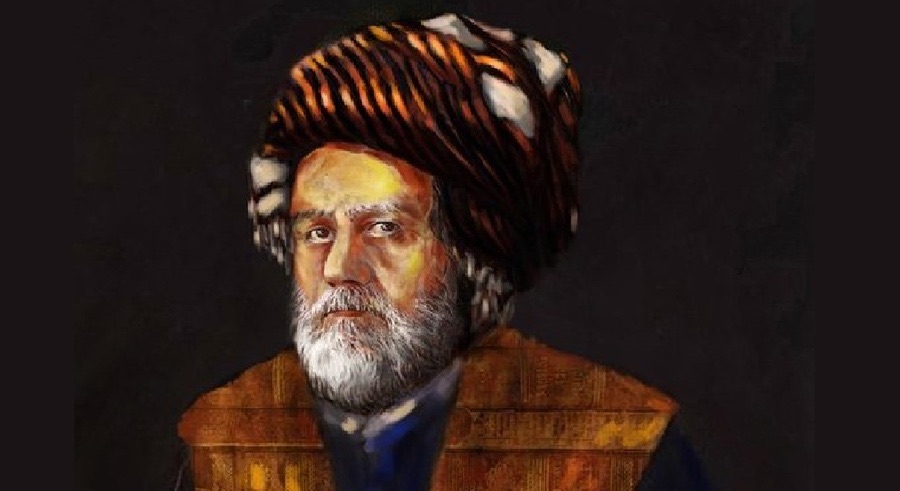
Kurdish literature, with its deep historical roots, has produced many remarkable poets and intellectuals who have shaped the cultural and linguistic identity of the Kurdish people. Among these figures, Ali Hariri stands out as one of the founding voices of classical Kurdish poetry.
Hariri’s full name was Ahmad, son of Ali Hariri, and though the exact dates of his birth and death remain uncertain, most reliable sources suggest he was born around 1530 in the village of Hariri, located in the Shamzinan region of Hakkari in northern Kurdistan. According to Kurdish literary historian Marif Khaznadar, Hariri passed away around 1600, likely in the same region where he was born.
Despite the challenges of education in his time, Hariri was introduced to learning at an early age. He traveled across cities and countries to complete his studies and eventually obtained a mullah certificate in the city of Antab—then considered the highest academic qualification in Kurdish society.
Historical accounts note that Mullah Jaziri, one of the most influential poets of Kurdish classical literature, was among Hariri’s mentors. His intellectual and poetic brilliance earned him wide recognition, even being mentioned by Mawlana Jami in his writings. Hariri’s work was celebrated for its depth, linguistic richness, and philosophical insight.
Beyond poetry, Hariri contributed significantly to the broader intellectual development of Kurdish society. Fluent in Turkish, Persian, and Arabic, he drew inspiration from these literary traditions, enriching Kurdish poetic expression. He wrote primarily in the Kurmanji dialect, becoming the first known poet to compose in Kurmanji, thereby laying the foundation for a new era in Kurdish literature.
Although much of his work has been lost due to historical and archival limitations, the surviving poems reflect his profound intellect and artistic sensitivity. His poetry often explored spiritual, philosophical, and human themes, embodying the essence of Kurdish literary heritage.
Hariri spent his later years in Damascus, where he served as a religious guide at the Salihiyya Mosque. He remained there until his death at the age of seventy, and was buried within the mosque’s grounds.
Ali Hariri’s enduring legacy earned him high praise from later Kurdish literary giants. Ahmad Khani ranked him alongside Mullah Jaziri and Faqi Tayran, while Haji Qadir Koyi famously described him as the “Hassan of the Kurds.”
Today, Ali Hariri is remembered not only as a pioneer of Kurdish poetry but also as a symbol of the rich cultural and intellectual history of the Kurdish nation.