
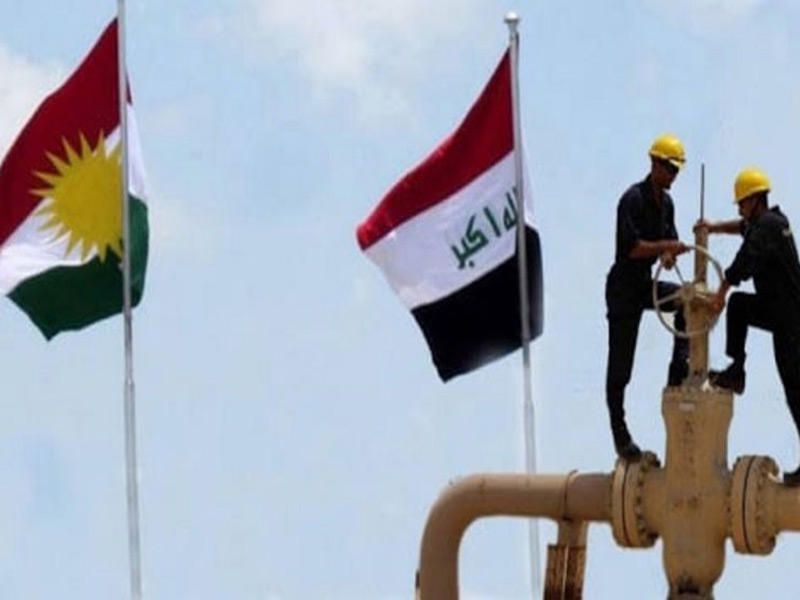
The relationship between Iraq’s federal government in Baghdad and the Kurdistan Regional Government (KRG) has deteriorated into a complex web of economic disputes that have significantly hampered the Kurdistan Region’s development prospects. Recent decisions by Iraqi federal institutions, particularly regarding salary payments and resource management, have intensified longstanding tensions and raised serious questions about Baghdad’s commitment to constitutional federalism.
The ongoing disputes center on critical economic sectors including oil and gas revenues, customs operations, civil servant salaries, and control over disputed territories rich in natural resources. These conflicts have created an environment of economic uncertainty that Kurdish officials argue is deliberately designed to prevent the region’s growth and maintain Baghdad’s dominance over Iraq’s federal structure.
Oil and gas: the heart of economic discord
The most contentious issue remains the delay in legislating Iraq’s oil and gas law, which would regulate the relationship between Baghdad and Erbil regarding hydrocarbon extraction, marketing, and investment. The federal government insists that the national oil marketing company (SOMO) should handle Kurdistan’s oil sales, while Erbil maintains its constitutional right to manage resources discovered after 2005.
This dispute goes beyond mere revenue sharing. Baghdad demands a “real and effective presence” in KRI oil fields to monitor production and marketing plans, which the KRG views as an unconstitutional infringement on regional autonomy. The federal government’s position effectively limits Kurdistan’s ability to develop its energy sector independently, constraining economic growth and foreign investment opportunities.
Article 112 of Iraq’s constitution defines joint responsibility between federal and regional governments for oil investment and revenue distribution based on population. However, disagreements over interpretation have left Kurdistan’s energy sector in legal limbo, discouraging international investors and limiting the region’s economic potential.
Salary crisis: federal control over regional workforce
The recent suspension of public sector salaries in the Kurdistan Region by Iraq’s Ministry of Finance has emerged as a particularly damaging economic weapon. The Iraqi Federal Court’s decision to implement direct payment of civil servants’ salaries represents what Kurdish officials describe as federal overreach that undermines regional governance.
Bapir Kamala, secretary of the Kurdistan Workers’ and Laborers’ Party, characterized the salary suspension as “political rather than administrative or economic,” noting that it was timed strategically before the Eid al-Adha holiday. The KRG maintains it has fulfilled all obligations under the Federal Budget Law, while Baghdad claims concerns about “phantom employees” justify increased federal control.
This dispute affects hundreds of thousands of public sector workers who have experienced months without payment, creating economic hardship that ripples through the entire regional economy. The uncertainty surrounding salary payments undermines consumer confidence and reduces domestic spending, further constraining economic growth.
The federal government’s proposal to establish a federal bank in Erbil for salary distribution represents another mechanism of economic control that limits the KRG’s fiscal autonomy and administrative independence.
Strategic economic containment
Kurdish officials argue that Baghdad’s approach reflects a deliberate strategy to prevent Kurdistan’s economic independence. Kamala noted that “successive federal governments have long imposed economic restrictions on the Kurdistan Region to prevent its progress,” viewing the region’s economic growth as a threat to federal control.
The disputes extend to customs operations, where Article 114 of the constitution defines joint powers between federal and regional governments. Despite agreements for revenue sharing, constant disagreements over customs management at KRI border crossings and airports create additional economic friction.
The contested status of disputed territories, including oil-rich Kirkuk province, further complicates economic development. These areas, covering 37,000 square kilometers with significant hydrocarbon wealth, remain under federal control despite constitutional provisions for resolution through referendum.
The cumulative effect of these disputes creates an environment of economic uncertainty that discourages investment, limits infrastructure development, and constrains the Kurdistan Region’s ability to diversify its economy. Without resolution of these fundamental disagreements over resource control and revenue sharing, the region’s economic potential remains significantly constrained by federal policies that Kurdish officials characterize as deliberately obstructionist.
The path forward requires what experts describe as “joint concessions, flexibility in negotiations,” and potentially international mediation to establish a framework that respects both constitutional federalism and regional economic autonomy.
By Jawad Qadir