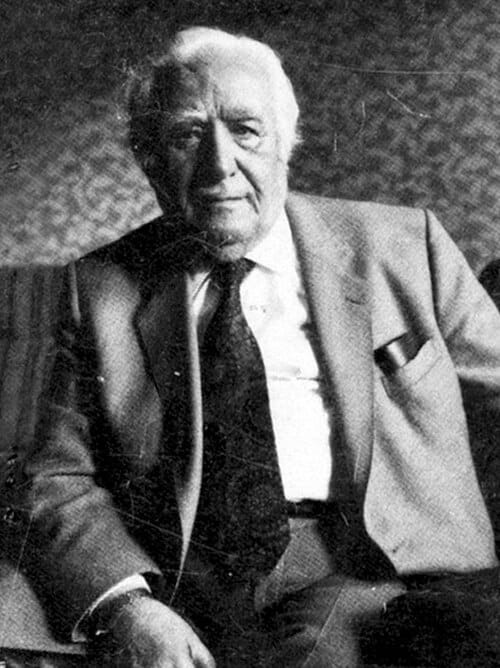
Cigerxwîn, born Şêxmûs Hassan Mohammed in 1903 in the village of Hesar near Mardin in northern Kurdistan, was a principled poet, thinker, and one of the greatest Kurdish intellectuals of the 20th century.
Growing up in poverty, Cigerxwîn worked as a shepherd and cowherd. He lost his father as a child and was raised by his sister. Due to extreme hardship, the family left Hesar in 1914 and settled in the town of Amuda. Despite these challenges, his intelligence and passion for learning were evident early on. He studied in the local mosque school, excelling in Arabic and Islamic sciences, and later traveled across northern Kurdistan and beyond to further his education under Mala Ubaid, eventually serving as a mullah in various Kurdish regions.
In 1946, Cigerxwîn entered politics, which profoundly shaped his poetry and literature. He joined the Party of Kurdish Freedom and Unity and later the Syrian Communist Party, even running for the Syrian Parliament in 1954. After leaving the Communist Party in 1957, he founded the Freedom
Organization, which merged with the Kurdistan Democratic Party of Syria. Between 1959 and 1963, he lectured on Kurdish language at Baghdad
University before returning to Qamishli to continue his literary and political work. His activism led to imprisonment in Damascus that same year.
In 1969, he joined the September Revolution led by Mustafa Barzani, dedicating himself fully to the Kurdish national cause. In 1973, he moved to
Lebanon and wrote his autobiography, Kîme Ez (Who Am I). Disillusioned with the religious
clergy due to the oppression Kurds faced,
Cigerxwîn devoted his life to political activism and national poetry, expressing the struggles and aspirations of his people in powerful, lyrical words. Inspired by Ahmad Khani, Haji Qadir Koyi, and the Kurdish national movement, he encouraged education, national consciousness, and resistance through his poetry.
Cigerxwîn’s literary legacy extends beyond poetry. He contributed significantly to Kurdish prose,
dictionaries, and grammar, leaving an enduring influence for future generations.
In 1976, he returned to Syria but was forced into exile in Sweden in 1979, where he continued writing. On October 22, 1984, Cigerxwîn passed away. Honoring his wishes, his body was returned to
Qamishli and laid to rest on Kurdish soil.