
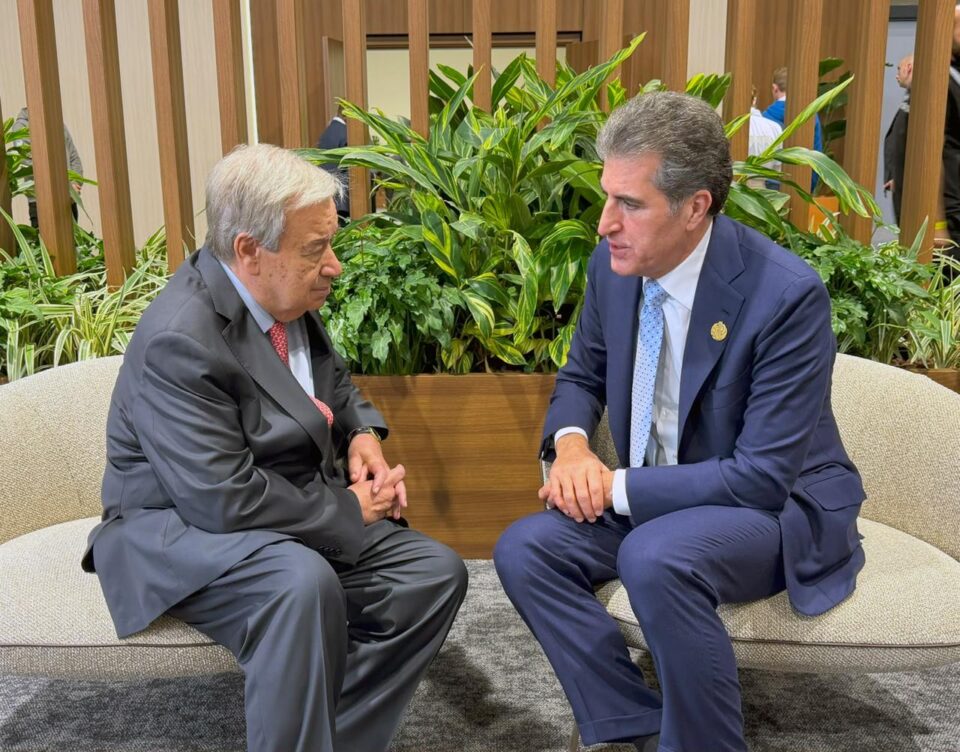
Kurdistan Region President holds talks with world leaders on regional stability, security and climate cooperation.
Kurdistan Region President Nechirvan Barzani’s visit to Antalya on November 10–12, 2026, brought together international climate diplomacy and high-level political discussions on the challenges facing the region.
Leading a high-level delegation, Barzani travelled to Türkiye at the invitation of President Recep Tayyip Erdoğan to participate in the Leaders’ Summit of the 31st United Nations Climate Change Conference (COP31). On the sidelines of the summit, he held meetings with regional and international leaders, discussing security, political developments, bilateral relations and environmental cooperation.
The visit highlighted the Kurdistan Region’s efforts to strengthen its international partnerships and maintain an active diplomatic role amid growing regional uncertainties.
Meetings focus on regional stability and international relations
One of Barzani’s key meetings was with United Nations Secretary-General António Guterres. Their discussions covered developments in Iraq, relations between Erbil and Baghdad, and the wider regional situation. Both sides emphasized dialogue and peaceful solutions to political disagreements.
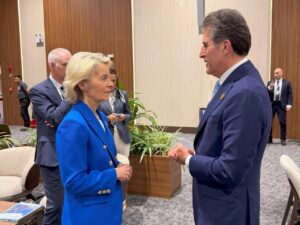
Barzani also met European Commission President Ursula von der Leyen. Their talks focused on relations between the European Union, Iraq and the Kurdistan Region, including opportunities for cooperation on environmental protection and climate change. Regional security and political developments were also discussed.In his meeting with Iranian President Masoud Pezeshkian, Barzani discussed relations between the Kurdistan Region, Iraq and Iran, alongside developments across the Middle East. The two leaders stressed the importance of coordination, mutual understanding and cooperation in supporting regional peace and stability.
The situation in Syria was another important topic. During his meeting with Syrian President Ahmad al-Sharaa, Barzani discussed relations between Syria, Iraq and the Kurdistan Region and opportun
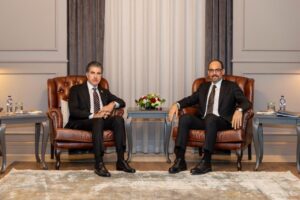
ities to strengthen cooperation. He stressed the importance of protecting the rights of Kurds in Syria and ensuring their rights are constitutionally guaranteed in the country’s future constitution. He also expressed hope that al-Sharaa would visit Baghdad and Erbil.
Barzani met Armenian Prime Minister Nikol Pashinyan to discuss strengthening relations and expanding cooperation between Armenia, Iraq and the Kurdistan Region. Regional developments and diplomatic solutions were also addressed.
His meetings with Turkish Foreign Minister Hakan Fidan, Defence Minister Yaşar Güler and National Intelligence Organization chief Ibrahim Kalın focused on relations between Ankara, Baghdad and Erbil, regional security and closer coordination. The discussions underscored Türkiye’s importance as a neighbouring country and key partner for the Kurdistan Region.
COP31 highlights growing importance of climate cooperation
Barzani’s visit coincided with COP31, hosted by Türkiye in Antalya from November 9 to 20, 2026. The conference brought together world leaders, government representatives, international organisations, climate experts and civil society groups to discuss global efforts to address climate change.
The Leaders’ Summit, held on November 11 and 12, provided an opportunity for heads of state and government to discuss climate commitments and international cooperation.
COP, or Conference of the Parties, is the main annual decision-making meeting under the United Nations Framework Convention on Climate Change. Countries use the gathering to assess progress, negotiate environmental policies and advance implementation of the 2015 Paris Agreement, which aims to limit global warming.
Key issues at COP31 included reducing greenhouse gas emissions, transitioning to cleaner energy, climate financing, protecting vulnerable communities and adapting to rising global temperatures.
For the Kurdistan Region, these discussions carry particular significance. The region faces serious environmental challenges, including rising temperatures, drought, water shortages, desertification and declining agricultural resources. These pressures threaten livelihoods, food security and economic development.
Participation in COP31 offered the Kurdistan Region an opportunity to highlight these challenges and explore international cooperation in renewable energy, sustainable agriculture, water management and environmental protection.
The conference also provided a platform for leaders to discuss political and security issues on its sidelines. Barzani used the opportunity to combine climate diplomacy with discussions addressing the region’s wider political challenges.
His Antalya visit underscored the growing connection between environmental concerns and regional stability. Water scarcity and climate pressures can deepen economic difficulties and intensify existing political tensions, particularly in countries already facing instability.
By participating in COP31 and meeting influential international and regional leaders, Barzani sought to advance environmental cooperation while strengthening the Kurdistan Region’s diplomatic relationships.
As climate change and political uncertainty continue to shape the Middle East, the Antalya visit highlighted the importance of dialogue, international cooperation and stability in addressing the region’s shared challenges.
By Jawad Qadir