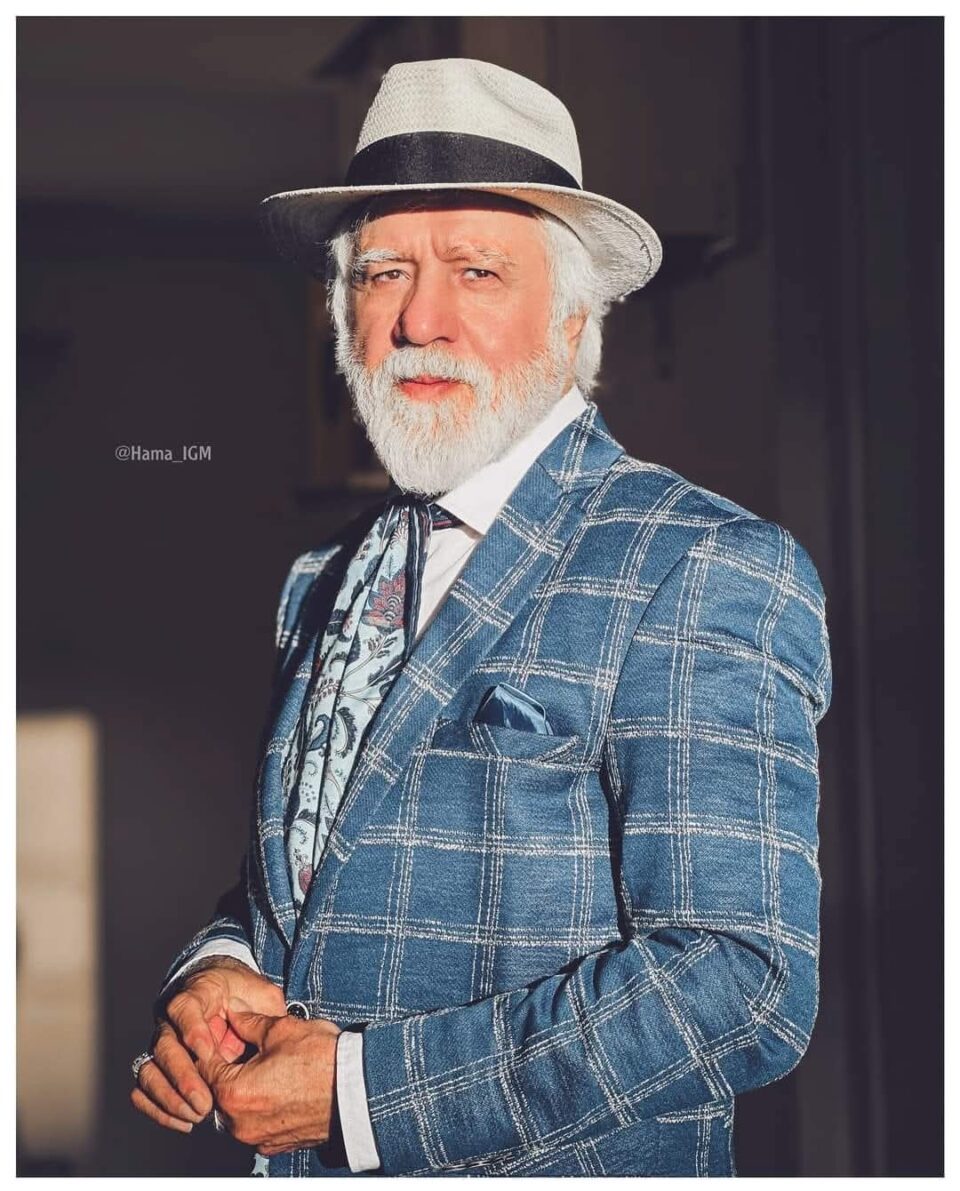
Renowned Kurdish artist, poet, and singer Dilshad Kwestani was born in 1957 in the Imam Qasim neighborhood of Kirkuk. His creative journey began with singing, later expanding to poetry and painting—fields in which he has left a remarkable mark. “The message of my paintings is generally about Kurdistan and my sweet homeland,” Kwestani said in a recent interview, underscoring the deep national sentiment that defines his work.
Kwestani’s career spans decades and continents. In 1996, he participated in a group exhibition in Greece, and by 2005, he was elected president of the French and African Cultural Organisation. His 2017 solo exhibition, A Journey Through the Soul, was held in Sulaymaniyah, further cementing his status as a leading Kurdish artist.
Now based in France, Kwestani owns his own gallery and has hosted over 70 solo exhibitions while participating in more than 30 group shows across 18 countries. His paintings adorn notable collections, including that of French President Emmanuel Macron, and royal figures such as Princess Rahma, daughter of King Hassan of Jordan.
Beyond painting, Kwestani has also pursued acting and music. He has appeared in numerous French and Kurdish films and received several awards, including the Second Prize for the film Aleph by celebrated Brazilian author Paulo Coelho. As a musician, he wrote, composed, and performed songs such as Jem Mehelem, arranged by Hedi Uttar and Diako Khalqi. He continues to explore his musical roots, preparing a new folkloric song titled Wey.
Kwestani described his art as a form of cultural ambassadorship for Kurdistan—a land he calls “a paradise unmatched by any other.” Despite its hardships, he says, Kurdistan remains “a shining jewel in my heart and soul.”
As a poet, Kwestani draws inspiration from the essence of Kurdish life—pain, joy, love, land, and freedom. “Poetry has always enriched my days with taste and fragrance,” he reflected, echoing Rasul Hamzatov’s belief that poetry is the lifeblood of the soul. Confident in the strength of Kurdish literature, Kwestani asserts that it stands equal to world literature in value and depth.
Kwestani also revealed that French philosopher Alain Vialoy has completed a forthcoming book about his life and work. The book explores his artistic philosophy, his techniques, and his mission to portray the pain and resilience of the Kurdish people through art. It also examines his emotional and psychological connection to his homeland.
Looking ahead, Kwestani continues to bridge East and West through art and performance. He is set to star in a new documentary film produced entirely by an Eastern team—further testament to his enduring role as a global representative of Kurdish culture and creativity.