
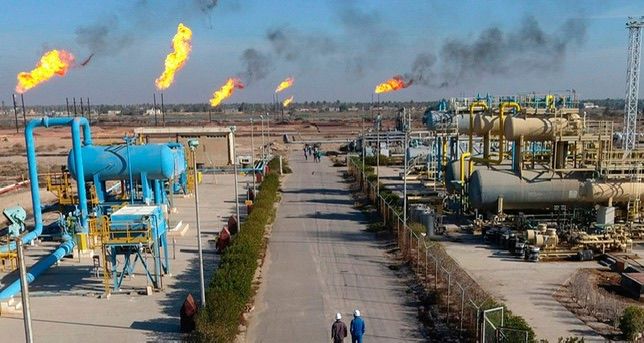
A kamikaze drone strike on Iraq’s Khor Mor gas field on November 26 has thrust the country’s energy security crisis into sharp focus, marking the eleventh attack on the strategically vital facility and triggering a near complete blackout across the Kurdistan Region for over three days. The assault on the storage tank, which required hours to extinguish, has exposed the fragility of Iraq’s critical infrastructure and raised urgent questions about the government’s ability to protect assets essential to national stability.
Strategic Facility Under Persistent Threat
Located in Sulaimaniyeh province near the border between autonomous Kurdistan Region and federally controlled territory, the Khor Mor gas field supplies over 80 percent of the Kurdistan Region’s electricity while contributing significantly to Iraq’s national grid. Operated by the Pearl Consortium—led by UAE-based Dana Gas and Crescent Petroleum—the facility had recently undergone capacity expansion, making the timing of the attack particularly damaging.
Iraqi authorities confirmed that two drones were launched from areas east of Tuz Khurmatu district, with one successfully striking a central condensate storage tank. Military expert Abdulkhaliq Talaat, a former Kurdistan Regional Government representative to Iraq’s Joint Operations Command, identified the launch site more precisely as territory between Amerli and Sulayman Beg, approximately 42-50 kilometers southwest of the field. Critically, Talaat emphasized this zone remains fully under control of Iraqi forces, specifically Turkmen units of the Popular Mobilization Forces and the Iraqi Army, stating it is “not in a security vacuum.”
The sophisticated nature of the operation suggests careful planning by an organized military force. Security alerts had been issued days earlier due to overnight drone threats between November 23 and 24, indicating a pattern of coordinated intimidation. No group has claimed responsibility, though Kurdish officials have characterized it as terrorism and historically attributed such attacks to backed Iraqi militias operating beyond Baghdad’s effective control.
Investigation and International Response
Following directives from caretaker Prime Minister Mohammed Shia Al-Sudani, a high-level investigative committee was established on November 28, chaired by Interior Minister Abdul-Amir Shammari. The committee, comprising senior officials including the National Intelligence Service chief, Kurdish interior minister, and Joint Operations Command representatives, has secured technical evidence from drone wreckage to extract data from memory units.
Military spokesperson Sabah al-Nu’man confirmed that investigators identified individuals involved, describing them as outlaws with existing arrest warrants. However, the government’s notable refusal to publicly name the suspected factions has raised questions about political sensitivities, particularly given the attack’s timing following Iraq’s November 11 parliamentary elections where militias wielded considerable influence.
The international response proved swift and unified. Newly appointed US Envoy to Iraq Mark Savaya condemned the strike, declaring that “armed groups operating illegally and driven by hostile foreign agendas” were responsible. The US Consulate in Erbil characterized the assault as part of efforts by malign actors to undermine Iraqi stability and target American investments in the region. Notably, both Turkey’s Foreign Ministry and Iran’s Consulate in Erbil issued condemnations, alongside Iraqi political factions including the Shiite Coordination Framework and the UN Mission in Iraq.
The Iraqi government has implemented comprehensive protective measures in coordination with the Kurdistan Regional Government, including redeploying security forces within the East Saladin Operations sector, replacing local commanders, and strengthening intelligence coordination between federal and regional authorities. The investigation committee has called for equipping the facility with air defense systems and implementing strict drone regulations near critical infrastructure.
By Jawad Qadir