Nearly five years have passed since the Sinjar Agreement was signed between Baghdad and Erbil, yet none of its promises have been fulfilled. The failure to implement the agreement has left the Yazidi community displaced, the region unstable, and hopes for peace still out of reach.
The Kurdistan Regional Government continues to press for the agreement’s implementation, but the Iraqi government has yet to take responsibility. With the 11th anniversary of the Yazidi genocide approaching, displaced residents of Sinjar voice frustration and uncertainty over their future. “To this day, we know nothing of our own fate,” many say. “We demand that the case of Sinjar be resolved.”
Statistics from the Kurdistan Regional Government’s Joint Crisis Coordination Centre reveal a grim reality: of nearly 840,000 displaced people and refugees from the area, only 2,380 have been able to return home recently. The cost of supporting these displaced families is steep, with an estimated annual need of $803 million, translating to about $2.60 per person per day.
The 2020 agreement aimed to stabilize Sinjar through joint administration covering security, governance, and reconstruction. However, multiple military forces still operate in the region, complicating security. The agreement’s nine-point annex, designed to monitor progress, remains unfulfilled.
Mahma Khalil, an Iraqi parliamentarian representing Sinjar, told Kurdish Globe, “Those who reject the Sinjar agreement want the region to remain unstable and the Yazidis displaced. It is crucial that the agreement be implemented swiftly to restore peace and security.”
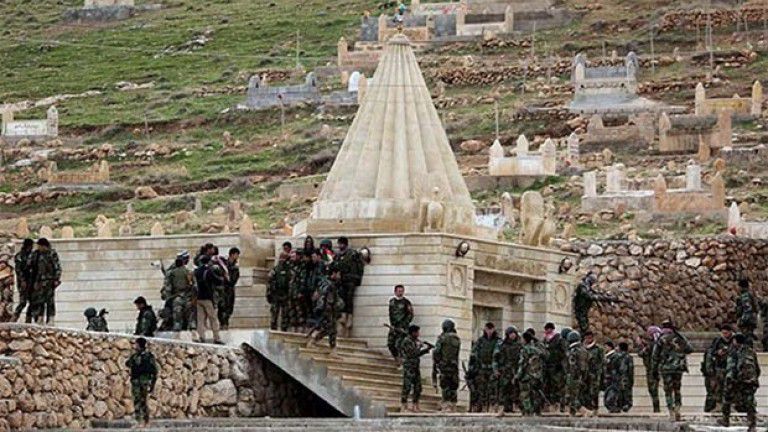
Following Sinjar’s liberation by the Peshmerga under President Barzani’s leadership, many Yazidis returned with hope. But large-scale displacement resumed after October 16, 2017, as security deteriorated.
Khalil urged the Iraqi government to work closely with the Kurdistan Regional Government to enforce the agreement and remove unauthorized armed groups. “None of the five key points in the agreement have been put into action. Armed forces remain in Sinjar, and sleeper cells continue to threaten the area. Until the political conflicts end and stability is restored, people will be unable to return to their homes.”
The ongoing crisis in Sinjar stands as a stark reminder of the challenges facing displaced Yazidis and the urgent need for political will and cooperation to rebuild their community and secure lasting peace.