
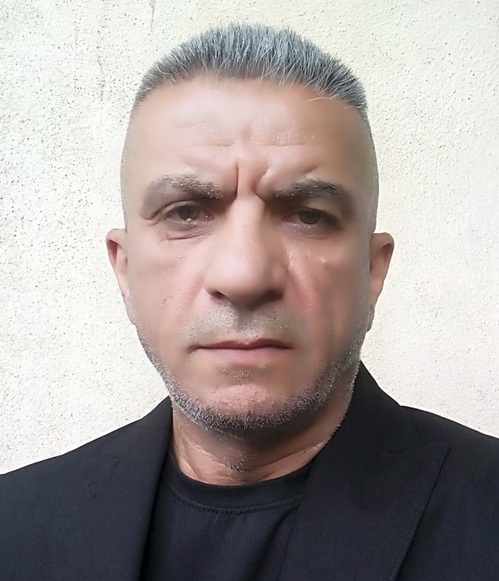
By Saadula Aqrawi
I believe that the relationship between the French and Kurdish people represents a unique and evolving strategic friendship that spans historical, political, and cultural dimensions. Rooted in a shared commitment to values such as secularism, resistance to extremism, and the right to self-determination, this alliance has become increasingly important in the context of Middle Eastern geopolitics and global security.
Actually France’s engagement with the Kurdish people can be traced back to the early 20th century, following the collapse of the Ottoman Empire. During the period of post-World War I restructuring, France played a role in shaping the modern Middle East through the Sykes-Picot Agreement and the League of Nations mandates. Though the Kurds were ultimately excluded from statehood in the Treaty of Sevres, the French remained engaged with Kurdish political and cultural movements.
In the 1980s and 1990s, as Kurdish populations in Iraq, Turkey, and Iran faced systematic repression, France became a safe haven for Kurdish intellectuals, exiles, and political activists. Paris emerged as a hub for Kurdish diaspora communities and organizations advocating for Kurdish rights, which laid the groundwork for long-term mutual trust.
I believe that the most visible aspect of the French-Kurdish strategic friendship has been military cooperation, particularly in the context of the fight against the Islamic State (ISIS). Beyond military and security cooperation, France has cultivated deep cultural and diplomatic ties with Kurdish communities. The Kurdish Institute of Paris, established in 1983, is a cornerstone of this relationship. It serves as a center for Kurdish studies, language preservation, and political dialogue. The Institute has helped strengthen cultural exchange and promote awareness of Kurdish history, literature, and aspirations within French society.
And of course the French diplomats have consistently maintained open lines of communication with both the Kurdish Regional Government (KRG). France’s friendship with the Kurdish people is more than a tactical alliance; it reflects a broader strategy of supporting minority rights, secular governance, and regional stability. For the Kurds, French support represents international recognition and validation of their contributions to global security and democratic aspirations.
At the same time, this relationship allows France to assert an independent Middle East policy, distinct from both American and regional power blocs. By supporting Kurdish entities, France enhances its influence in a volatile region while staying true to its republican values.
However, the resilience of the Kurdish people and the consistency of French engagement suggest that this strategic friendship will endure. Whether through cultural diplomacy, continued humanitarian support, or renewed security cooperation, the French-Kurdish alliance remains a symbol of principled internationalism in a fragmented world.
Yes, the strategic friendship between the French and Kurdish people is a story of mutual respect, shared struggle, and visionary cooperation. In a region where alliances are often transactional, the Franco-Kurdish bond stands out as a relationship built on values as much as interests one that has not only withstood the tests of war and politics but has also contributed meaningfully to peace, stability, and the pursuit of justice.