
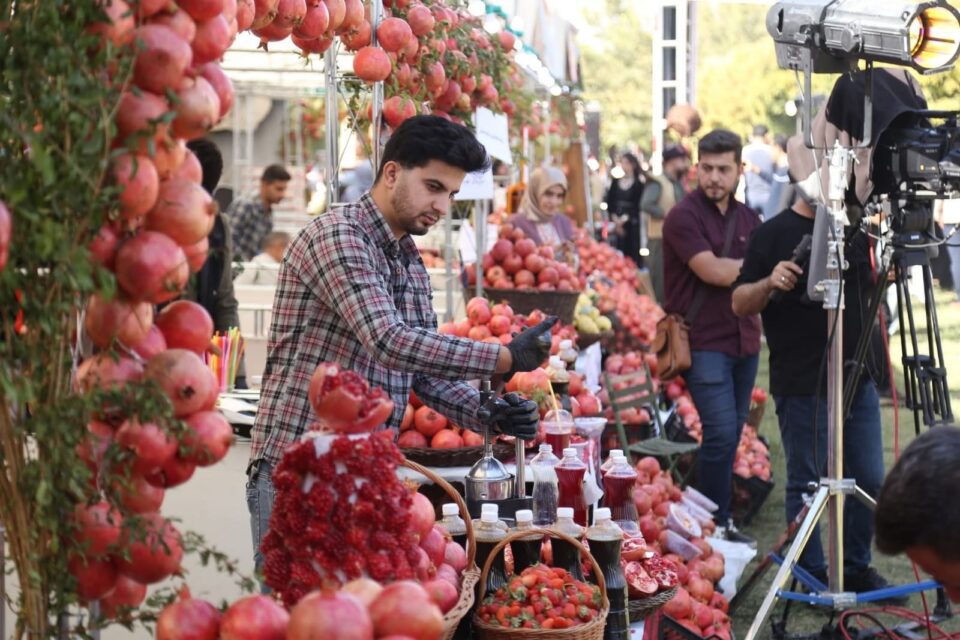
Pomegranates have long been celebrated as an extraordinary agricultural treasure, prized not only for their rich taste but also for their profound nutritional and medicinal value. Abundantly endowed with vitamin C, polyphenols, and potent antioxidants, this ancient fruit plays a pivotal role in strengthening the human immune system, optimizing cardiovascular health and blood circulation, supporting digestive functions, and assisting in healthy metabolic regulation. Beyond its dietary attributes, the pomegranate holds deep historical, geographic, and cultural significance for the Kurdistan Region, serving as an enduring hallmark of local identity and agricultural excellence.
A Legacy Rooted in Soil and Resilience
Geographically and culturally, the pomegranate and Halabja Governorate are inextricably intertwined. Throughout centuries of agrarian tradition, this distinctive fruit has shaped the socio-economic life of Halabja, anchoring generations of families to their ancestral lands and orchards. Even during the darkest chapters of modern Kurdish history—most notably following the genocidal chemical bombardment unleashed against the city on March 16, 1988—Halabja’s pomegranate groves stood as living emblems of regeneration, authenticity, and steadfast endurance. The survival and post-war resurgence of these fertile orchards mirrored the resilience of the local community, transforming the crimson fruit into an inspiring symbol of life reclaiming victory over tragedy.
In terms of horticultural diversity, Halabja is home to more than ten distinct pomegranate cultivars. Among them are celebrated native varieties such as Sawa, Sura Hanar, La Rasha, Malasi, Shirin Karali, Kawa Hanar, and Ababayla. Rising above all others is the legendary Salakhani pomegranate, universally renowned for its ruby luster, balanced sweetness, and juiciness. The Salakhani variety represents the oldest and most prestigious strain cultivated in the region, accounting for approximately 80% of Halabja’s aggregate fruit yield and establishing the gold standard in markets across the Kurdistan Region and Iraq.
An Agri-Tourism Bridge to Economic Vitality
To celebrate this agricultural bounty and establish reliable marketing channels for local producers, the Halabja Pomegranate and Autumn Festival is convened annually as a transformative socio-economic and cultural gathering. Held across Halabja city during late October and early November, the event is organized through a coordinated partnership between the Halabja General Directorates of Agriculture and Tourism, the Halabja Organizations Network, civil society groups, and media organizations.
The three-day festival serves as an open-air marketplace connecting more than 250 orchardists and farmers directly with thousands of consumers. Hundreds of dedicated stalls showcase raw pomegranates, cold-pressed juices, pure molasses, and natural derivatives, alongside mountain honey, artisan dairy goods, authentic Kurdish confectioneries, and bespoke handmade crafts produced by rural women. By cutting out intermediaries, the festival secures fair profit margins for primary cultivators while providing visitors with fresh, organic goods at accessible prices. Consequently, the festival bridges agriculture with eco-tourism, stimulating rural enterprise and generating vital seasonal employment.
Economic Footprint and Sectoral Performance
The 2025 edition of the festival demonstrated monumental economic success. Official metrics published by the General Directorates of Agriculture and Tourism revealed that total vendor installations expanded to 700 booths, generating cumulative commercial revenues exceeding 1.7 billion Iraqi dinars (IQD). A detailed analysis of revenue distribution illustrates a multi-tiered economic impact:
Food and Confectionery Sector: Traditional Kurdish delicacies, freshly cooked meals, and artisanal sweets accounted for the largest financial share, generating 800 million IQD (47.06% of total revenue). This substantial figure highlights the rising prominence of culinary tourism and visitor appetite for authentic cultural hospitality.
Agricultural Produce: Sales of fresh pomegranates, organic preserves, and fruit extracts generated 700 million IQD (41.18% of total revenue), injecting critical liquidity directly into farming households and orchard maintenance.
Handicrafts and Rural Crafts: Local textiles, traditional pottery, and woven items yielded 200 million IQD (11.76% of total sales), providing direct economic empowerment to rural women artisans and household micro-enterprises.
Record-Breaking Tourism Expansion
From a tourism standpoint, 2025 proved to be an unprecedented watershed. The festival attracted a record-shattering 419,000 tourists and visitors, representing a remarkable 47% annual surge in attendance. This impressive influx cemented the event’s evolution from a municipal exhibition into a premier regional tourism brand.
Logistical data recorded during the event highlighted immense mobility:
Over 81,000 private vehicles entered the governorate.
804 regional passenger buses transported visitor contingents.
4,000 motorcycles navigated festival environs.
54 specialized, organized travel expeditions conducted formal tours.
This intensive foot traffic generated widespread indirect economic benefits, invigorating Halabja’s hospitality, hospitality accommodation, retail stores, dining establishments, and transport sectors.
Strategic Recommendations for Future Sustainability
To sustain this growth trajectory and institutionalize the event as a premier driver of regional autumn development, the Kurdistan Regional Government and municipal authorities should adopt several strategic interventions:
Nationwide Marketing Campaign: Launch targeted promotional and digital media campaigns across Iraqi governorates and international diaspora networks to elevate the festival’s profile.
Event Duration Extension: Expand the festival timeline from three to five or seven consecutive days to distribute footfall evenly, mitigate urban congestion, and encourage extended hotel stays.
Advanced Demographic Analytics: Implement automated digital tracking systems, mobile network spatial analytics, and survey kiosks to gather comprehensive demographic profiles regarding visitor origins and spending behaviors.
Scientific Traffic and Logistics Master Plan: Formulate comprehensive urban circulation plans featuring designated external park-and-ride facilities, continuous zero-emission shuttle transit, prioritized pedestrian and emergency corridors, and strategically positioned field medical and traffic management personnel.
Through targeted infrastructure investments and structured governance, the Halabja Pomegranate and Autumn Festival can continue to flourish as an enduring beacon of cultural pride, rural resilience, and sustainable economic modernization.
Gharib Ali Salim