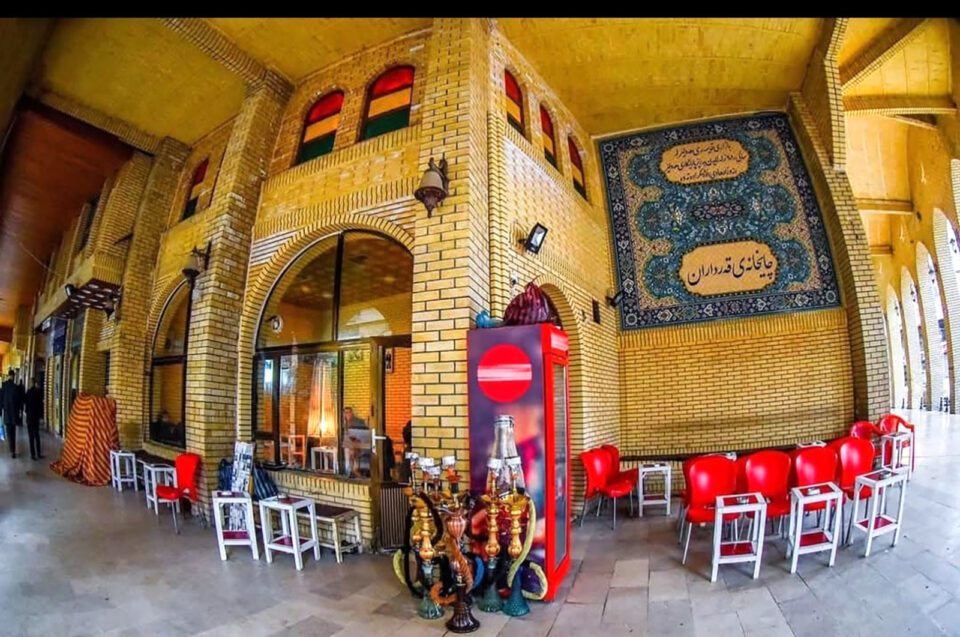
In the heart of Erbil’s old bazaar, the Qardarān Tea House stands as a cherished symbol of the city’s social and cultural life. This small but beautiful tea house was established in 1960 by Haji Othman Mohammed Mustafa, and over time became one of Erbil’s most beloved gathering places. In 2006, recognizing its historical value, the former governor of Erbil, Nawzad Hadi, oversaw its renovation to preserve its heritage and restore its character.
From its earliest days, the Qardarān Tea House served as a meeting spot for craftsmen, teachers, and civil servants, particularly those from the nearby bazaar. Blacksmiths, carpenters, goldsmiths, grocers, and bricklayers gathered there, as did civil servants who had been dismissed from their jobs for political reasons. After government offices closed in the afternoon, teachers and employees would come to the tea house to socialize. It became so popular that chairs were often placed on the sidewalks to accommodate the crowds, and many visitors stood while drinking tea.
Local writer Jamal Nureddin described the tea house as “one of the most beautiful and nostalgic sights in Erbil. When you walk through the bazaar or pass by the Peace Bridge in the evening, you see this historic tea house filled with life. Many of today’s elderly men once sat here in their youth, enjoying its delicious tea.”
The name “Qardarān,” which means “Debtors” in Kurdish, also has an interesting story. According to the tea house owner, during the early 1960s the government provided land advances to citizens, especially civil servants and teachers, so they could build homes. Many of them came to Qardarān to hire builders, carpenters, and blacksmiths on credit until they received their government advances. Because of these unpaid transactions, the tea house became known as the “Debtors’ Tea House.”
Today, after more than six decades, Qardarān Tea House remains a vibrant part of Erbil’s daily life. From early morning until late at night, it welcomes locals and visitors with its warm hospitality and traditional tea. It continues to attract teachers, craftsmen, retirees, and travelers, keeping alive the spirit of community that has defined it since its founding.
Among its many regulars were well-known figures such as Wasta Azaddin the builder, Geylan and Bakr Malek the carpenters, Kamal the bricklayer, Adel Sheikhil, Teacher Abdulqadir, and Teacher Iskandar Othman, along with many others remembered fondly by the people of Erbil.
For more than sixty years, the Qardarān Tea House has been more than just a place to drink tea; it is a living landmark, carrying the stories and friendships of generations and preserving the true flavor of Erbil’s cultural heritage.