
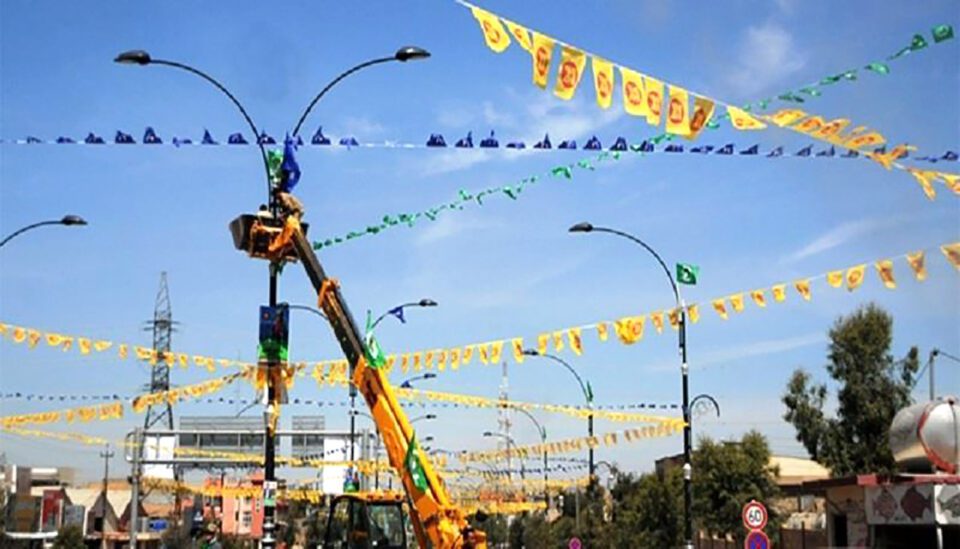
Amid U.S.–Iran tensions, Kurdistan’s election campaign remains calm and orderly, marked by restraint and stability
The Independent High Electoral Commission of Iraq has set November 11, 2025, as the date for the Iraqi parliamentary elections. The entire country will be divided into 18 electoral districts, each corresponding to one province. According to Iraq’s electoral law, one seat is allocated for every 100,000 people. At that time, Iraq’s population was around 32 million, and nine additional seats were reserved for minorities (Yazidis, Christians, Fayli Kurds, and Mandaeans).
The total number of parliamentary seats is 329, out of which around 65–70 seats belong to the Kurdistan Region, including the Kurdistani areas outside the KRG’s formal administration. The four Kurdistan Region provinces together hold 46 seats, though this is not evenly distributed — if calculated strictly by population and voter numbers, the Region should have received even more seats.
The Independent High Electoral Commission also set October 3, 2025, as the start date for party campaigning.
At the outset, President Nechirvan Barzani called on all parties to respect the Commission’s regulations, emphasizing that elections in the Kurdistan Region should be conducted in a civilized and peaceful manner, avoiding tensions between political forces. This appeal drew wide attention from journalists, experts, and citizens, especially since, compared to other Iraqi provinces, the campaign atmosphere in Erbil and other cities of the Region appeared more stable and civic.
Nevertheless, several preliminary violations and rivalries among political forces have been reported since the beginning, which analysts describe as worrying trends.
There are several reasons why the Kurdistan Region’s campaign is expected to remain calm and contained:
1. The intense competition that exists in federal-controlled provinces over who will gain the most parliamentary seats — as these directly influence the selection of Iraq’s Prime Minister and post-election— does not exist in Kurdistan.
2. The Kurdistan parliamentary election was conducted last year, and people are not as enthusiastic about another election so soon alliances, especially since the KRG’s authority will not be directly affected. This vote mainly concerns Kurdish representation in Baghdad.
3. There is regional uncertainty over potential U.S.–Iran escalation or new attacks on Popular Mobilization Forces (PMF). Experts believe that if the U.S. strikes the PMF, Iraq’s entire situation could destabilize, leading to possible postponement of the election.
4. The election campaign period is only one month, so political parties prefer not to spend all their energy early on, waiting instead to make their strongest push closer to election day.
5. The municipalities and interior ministry of the KRG have imposed strict rules preventing the misuse of public property for campaign purposes.
Voting will be suspended 24 hours before polling begins to mark the “electoral silence” period.
The election will take place in two phases:
• Special voting: members of the security forces, Asayish, and Peshmerga will vote two days earlier to allow them to secure polling stations during the general vote.
• General voting: will be held on November 11, 2025. Every citizen aged 18 and above who has completed biometric registration and collected their voting card is eligible to vote.
Polling stations will open from 7:00 a.m. to 6:00 p.m., during which citizens can vote for political parties, coalitions, or independent candidates.
Ferman Omar Saeed