
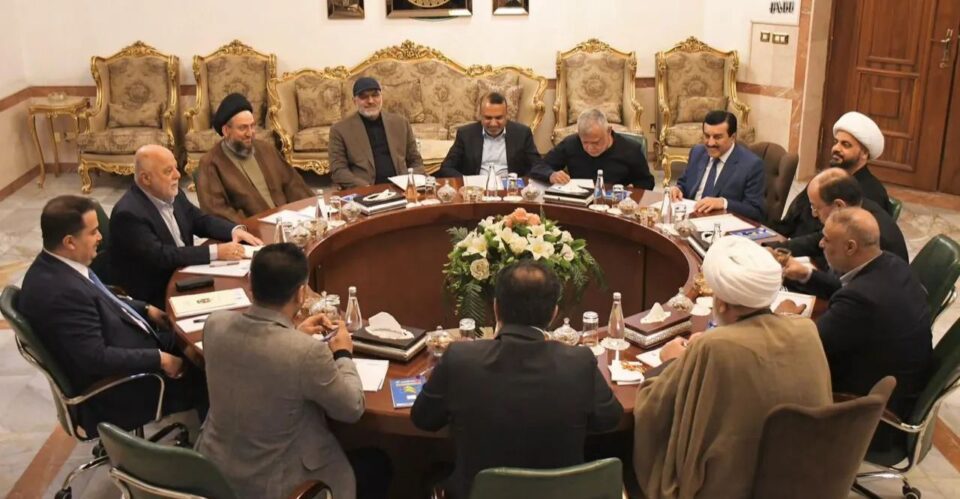
Three months after elections, Baghdad’s political elite remain deadlocked
A Fractured Parliament, a Familiar Impasse
Iraq held its sixth parliamentary elections since 2003 on November 11, 2025, and for a brief moment the results offered a glimmer of hope. Voter turnout reached 56 percent, compared to roughly 41 percent in 2021 — a meaningful signal that Iraqis had not entirely abandoned faith in the ballot box. Yet by February 2026, that optimism has curdled into a familiar frustration: the process of forming Iraq’s next government is at a standstill.
Prime Minister Mohammed Shia al-Sudani, who wants a second term, won the most seats with 46 out of 329. But in Iraq’s consociational system, winning the most seats is only the opening move. The largest bloc is not necessarily the party that won the most seats in the election, but rather the largest coalition, and the process of government formation involves protracted negotiations and bargaining between parties. Since 2005, that process has averaged around 224 days — nearly eight months of backroom dealing before a cabinet takes shape.
The seat breakdown tells the story of a deeply segmented polity. Out of 329 seats, Shia parties secured 187, Sunni parties 77, Kurdish parties 56, and minority groups the remaining 9. No single bloc commands anything close to a majority, making coalition-building an exercise in high-stakes horse trading.
The Shia Struggle: Iran, America, and the Maliki Problem
At the center of the crisis sits the Coordination Framework (CF), the coalition of Iran-aligned Shia parties that dominated the last government. The CF declared itself the largest bloc in parliament following the November 11 elections, and thus moved to form the next government. To that end, the Framework selected former Prime Minister Nouri al-Maliki as its candidate on January 24.
That decision triggered an immediate international reaction. US President Donald Trump rejected Maliki’s nomination on January 27. Washington’s leverage is substantial: the United States can use access to dollars, the threat of sanctions on banks and businesses, and the threat of air strikes on militias to influence the negotiations. The Trump administration has made clear its preference for Sudani to remain, with former US Special Envoy Mark Savaya publicly pressing for militia disarmament and an end to regional interference.
With the CF housing multiple US-designated terrorist organizations among its ranks, the impasse between Washington and Tehran is playing out directly on Baghdad’s political stage. One reported solution is to extend the current government under a caretaker status for one year — a temporary patch that would preserve the CF’s institutional grip while buying time for a lasting deal.
Sunni Leverage and Kurdish Kingmakers
While Shia parties possess the parliamentary numbers, Iraq’s government formation process has never been an exclusively Shia affair. Sunnis can leverage the parliamentary speakership, and Kurds benefit from flexible political positioning — making both communities indispensable to any viable coalition.
Kurdish participation was notably strong in the November vote. Voters in the Kurdistan Region recorded the highest participation in the country, exceeding 70 percent in Erbil and Duhok. The Kurdistan Democratic Party (KDP) had its best national performance ever, securing over one million votes nationwide, the highest total for any single party. The Patriotic Union of Kurdistan (PUK) performed solidly in its strongholds of Sulaimani and Kirkuk. Together, the two main Kurdish parties secured 56 seats, giving them significant leverage in coalition talks.
Crucially, the position of president of Iraq has historically been given to a Kurd, and the vote must achieve a two-thirds majority. That requirement gives Kurdish parties a structural veto — no government can be constitutionally seated without Kurdish buy-in on the presidency. Kurdish leaders have historically used this leverage to negotiate budget transfers, oil revenue arrangements, and the status of disputed territories like Kirkuk. First-term premiers tend to prioritize deals, including Baghdad-Erbil arrangements such as budget-oil agreements — something Kurdish leaders will be watching closely in the weeks ahead.
What Comes Next
The constitutional clock is running, but deadlines in Iraq have always been more aspirational than binding. At every stage, negotiations are not done in the parliament, but in the backrooms of power. The real decision-makers, the heads of the ruling blocs, treat electoral results as bargaining chips in negotiations over ministerial positions and almost 1,000 other senior government posts.
The international community is urging speed. UN Secretary-General António Guterres called for a swift formation of Iraq’s next government, and Washington has signaled it will not wait indefinitely. Whether Iraq’s elite can break the current deadlock — or simply extend it under the guise of caretaker governance — may ultimately determine not just who governs Baghdad, but how closely aligned the next Iraq aligns itself for years to come.
By Jawad Qadir