
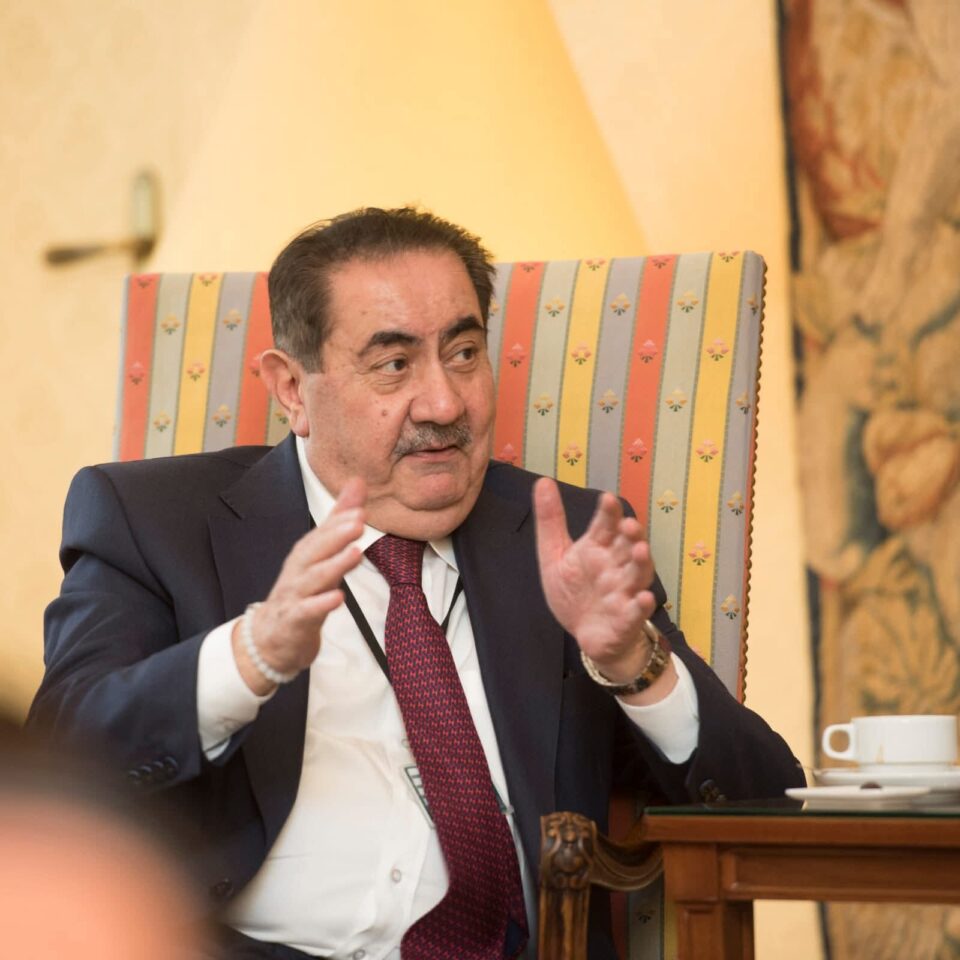
Hoshyar Zebari warns of regional escalation and September flashpoint
Hoshyar Zebari, member of the Kurdistan Democratic Party’s Political Bureau Executive Committee and former Iraqi Foreign Minister, in an interview with Iraq’s Sumeria TV, spoke about several current issues related to Iraq’s situation and the Middle East’s turmoil.
Drone attacks on the Kurdistan Region
Regarding the recent drone attacks on Kurdistan Region’s oil fields, Zebari stated that investigations are ongoing, and the attacks have launched from areas under PMF control, targeting oil fields and the airport. He said the aim was to hit economic infrastructure and oil sites, calling these hostile acts against the Kurdistan Region. He explained that drones launched from inside Iraq targeted multiple areas, including Sulaymaniyah province, Kirkuk airport, Erbil airport, and oil facilities. Kurdistan has its own security and intelligence apparatus and, in coordination with the Iraqi government and coalition forces including the U.S., they investigated the incidents and concluded that the drones and attacks came from PMF-controlled areas such as the Nineveh Plains, Rashad area of Kirkuk, and other locations.
He noted that these groups have bases near Iraqi army bases in Baghdad’s Green Zone. According to him, those carrying out the attacks are organized groups deliberately targeting Kurdistan to intimidate oil production companies and disrupt their operations. This is not only an attack on Kurdistan’s interests, but also on U.S. interests, since the oil companies in Kurdistan are closely tied to U.S. decision-making. Such attacks will have serious repercussions; they may not be immediate but will certainly be monitored closely.
Zebari emphasized that joint investigations between Kurdistan Region and the federal government are ongoing, and they have not officially accused any party until results are finalized. However, he revealed that in the past month alone, these groups carried out 14 drone attacks on Kurdistan and even tried to change the types of drones used to create confusion in investigations. “We have all the information, and we await the results of the Iraqi government’s investigations,” he said.
On the drones, Zebari stated: “We know, even by name, those responsible. We are waiting for the government to reveal them publicly.” He added that they have been in contact with Prime Minister Mohammed Shia al-Sudani, his office, Iraq’s general command, the Interior Ministry, and the Defense Ministry, but so far see no seriousness in the investigations. “They form committees and teams, but nothing comes out of them,” he remarked.
High-level coordination with allies
Speaking about coordination with allies to confront the threats from Iraqi armed groups, Zebari said there is high-level coordination and mutual exchange of intelligence on threats affecting both Kurdistan and its allies. He noted that U.S. forces in Erbil airport were targeted, but the drones were intercepted before reaching their targets. “These groups are playing with fire in a volatile, sensitive environment already engulfed in flames,” he warned, adding that confrontations are not over and signs of escalation are present at any moment.
U.S. position on the PMF Law
On U.S. warnings about the possible passage of the PMF Law and the risks it poses to Iraq, Zebari said the message from Marco Rubio, the U.S. Secretary of State, to Mohammed Shia al-Sudani, the Prime Minister of Iraq, was in written form so that no clarification could be provided, and it included a reference to this matter. It stated that the U.S. opposes the passage of the PMF Law in parliament. While the Iraqi federal government has tried to convince Rubio that, with elections approaching, they cannot implement such a decision due to internal conditions, this is merely delaying the issue.
Zebari warned that if the law passes, Washington’s tone toward Baghdad will shift to threats and sanctions, ending security, military, and financial cooperation, and publicly naming individuals and groups. “The PMF Law will complicate the situation further,” he said, noting that even some Shiite factions oppose it. He cautioned that the U.S. might adopt measures similar to those against Lebanon, where Lebanese authorities were told that dollars would be cut off and property transfers blocked if they did not disarm Hezbollah. If applied to Iraq, these measures could be even harsher, as current U.S.–Iraqi relations are weak.
Iraq’s elections will be the toughest
Regarding Iraq’s next elections, Zebari said: “We don’t want any side to be forced into forming a government. The upcoming elections will be the toughest for everyone.” The absence of the Sadrist movement will alter many internal dynamics. He confirmed that Muqtada al-Sadr is very dissatisfied with the situation and stressed that Sadr has always been an ally of the Kurds. Zebari also said: “We will not give Sudani a blank check for the next phase; we have changed many prime ministers because they rejected our policies.”
Situation to explode in September
On the region’s instability and Middle East tensions, Zebari warned that in September the situation will escalate. “All developments in the region and internationally point to an explosion in September,” he said, adding that such events could impact the elections.
He noted: “As the Kurdistan Democratic Party, we are preparing for elections to be held on time regardless of the situation, but we do not know what will happen until then. Things may spiral out of control. Baghdad has recently been considering forming a salvation government. I believe the elections will be tough for all, given the volatile situation and doubts surrounding the process. The absence of the Sadrists will change most internal political equations.” Zebari concluded: “We have ongoing relations and dialogue with the Sadrists, and we remain committed to the agreements the government was formed on.”