
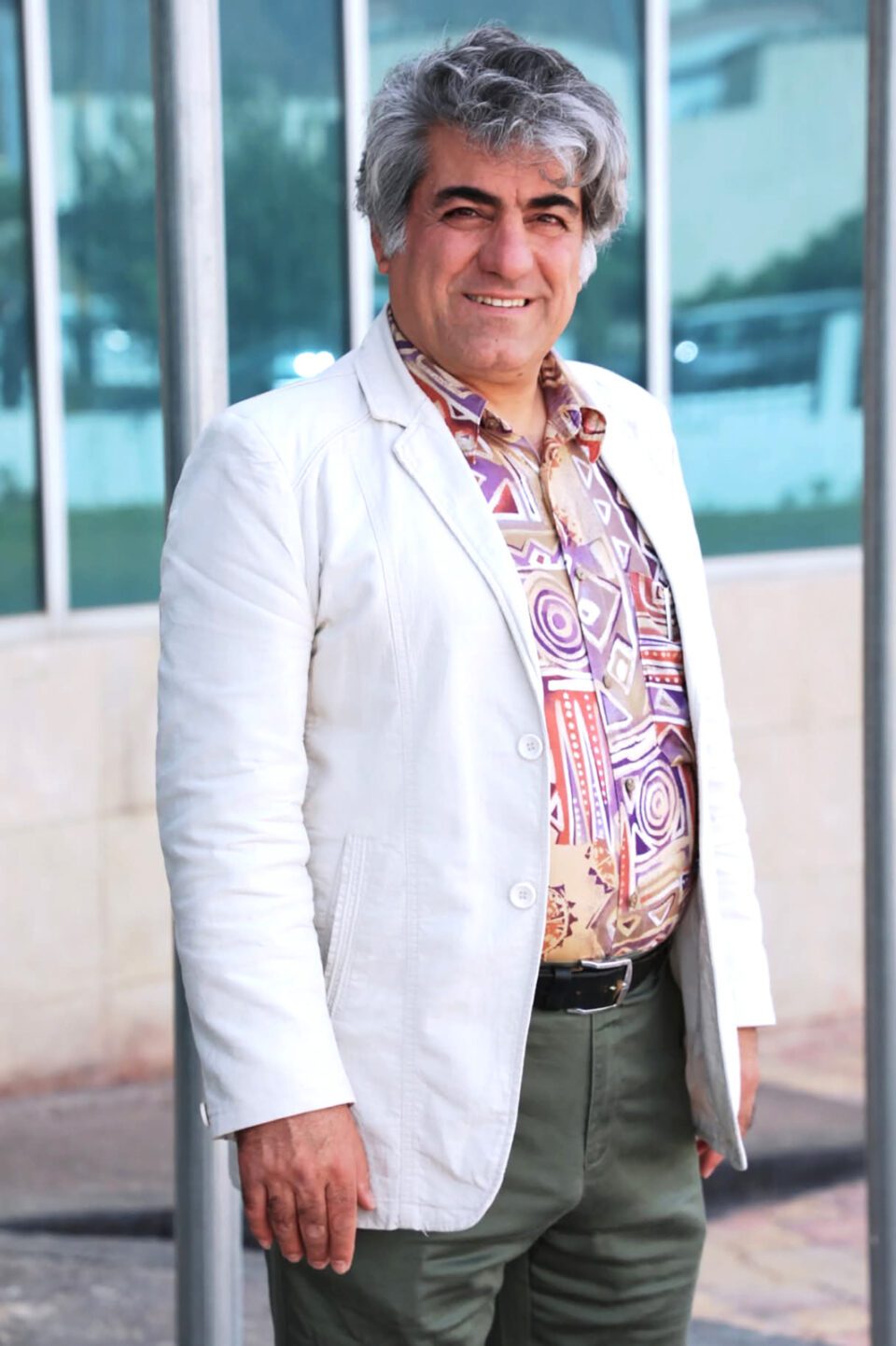
Writer and artist Khalil Ali, born in Ranya, is a distinguished figure in both art and education. With expertise in art education, he began his teaching career in 1994 and has since participated in 57 joint art exhibitions across Turkey, America, Morocco, Tunisia, Jordan, Lebanon, France, Iran, and Iraq, including several cities such as Sulaymaniyah, Erbil, Ranya, Kifri, Kalar, Darbandikhan, and Khanaqin. In addition to his group work, he has held three solo exhibitions.
Ali’s literary achievements are equally notable. He has 27 published books and 13 others ready for publication, many of which are recognized and used in academic and educational institutions. His works focus primarily on art education and the documentation of Ranya’s cultural heritage.
The true writer
Speaking about the essence of genuine writing, Khalil Ali defines the true writer as “someone who is honest with himself first, and then with his surroundings, because honesty is the true measure for evaluating thoughts and ideas—it builds confidence between the writer and the reader.”
Ali’s published works span 7,200 pages and are divided into two main categories. The first includes programmatic writings on art education, reflecting his 29 years of teaching experience across all levels—from kindergarten to university. Thirteen of these books have been officially adopted by the Ministry of Education as part of the national curriculum.
Archiving Ranya
The second category of his books focuses on archiving the history and culture of Ranya. So far, he has published five volumes totaling 3,700 pages, with ten more manuscripts awaiting publication. “I love all my books,” he says, “because each one represents nights of hard work and deep passion.”
The importance of language in art
Ali emphasizes the vital connection between language, reading, and creativity. “Extensive reading creates extensive experience,” he notes. “When a person isolates themselves from reading, they leave the world of creation and awareness and cannot be part of the future.”
He believes that a writer’s honesty forms the foundation of trust with readers, helping shape an enlightened future. According to him, language knowledge strengthens awareness: “The more languages a writer knows, the better they understand the world.” Ali views linguistic diversity as a source of joy and discovery, while maintaining that each writer develops a unique style. His own philosophy centers on serving education and enriching the Kurdish library, contributing ideas and subjects that, as he puts it, “no one has written about before.”
Visual arts
In addition to his literary contributions, visual art remains at the heart of Ali’s creative identity. “My paintings are reflections of my inner self,” he explains. “Each one tells a story and carries special meaning for me.”
He believes there is a strong connection between visual arts and writing, especially in Kurdish culture. “When I saw that the Kurdish library lacked artistic works, I felt responsible to fill that gap,” he says. His first major initiative was developing the Art Education curriculum and the Teacher’s Guide for the Ministry of Education.
“Writing is everything to me now,” Ali concludes, “but without visual arts, the writer I am today would not have existed.” His lifelong dedication to art, writing, and education continues to inspire new generations of Kurdish artists and scholars.