

By Nadir Rusti
Kurdish cities host various types of museums, but the Khinis archaeological site, nestled in the heart of nature, has become a massive open-air museum housing numerous historical treasures. Khinis is one of the most important and fascinating Assyrian historical sites in the Kurdistan Region. It is regarded not only as an artistic monument but also as a summer resort and a grand water engineering project.
The Location of Khinis
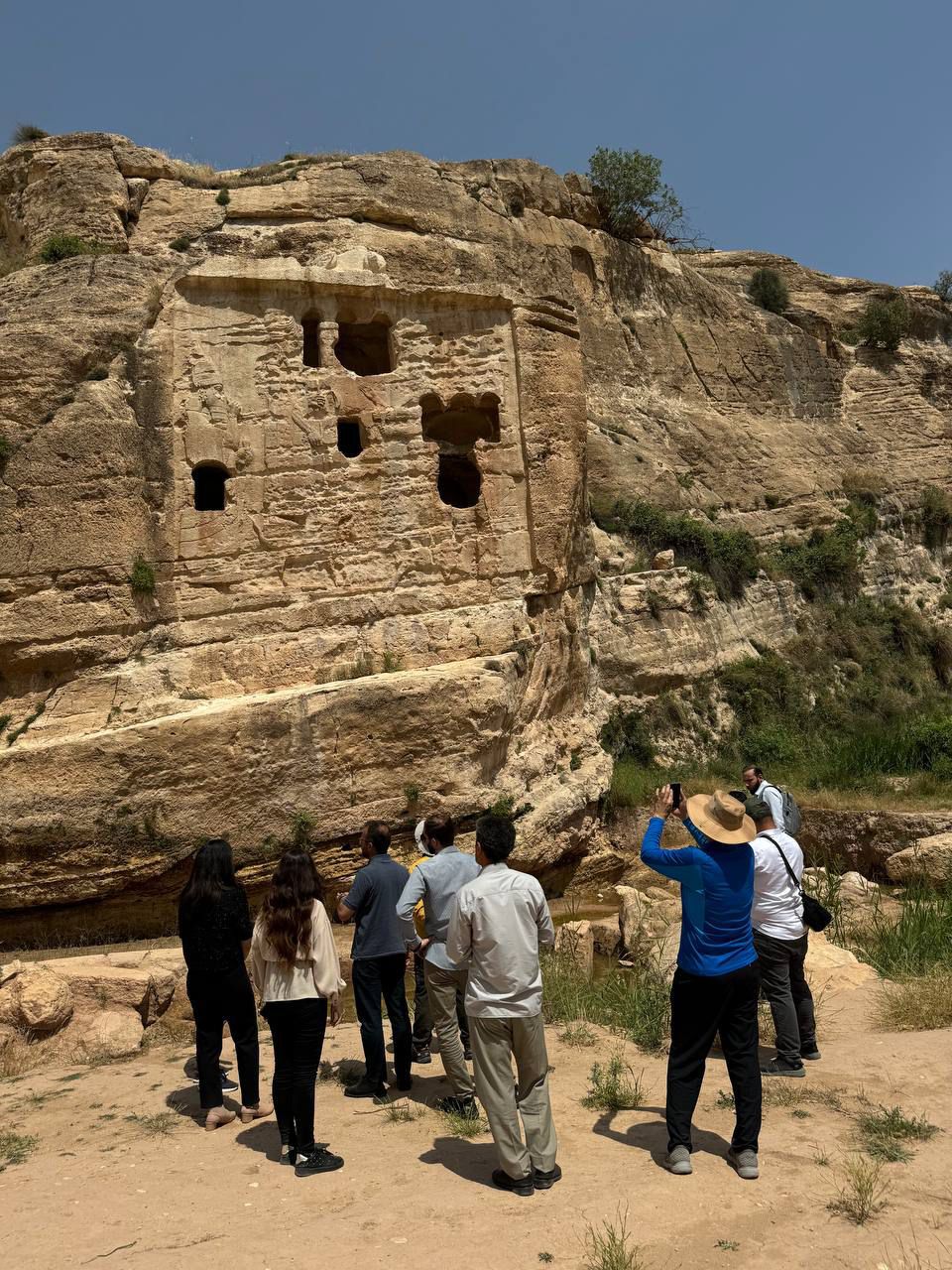
Khinis is located 56 km east of Duhok and 13 km northeast of the Shekhan district; it is 121 km from Erbil and 80 km from Mosul. It lies along the Gomel River within a semi-valley. The site takes its name from the nearby village of Khinis. Due to the density and variety of its monuments, it functions as a museum and is widely known as the summer resort of the Assyrian King Sennacherib. A small river flows in front of the cliffs, surrounded by trees and greenery. To the north, at the foot of the mountain, there are two natural caves; one features a beautiful, rushing stream. Several basins have been constructed in front of the water, providing the area with a stunning view.
History of Khinis
Part of the site dates back to the Mitanni and Hurrian periods. However, its main and most significant section belongs to the reign of the Assyrian King Sennacherib (705–681 BC). Another portion, specifically the rock-cut tombs and chambers (nawsks), dates back to the Median Empire, as they reflect Zoroastrian religious practices.
The Purpose of the Site
Sennacherib chose this location as the primary water source for Nineveh, the capital of the Assyrian Empire. However, the objective was not merely water transportation; it was about creating a sacred territory and demonstrating royal power by blending engineering and art onto the mountainside. Additionally, the King established this site as a major summer resort.
Main Components of the Site
Khinis is carved directly into the natural rock faces of the mountain and includes several key features:
1. Rock Reliefs
Several large panels are carved into the mountain and large boulders. The most prominent is the Great Panel (10m x 12m), which is considered one of the largest rock reliefs in the world. It depicts King Sennacherib in a posture of prayer and worship before the gods. It also features the god Ashur and his wife, Mullissu, standing on the backs of mythical creatures known as Mushkhushshu.
2. Cuneiform
Inscriptions
Alongside the reliefs, long texts are carved in cuneiform script. These inscriptions detail the great deeds of King Sennacherib, focusing on the Khinis irrigation project and its sanctity.
3. The Winged Bull
Near the water source are the remains of a Lamassu (Winged Bull)—a massive bull’s body with wings and a human head. On its back are two small human figures. The Winged Bull was placed as a guardian of the site and the water source. Some of these statues have fallen into the river due to natural erosion.
4. Artificial Caves and Chambers
Various artificial caves, rooms, and small niches are carved into the mountain. These likely served as burial sites during the Zoroastrian era for high-ranking political or religious figures. They were also used as religious retreats (nawsk or nawus) during different eras, particularly the early Christian period, or as quarters for the project’s guards and workers.
5. Irrigation System and Dams
Khinis was not only a religious site but also a masterpiece of engineering and strategic irrigation. The remains of tunnels and canals that transported water are still visible. Water was collected here and directed toward the Jerwan aqueduct and eventually to Nineveh. The project began with precisely carved large stones, followed by a canal 3 meters wide and 2 meters high carved into the rock.
6. Niche Figures (The Arches)
High on the mountain, there are 12 door-like carvings (niches). Inside most of these are carved human figures, each distinct from the others. Two of these niches contain cuneiform inscriptions regarding Sennacherib’s project. Images of the King are carved alone or alongside symbols of the gods (such as the moon for the god Sin and the sun for the god Shamash). In some areas, stone steps have been constructed.
7. Stone Pits
On a sloped area east of the irrigation project, there are more than 50 pits carved into the rock. Most are circular but vary in size. Generally, they are 100–150 cm deep and 50–100 cm wide. Various theories exist regarding their specific use.
8. Statues of the King and Deity
On a massive boulder weighing approximately 40 tons, there are carvings of two human figures believed to represent the King and an Assyrian deity.
9. The Lion Statue
Above the Great Panel, a lion statue is carved, positioned as if guarding the large relief.
10. The Royal Summer Resort
Khinis was more than an engineering and archaeological site; it was King Sennacherib’s summer resort used for leisure and enjoyment. The natural beauty, the water source, and the sanctity of the location made it a major center for recreation.
11. Future Research
The area surrounding this natural museum likely contains remnants of ancient settlements, such as houses and palaces. however, archaeological excavations have not yet been conducted in the surrounding vicinity.
The Current Importance of Khinis
Today, Khinis is on the UNESCO Tentative List to become a World Heritage site, showcasing a unique artistic achievement from 2,700 years ago. Because Khinis functions as a natural museum, it attracts a large number of tourists and archaeological researchers every year. I personally have visited the site four times and intend to return. Guards are stationed at the site, and basic services for tourists are available. The Duhok Directorate of Antiquities plans to further develop the area for tourism and improve its facilities.