
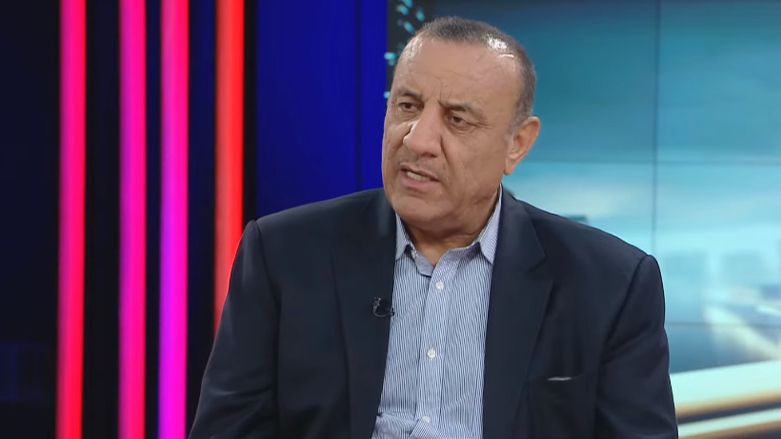
ISIS movements are resurging near Kirkuk, with Kurdish officials warning the group is reorganizing amid growing regional instability and clashes.
Major General Abdulkhaliq Talat, the Kurdistan Regional Government’s (KRG) representative to the Joint Operations Command, has warned that ISIS remains a serious threat and is actively working to regroup in several regions, particularly in and around Kirkuk, Daquq, and Tuz Khurmatu.
“We don’t yet know the full scale of ISIS’s presence, but what we do know is enough to cause concern,” Talat told The Kurdish Globe. “They are capable of creating instability and escalating the situation in these areas.”
According to Talat, recent unrest in the region — including the Iran–Israel conflict and broader regional instability — has contributed to the group’s resurgence. “Our intelligence shows increasing ISIS activity,” he said, adding that Iraqi and Kurdish security forces recently killed three top ISIS commanders in joint operations around Palkane, Daquq, and Tuz Khurmatu, including the group’s local emir and head of operations in the area.
Talat confirmed that ISIS fighters have recently been spotted in several provinces including Anbar, Salahaddin, Diyala, and across the disputed areas. “Their movements are especially visible in the disputed territories, where the group is trying to exploit security gaps,” he said.
He described Palkane, Daquq, and Tuz Khurmatu as “highly unstable areas,” where the terrain and lack of full control have allowed ISIS activity to intensify. “Not every weapon gets into these areas, but the terrain favors ISIS, and that’s why we’re seeing increased movement.”
Talat also noted recent attacks: “Missiles were fired at Kirkuk, and another attack targeted an IDP camp in Zakho. Around the same time, there was direct confrontation between ISIS and the Iraqi army in Palkane.” He emphasized that ISIS movements have clearly increased, and that the group is attempting to capitalize on the vacuum left by political and military instability.
He also said: “The recent missile attacks on Kirkuk and later on an IDP community in Zakho and Beji district, along with renewed clashes between the Iraqi army and ISIS in Palkane, show that ISIS movements have increased recently, especially in Tuz Khurmatu, Daquq, and the Kirkuk area. The overall events indicate two things: First, ISIS remains, and second, these recent events show that ISIS is trying to increase its activities in the area.”
Regarding the source of these attacks during a time of war between Israel and Iran and increasing regional instability, he noted that the source of the attacks was from inside Iraq. Their goal is to create instability, worsen the regional situation, and exploit the security vacuum to reorganize themselves and launch attacks on the Iraqi army and Peshmerga forces. Therefore, it cannot be said that ISIS is weak in Iraq—they are still active and operating in different areas. What’s important is that ongoing coordination, cooperation, and specialized security committees between Erbil and Baghdad must continue to confront terrorism. In this regard, Kurdistan’s Peshmerga forces have played a vital role in countering ISIS and have prevented them from expanding inside Kurdistan borders.”
He also stated: “ISIS movements are especially strong in areas under Article 140, where they’ve taken advantage of the security vacuum. Through that path, they are trying to reorganize. Some of their leaders and commanders remain, and between the Iraq–Syria border, they have many active movements in different places. What is very important is to attack ISIS as soon as possible and destroy their bases inside Iraq, especially in areas where they’ve been regrouping.
Talat concluded with a clear message: “The sooner we act — through joint operations on their hideouts, especially in the areas where they’re regrouping inside Iraq — the better chance we have at containing this threat before it grows stronger.”
The Kurdish Globe