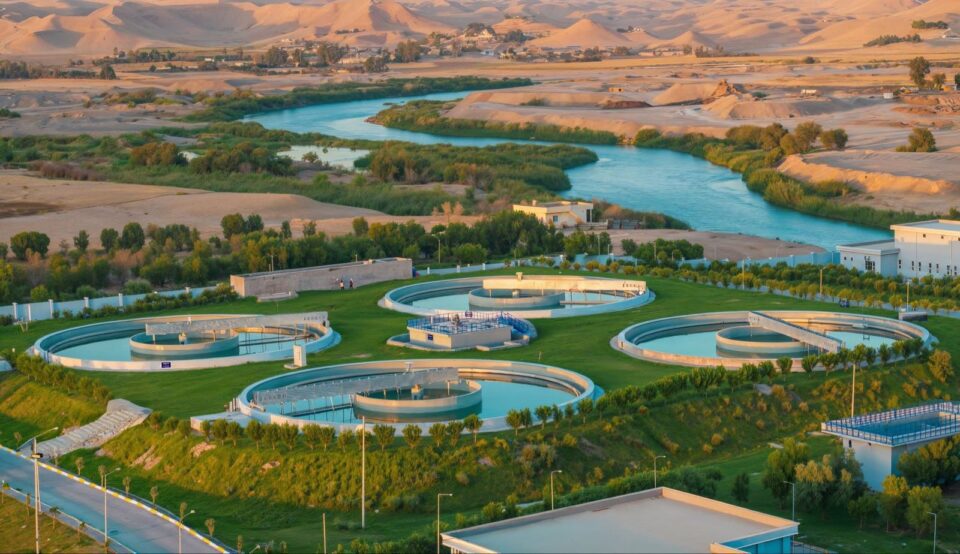
The ninth cabinet of the Kurdistan Regional Government (KRG) has begun implementing strategic projects to address the water crisis, combat drought, and ensure long-term water security for the region. These efforts have played a significant role in preventing migration from Kurdistan, a challenge currently affecting other parts of Iraq due to water shortages.
Following the completion of the Erbil Emergency Water Project, work has started on the Qushtapa Drinking Water Project, one of the largest water infrastructure initiatives in the Erbil area. The project aims to provide clean drinking water to hundreds of thousands of residents. At the inauguration, Prime Minister Masrour Barzani emphasized Kurdistan’s proactive approach to managing drought and ensuring water availability, noting that these measures have helped retain population stability in the region.
The government’s plan focuses on reducing reliance on groundwater while increasing the use of surface water. The goal is for 70–75% of the water supply to come from surface sources, with approximately 1,800 groundwater wells placed in reserve to restore and maintain aquifer levels. These steps aim to preserve Kurdistan’s clean water resources for the future.
In addition, previously suspended projects have resumed under the Prime Minister’s guidance. In Erbil, the Emergency Water Project has already resolved 65% of the city’s water challenges, with full completion expected to cover 100% of needs. In Akre, the implementation of the Akre Water Project is planned for next year. Work has also resumed on the Barzan water project covering 51 villages, with completion expected by early 2026. In Sulaimani, a $423 million sewerage project has been contracted and is set to begin within a month.
The KRG is also investing in water collection systems, artificial rivers, ponds, and dams to further develop the region’s water resources. Measures to reuse and recycle wastewater are being institutionalized to enhance sustainability. Household tap water now meets full potable standards, verified through more than 140,000 biological, chemical, and physical tests annually, in line with Iraqi regulations and World Health Organization (WHO) standards.
These initiatives demonstrate the KRG’s commitment to securing water resources, supporting population stability, and promoting sustainable development throughout the Kurdistan Region.