
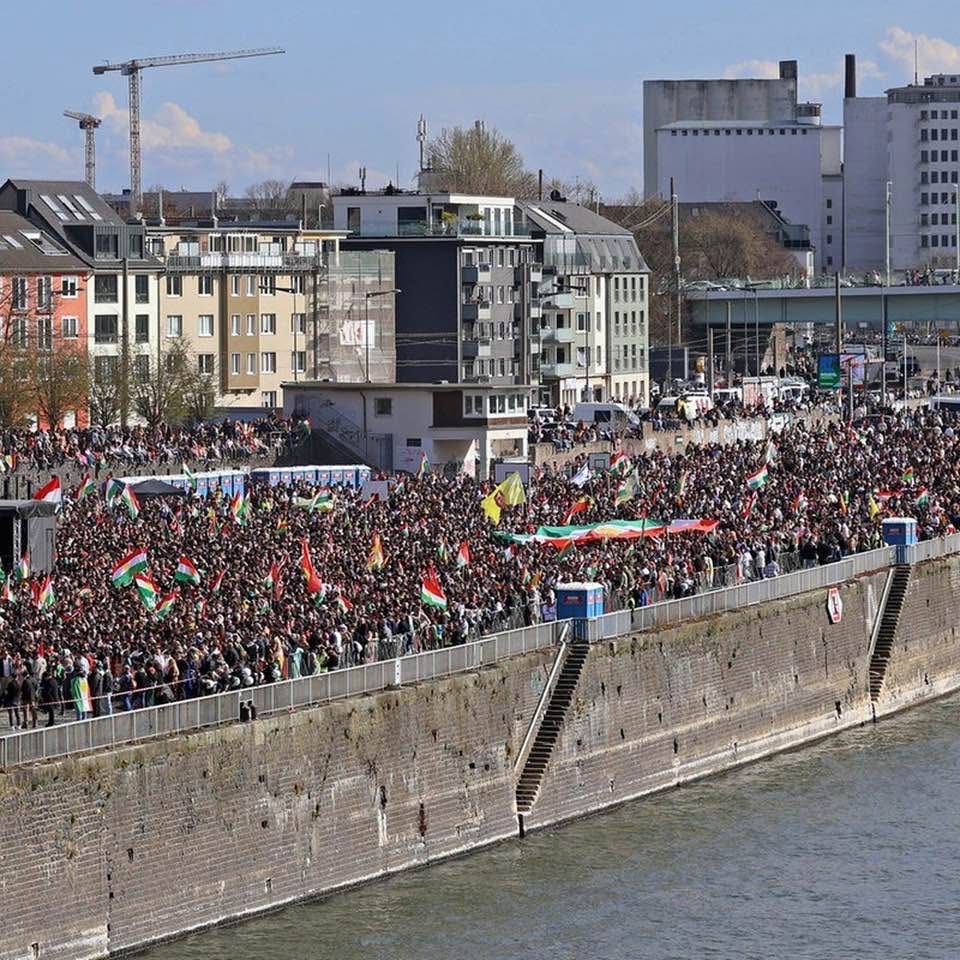
The Kurdish diaspora has become a powerful international force, helping advance Kurdish national interests, says activist Hawraman Ali Tawfiq. In an interview with The Kurdish Globe, Tawfiq highlighted how global events, including recent conflicts in Syria and the Middle East, have both challenged Kurds in Rojava, or West Kurdistan, and strengthened unity among Kurds abroad.
Tawfiq explained that Kurds living abroad support their national cause in multiple ways. They exert political and media pressure on Western governments through organized protests, media campaigns, and collaboration with human rights organizations. By building direct connections with European parliaments and political parties, they ensure the Kurdish issue remains on the international agenda. Activists also frame the Kurdish struggle in terms of human rights, liberation, and resistance to oppression, helping the global public see Kurds not simply as a displaced group, but as a nation deserving sovereignty. During periods of conflict or humanitarian crisis, the diaspora provides vital financial and logistical support to NGOs and civil society organizations on the ground. Maintaining Kurdish language, culture, and historical memory abroad is another key effort, Tawfiq said, ensuring the long-term continuity of the Kurdish cause.
At the same time, Tawfiq acknowledged the challenges of Kurdish unity. Political differences and the distinct circumstances across the four parts of Kurdistan can create fragmentation. Yet during existential threats, such as the fight against ISIS, these differences are often set aside in favor of a unified voice. He also pointed to a rising generation of Kurds within Western academic, scientific, and political institutions, whose professional integration strengthens a more “intellectual” lobby capable of influencing international policy more effectively than ever.
Tawfiq noted that the conflict in Rojava provided a clear example of the diaspora’s pragmatic partnerships. Despite internal political disputes, Kurds abroad successfully mobilized European support by focusing on human rights and civilian protection. This collective effort demonstrates that the diaspora is a primary international voice for the Kurdish people, capable of drawing global attention to regional injustices.
Concluding the interview, Tawfiq stressed that the Kurdish diaspora is an indispensable asset for the nation’s future. He called for strategic planning and institutional coordination to ensure that this global energy is sustained as a permanent, organized force for advancing Kurdish national interests.
By Frsat Said Shkur