
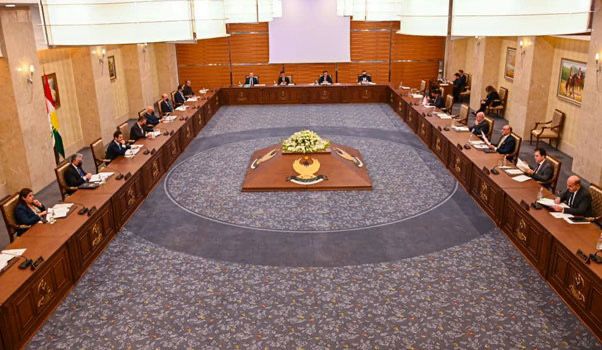
Interview with Dr. Saman Sorani and Dr. Mohammed Salih on unity, trust, and the future of the Kurdistan Region.
After the recent parliamentary elections, the Kurdistan Region has entered a decisive stage in shaping its political future. With seats now distributed, attention has shifted to forming a stable government that reflects the will of the people, safeguards Kurdish rights, and strengthens the region’s position in Baghdad. At the center of this process is the urgent need for unity among Kurdish political forces, a commitment that goes beyond political slogans to become a strategic necessity.
Dr. Saman Sorani, a senior advisor in the KRG Department of Foreign Relations, highlighted the underlying challenges. He noted that the current difficulties in forming the new cabinet are rooted in historical mistrust between the main Kurdish parties. “We believe that disagreements over the distribution of posts exist, but the root of the crisis is much deeper than that; it primarily goes back to the lack of trust between the main political parties,” he said. This lack of confidence, he explained, has affected every round of negotiation, slowing progress and weakening the Kurdish position in Baghdad.
According to Dr. Sorani, the Patriotic Union of Kurdistan (PUK) has at times approached negotiations in ways that complicate the process. “These stances, which can be described as obstructive, cannot be separated from the atmosphere of a lack of mutual trust that has accumulated over the past years,” he said. “Mistrust is not new. It reflects decades of disputes over power, resources, and relations with Baghdad.”
Sorani stressed that rebuilding trust is essential for forming a strong and effective government. “Without a foundation of mutual trust, any agreement will remain weak and fragile,” he said. “Forming a strong and stable government is achieved only by returning to political trust, moving away from hegemony, and pursuing a shared vision that prioritizes the interests of Kurdistan above all partisan and personal agendas.”
Respecting the outcome of elections is another critical pillar, he emphasized. “In any democratic system, elections are the starting point for establishing political legitimacy,” Sorani noted. “Building the new government on these results is not only a political choice but a moral commitment that guarantees respect for voters’ will and protects governance institutions.” Ignoring or reinterpreting election outcomes, he warned, would erode public trust and undermine the democratic process.
The consequences of delay or obstruction, Sorani added, could be severe. “When the political process turns into a power struggle, democracy is emptied of its essence, and citizens feel their votes change nothing,” he said. This is particularly dangerous in a region where political stability is closely linked to economic growth and international credibility.
Unity among Kurdish parties, he explained, is the key to avoiding repeated mistakes of the past. “The real guarantee is not in promises but in the seriousness of parties forming an alliance and their commitment to implementing agreements,” he said. Transparency, institutional unity, and moving beyond narrow partisan calculations are essential for reassuring citizens that the partnership is strategic and long-term, not temporary.
University professor Dr. Mohammed Salih reinforced this perspective, warning that delays in forming the cabinet could jeopardize the region’s integrity. “The more the delay, the closer we get to the abolishment of the region,” he told Kurdish Globe. He explained that the deadlock is less about post distribution and more about trust between the leading parties. “If the main parties do not act responsibly, the region risks sliding toward division, undermining decades of progress,” he said.
Both Sorani and Salih highlighted the importance of compromise, cooperation, and prioritizing the region’s long-term interests. “The immediate duty of the leading parties is to form the cabinet,” Salih said. “Only then can Kurdistan assert its political weight, maintain stability, and continue its path toward democratic progress.”
As the Kurdistan Region navigates this sensitive moment, the insights of leaders like Dr. Sorani provide both guidance and reassurance. Their message is clear: unity, trust, and respect for democratic principles are essential for ensuring that Kurdistan remains stable, strong, and capable of advancing the rights and welfare of its people.