
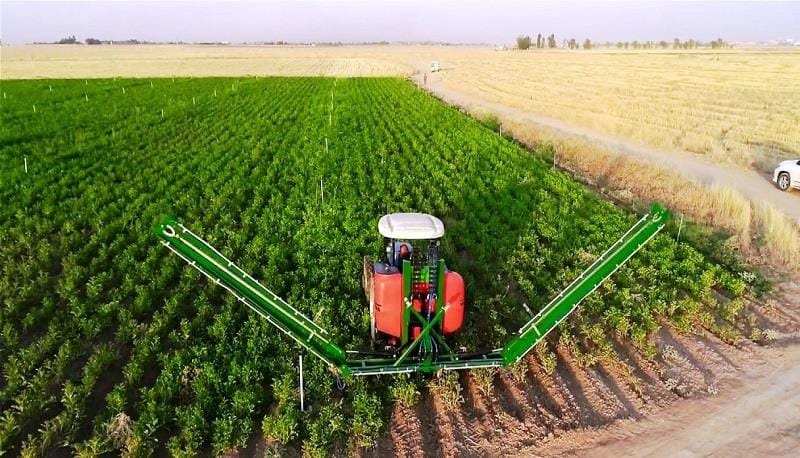
New silos, growing exports, and increased investment strengthen the Region’s food security
The Kurdistan Regional Government (KRG) has significantly increased investment in the agricultural sector as part of its broader strategy to strengthen food security, diversify the economy, and support domestic production. During the Ninth Cabinet, agriculture’s share of total investment rose from 1.8% to 12%, while investment in the sector increased by an additional 2% over the past year.
A key component of the government’s strategy is expanding grain storage capacity to safeguard wheat production. The KRG has allocated IQD 90 billion to construct four new silos with a combined storage capacity of 160,000 tonnes.
The projects include a 40,000-tonne silo in Qushtapa (Erbil) costing IQD 21 billion, another in Kalar (Slemani) for IQD 21 billion, a third in Rovia (Duhok) valued at IQD 20 billion, and a fourth in Halabja costing IQD 28 billion.
The government also plans to build additional silos in Duhok, Zakho, Kifri, Koya, and Harir, further expanding the Region’s grain storage network and reinforcing long-term food security.
Alongside infrastructure development, the Kurdistan Region has continued to strengthen its agricultural and industrial sectors. The Region now has 13,943 registered companies, 1,341 industrial factories, approximately 30,000 greenhouses producing crops throughout the year, and 319 cold storage facilities for preserving agricultural products.
The expansion has boosted production and market access, enabling locally produced agricultural goods and manufactured products to reach markets across central and southern Iraq. Hundreds of thousands of tonnes of produce are transported annually throughout the country.
In another milestone, farmers in the Kurdistan Region have, for the first time, exported tens of thousands of tonnes of agricultural products to Gulf countries and other international markets, reflecting the growing competitiveness of the Region’s agricultural sector.
The KRG says these investments are helping reduce dependence on imports, increase self-sufficiency, and build a more resilient agricultural economy while creating new opportunities for farmers and strengthening long-term food security across the Kurdistan Region.