
The Kurdistan Region is at a crossroads, confronting a banking sector hindered by historical mistrust, structural inefficiencies, and political constraints while pursuing ambitious reforms to modernize its financial system. With 46 banks operating in the region—including two state-owned central banks, 14 state-owned regional banks, and 30 private institutions—the sector remains underdeveloped, struggling to meet the economic demands of its population. The Kurdistan Regional Government (KRG) has prioritized banking reform as a cornerstone of economic progress, aiming to overcome years of stagnation and foster a robust financial ecosystem capable of driving sustainable growth.
Deep-Rooted Cultural and Structural Barriers Impede Banking Development
A pervasive mistrust of financial institutions, rooted in decades of political instability, has shaped the Kurdish preference for keeping money at home rather than in banks. This cultural reluctance has limited banks to serving primarily as intermediaries for government salary payments, rather than as engines of economic growth through lending or investment. Structural challenges exacerbate this issue, with technological deficiencies and a shortage of skilled professionals hindering the adoption of modern banking services like loans, savings programs, or digital platforms. Unlike banks in developed economies that finance major projects, Kurdish banks remain disconnected from broader economic activities.
The lack of fiscal autonomy further complicates matters. The Iraqi constitution denies the Kurdistan Region’s central bank regulatory independence, leaving financial policy under Baghdad’s control. This restricts the KRG’s ability to manage money flows or forge international financial partnerships, stifling the development of a sophisticated banking system. These barriers have created a cycle of low public engagement, diminished trust, and limited institutional growth, keeping the sector in a state of underdevelopment.
Political Crisis Exposes Financial Vulnerabilities
In early 2023, the Kurdistan Region faced its most severe banking crisis since 1991, triggered by disputes with the federal government over budget allocations and oil revenues. These tensions, which began in 2012 when the KRG built its own oil and gas pipeline to Turkey, exposed the banking sector’s critical lack of liquidity. The crisis prevented the KRG from paying public sector salaries, highlighting the sector’s inability to provide financial stability during political turmoil. Despite the presence of over 70 private banks, their limited engagement in market activities became glaringly evident.
The crisis underscored a broader issue: a decade of economic growth in the region, driven by oil exports, had not translated into corresponding banking infrastructure development. The lack of coordination with established financial institutions and the political nature of the crisis overshadowed potential economic solutions. This vulnerability revealed the urgent need for a resilient banking system to support the region’s aspirations for economic independence and sustainable governance.
Government-Led Reform Initiative Promises Comprehensive Modernization
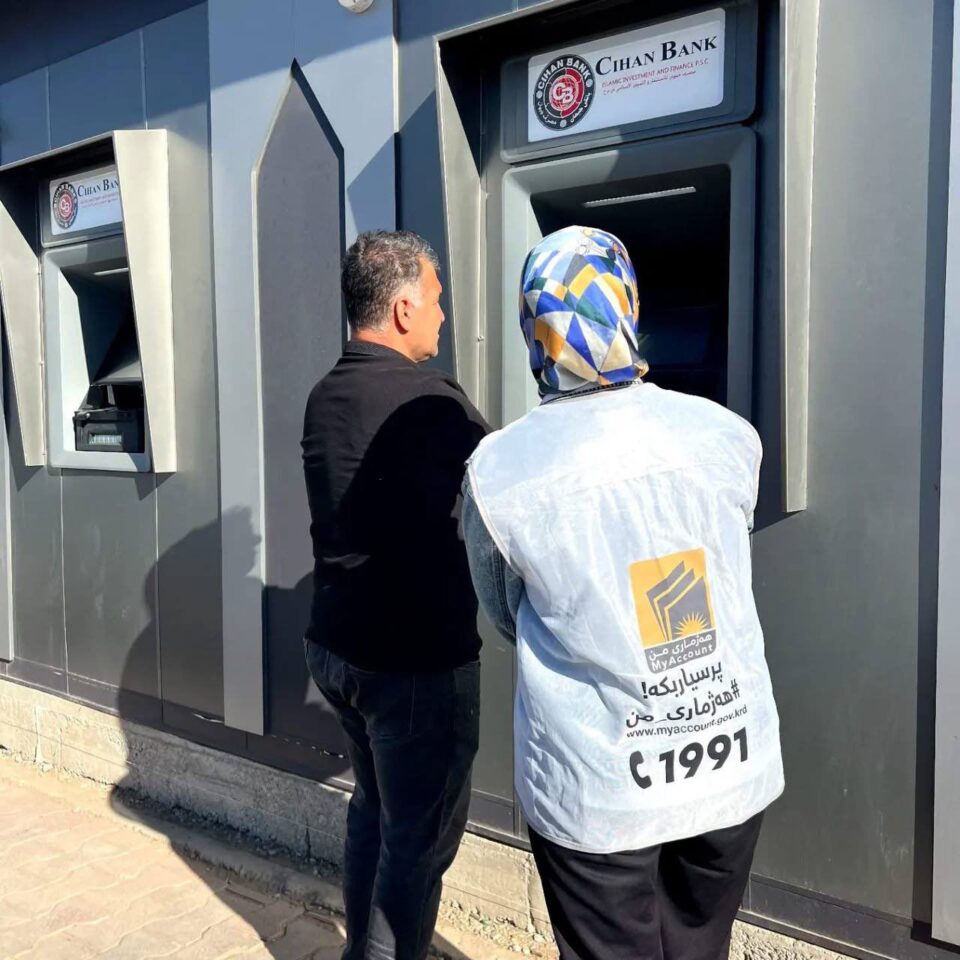
The KRG has launched a transformative banking reform program to address these challenges and build public confidence. The flagship “My Account” project aims to enroll one million public sector employees in private bank accounts within two years, with five private banks selected for their branch networks, digital capabilities, and ATM coverage. The initiative also includes plans to expand ATM networks, introduce electronic payment systems, and develop online banking for loans and international transfers.
Beyond immediate improvements, the reforms mandate private sector employees to maintain bank accounts following public sector enrollment, marking a shift from voluntary to compulsory banking adoption. Additional measures focus on combating money laundering and stabilizing the Iraqi dinar through enhanced coordination with federal authorities. The KRG acknowledges past shortcomings in banking services and is committed to supporting private institutions to enhance their technological and service capabilities.
The success of these reforms hinges on rebuilding trust between citizens and banks while encouraging institutions to expand their offerings. The KRG’s vision is ambitious: to position the Kurdistan Region as a model for banking development in Iraq, with its current banking partners potentially becoming the country’s largest private banks within five years. This transformative agenda reflects both the scale of the challenges and the potential for significant progress, as the region moves toward a modern, inclusive financial system capable of supporting its economic aspirations.