
Kurdish leaders say Baghdad’s unilateral military appointment breaches the constitution and weakens Iraq’s power-sharing system.
Kurdish political leaders have accused Iraq’s federal authorities of violating the constitution and undermining the country’s power-sharing system after parliament approved senior military and administrative appointments without Kurdish consent, escalating tensions between Erbil and Baghdad.
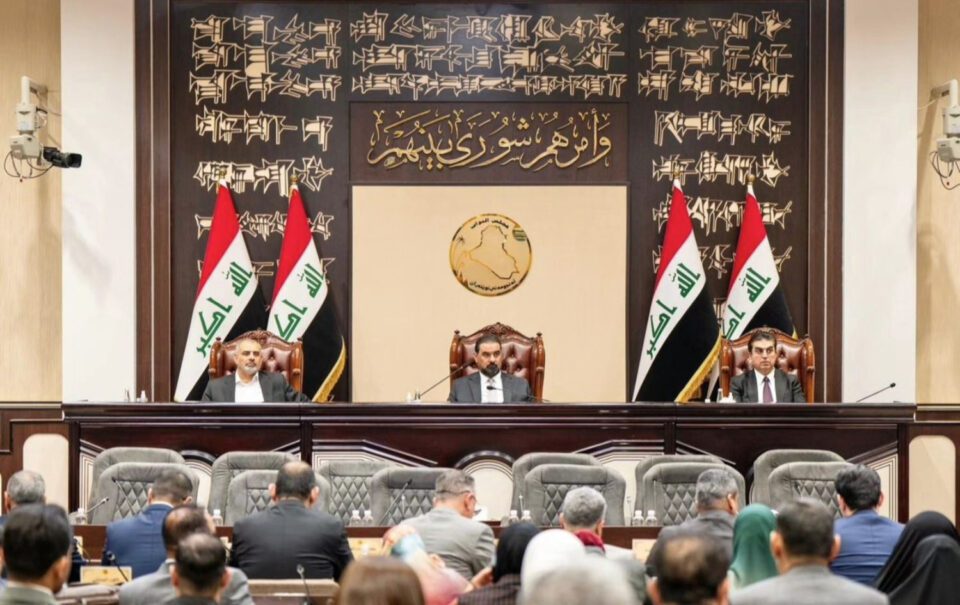
At the center of the dispute is a parliamentary session held on Feb. 17, during which lawmakers confirmed Abdul Amir Yarallah as Chief of Staff of the Iraqi Army and Ammar Musa as Mayor of Baghdad. Kurdish blocs say the votes were pushed through without prior agreement and in defiance of long-standing conventions designed to preserve ethnic and political balance in the post-2003 Iraqi state.
In Iraq’s fragile political system, key state positions are traditionally allocated through muhasasa, an informal ethno-sectarian quota arrangement meant to prevent any single group from monopolizing power. Kurdish leaders argue that senior military and security posts are not symbolic rewards, but safeguards of what they call the “partnership” underpinning the federal system.
“The issue is not one appointment,” said a senior Kurdish lawmaker, speaking on condition of anonymity. “It is about dismantling the balance that has kept Iraq together since 2003.”
Parliamentary flashpoint
The Feb. 17 session was initially billed as routine legislative business, focused on amendments to internal bylaws and reducing the number of permanent parliamentary committees. Kurdish and some Sunni lawmakers say that midway through the sitting, parliamentary leaders added votes on so-called “special grade” positions without consensus from the chamber’s presidency.
Kurdish representatives protested inside the hall, but the votes went ahead.
“This was not just a procedural issue,” said one Sunni MP who opposed the move. “It changes how power is exercised in Iraq.”
Symbolism of the army post
The appointment of a permanent Chief of Staff has proven particularly sensitive. For years after 2003, the role was held by a Kurdish general, Babakir Zebari, and came to symbolize Kurdish inclusion in national defence decision-making. Since his departure, the post has often remained vacant or filled on an acting basis.
Kurdish parties say confirming a new chief without their approval amounts to a deliberate effort to sideline them from the security apparatus at a time of regional instability.
Legal objections
Kurdish leaders have framed their rejection in legal terms, citing multiple violations.
They point to Article 9 of the Iraqi constitution, which stipulates that the armed forces must represent all components of Iraqi society. They also cite Article 37 (Second) of parliament’s internal bylaws, which governs how agendas are set and requires the approval of the parliamentary presidency for adding sensitive items.
Most importantly, they argue that the spirit of consensus — the unwritten rule that major appointments require cross-bloc agreement — was ignored.
“This is decision-making by simple majority, not partnership,” said Dr. Shakhawan Abdullah, head of the Kurdistan Democratic Party (KDP) bloc in parliament. “Touching Kurdish entitlements weakens the Kurdish position and threatens political stability.”
Shakhawan Abdullah said the move marked “a very bad beginning” for relations between Erbil and Baghdad.
Unified Kurdish response
Kurdish factions have responded with unity. The KDP parliamentary bloc issued a statement rejecting the session’s outcomes, warning that “building a state is not achieved by monopolizing decisions and marginalizing the rights of components.”
Farhad Atroushi, the second deputy speaker of parliament, said the vote deepened an already complex political environment.
“Iraq and the region are passing through a difficult period,” he said. “What happened raises serious questions and clearly violates the constitution and parliamentary bylaws.”
Next steps
Kurdish leaders say they will challenge the session in court, seeking to have the appointments annulled on procedural grounds. Such a move could stall other legislative business and further strain relations with Prime Minister Mohammed Shia al-Sudani’s government.
Parliament has also announced that upcoming sessions will be held at 9 p.m. during Ramadan, a change that analysts say could affect attendance and make consensus-building even harder.
For now, Kurdish officials warn that unilateral decision-making risks unravelling the delicate arrangements that hold Iraq together.
“Without real partnership,” one Kurdish official said, “the idea of a national government loses its meaning.”
The Kurdish Globe