
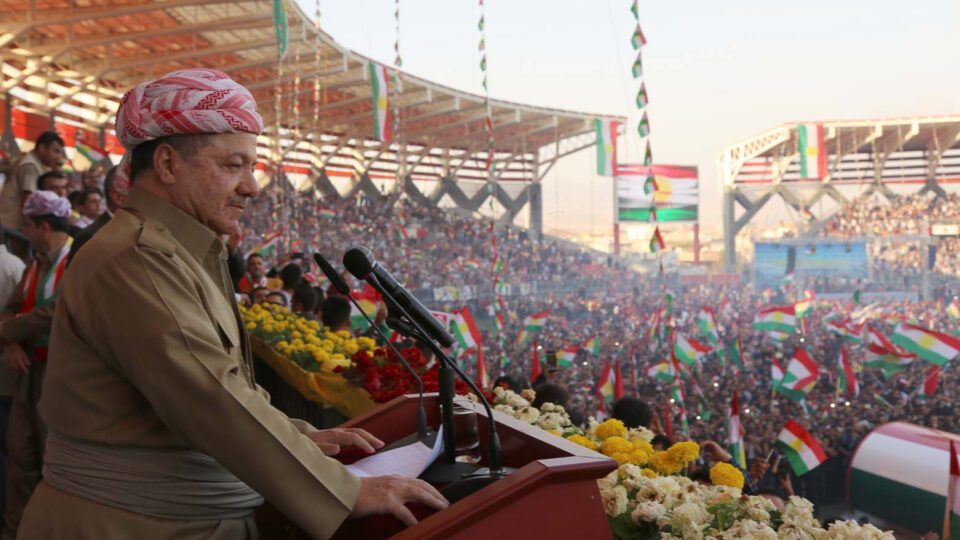
President Masoud Barzani and PM Masrour Barzani marked nine years since Kurdistan’s independence referendum
President Masoud Barzani marked the anniversary with a message on X: “A vote for history, a memory for generations.” Prime Minister Masrour Barzani also posted a message, saying: “May the anniversary of the triumph of the people’s will be blessed and enduring.”
Their messages recalled September 25, 2017, when people in the Kurdistan Region and Kurdistani areas outside its administration voted on independence. The vote remains a defining moment for many Kurds, even though the political and military developments that followed prevented its result from being put into effect.
According to the figures reported at the time, 4,561,255 people were eligible to vote and 3,305,925 took part, a turnout of more than 72%. Of those who voted, 2,861,471 chose “Yes,” representing more than 92% of ballots cast.
The decision to hold the referendum was made on June 7, 2017, at a meeting attended by President Barzani and senior representatives of parties in the Kurdistan Parliament and Regional Government. The Region’s then vice president, prime minister and election commission head were also present. A High Council was formed to oversee the process, with members from major political parties and the Region’s communities.
September 25 was chosen as the voting date. Ten days before the referendum, the Kurdistan Parliament approved the vote by a majority. Its electoral and referendum commission then supervised voting in the Kurdistan Region and Kurdistani areas outside the Region’s administration.
Nine years later, the messages from President Barzani and PM Masrour Barzani placed the emphasis on the meaning of the vote for those who took part. President Barzani’s reference to history and future generations echoed a theme heard throughout the anniversary: that the result remains part of the Kurdish people’s political memory. The prime minister described it as a victory for the people’s will.
Residents also shared their memories on Friday. Photographs from the referendum campaign and voting day appeared across social media. In streets and markets from Erbil to the Badinan area, people wore Kurdish clothes, raised Kurdistan flags and gathered to remember the occasion. Some described it as a celebration; others spoke about what casting their ballot had meant to them.
One elderly resident described voting as being born again. Other residents said they would vote “Yes” again if given the chance. They called on political parties to preserve the unity shown during the referendum and continue working toward independence.
That call came as the Kurdistan Region faces a political deadlock over reopening parliament and forming a new government cabinet. Several leaders who spoke on the anniversary said the parties should draw on their earlier ability to reach a shared decision.
Mohammed Haji Mahmoud, president of the Kurdistan Social Democratic Party, said the parties should have reopened parliament sooner. He argued that parliament gives the Region a way to respond to laws passed in Baghdad that it regards as harmful to Kurdistan. He said an agreement between the Kurdistan Democratic Party (KDP) and Patriotic Union of Kurdistan (PUK) could allow parliament to resume its work quickly.
For Mahmoud, the referendum was “the brightest moment in the ancient and modern history of the Kurds.” He said the Kurds should have taken that step earlier and urged people not to lose hope. “Whenever there is an opportunity, we must work for independence, because no law or religion requires the Kurds to remain under the rule of others forever,” he said.
Bayram Bozyel, president of the Kurdistan Socialist Party, also described the vote as a historic moment. He said: “The referendum was a proud moment. For the first time in one part of Kurdistan, our people went to the ballot box in a civil, peaceful and lawful way, under international observation, and collectively called for independence.”
Bozyel said the setbacks after the vote were temporary, while the public decision expressed on September 25 would endure. He said President Barzani and the political leadership of that period continued to hold a respected place among Kurds across Kurdistan. Bozyel also recalled thousands of people travelling from Northern Kurdistan, including Diyarbakir, to join events in Erbil and Sulaimani before the vote.
Former Kurdistan Region vice president Kosrat Rasul Ali remembered his role in overseeing voting in Kirkuk and other Kurdistani areas. In a Facebook post, he called it “a great source of pride for me, and one of the happiest historic days of my life” to have been entrusted with that responsibility. He said people in those areas had taken part in a rare historic event.
Former members of the referendum’s High Council stressed that the decision had involved more than one party. Bapir Kamala, secretary of the Kurdistan Workers and Toilers Party, said political groups had come together to approve the vote. Some who had not attended the meetings still supported it on voting day, he said. He described the referendum as an inclusive national decision made by the people of Kurdistan.
Representatives of the Region’s other communities made the same point. Janan Jabbar, president of the Christian Alliance, said her community remained proud of its part in the vote. She described the referendum as a message from Kurds and the Region’s other communities that they wanted an independent state after feeling they had been treated unjustly by the Iraqi government.
Political leaders and residents cited disputes with Baghdad as a central reason for the referendum. They accused successive Iraqi governments of failing to respect the Kurdistan Region’s constitutional rights. The Turkmen Reform Party said those disputes had included financial, administrative, military and legal issues. In an anniversary statement, it called the referendum a shared national achievement for the Region’s communities.
The party also urged political forces to work together now. It called for faster formation of a new Kurdistan Regional Government cabinet and for the Region’s constitutional status to be protected. Other leaders similarly warned that continued political deadlock could harm the Region’s interests.
The Kurdish Globe