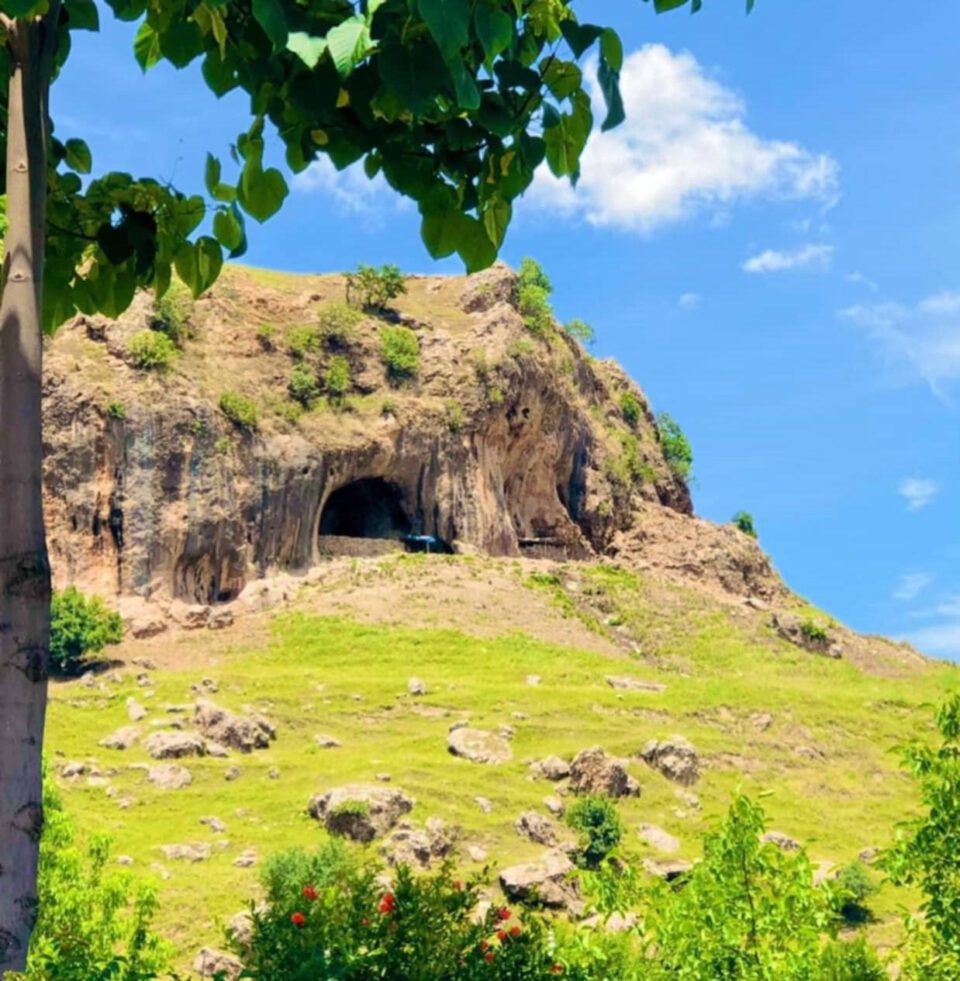
The Mir Kallos cave, perched in the Bradost mountain range, overlooks the village of Hawdian in the Diana sub-district of Soran. Situated just five kilometres from the village, the cave occupies a strategic vantage point, believed to have been the site of a historic fortress.
Azad Bakr, a local historian, explains that Mir Kallos was a prince of the Soran border principality during the early 14th century Ottoman period, serving as the region’s main ruler. “Historical remnants of fortresses, towers, and walls still remain, including the Mir Kallos cave in Hawdian village,” Bakr notes. He adds that Mir Kallos advised his son to succeed him, leading to Mir Isa establishing the Soran principality between the 14th and 15th centuries, making it one of the region’s first and longest-ruling principalities.
Over the centuries, several principalities governed Kurdistan, with the princes of Soran constructing fortresses, towers, and utilising caves for defence and rest during conflicts. Among these, notable caves include Mir Kallos, Akoyan, Bastun, Dayan, and Zargali. The Mir Kallos cave, in particular, served as a watchpoint over the Dashti Dayan plain, highlighting its defensive and strategic importance.
Bakr emphasizes the need to preserve these historical sites for archaeological research and tourism. “Protecting these caves and developing surrounding infrastructure is essential. The interior should remain untouched unless studied by specialised teams,” he said.
The exact history of the fortress above Mir Kallos cave remains unclear. No inscriptions or written records confirm its construction, and knowledge comes only from stories passed down by elders. Several other fortresses surround the area, including Qalatuk, Qalati Quchakmari, Qalati Sarkatashi, Kawna Qalat, and Qalati Darduk. Located just 10 km west of Soran city, Mir Kallos fortress is separated from the Bradost mountain by natural features and lies only a few metres from Hawdian village.