
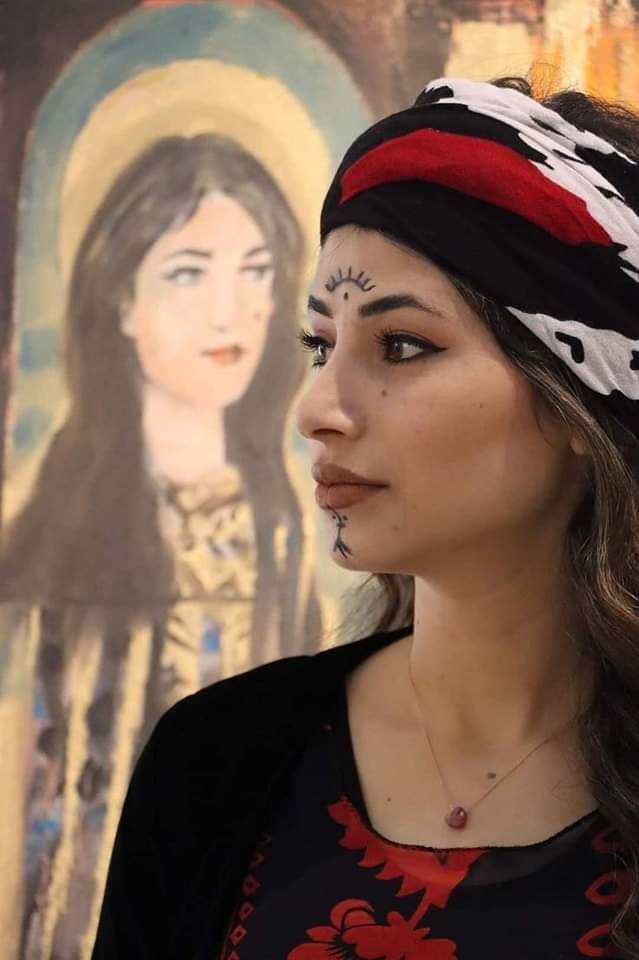
Deq, the traditional mole tattoo of Kurdish women, is fading in practice as modern beauty trends and tattoos dominate.
Mole tattooing — the practice of etching small marks and designs onto the face, hands, and arms — has long been a cultural tradition among Kurdish women. Though men occasionally took part, women were its main bearers, and for centuries the practice symbolized beauty, identity, and even spiritual protection.
Unlike today’s colorful and elaborate tattoos, Kurdish mole tattooing was modest and symbolic. The most common was a small green or black dot near the chin or on the hands, instantly recognizable as a cultural marker. Among women now in their fifties and sixties, it was once rare to find someone without such markings. These moles were more than decoration; they were a visible statement of heritage, beauty, and belonging.
This practice was widespread across Kurdistan, not confined to one town or province. Young girls would often seek out women skilled in mole tattooing, who gained reputation in their communities for their artistry. These tattooers, often elderly women, worked in homes rather than shops. Girls would gather in groups, making the experience both social and ceremonial.
The procedure was simple but required skill. Leaves were burned to ash, mixed with goat or sheep milk, and left to mature into a thick black paste. A heated needle or thin piece of copper was then dipped into the mixture and used to puncture the skin. The wound would scab and heal, leaving behind a dark, permanent mole. Though painful, women considered the process an essential rite of passage.
Mole placement varied widely and often carried meaning. Marks could be made between the eyebrows, on the chin, beside the lips, or near the eyes. Others appeared on the arms, chest, or even hidden parts of the body. In many cases, the location matched the woman’s personal intention, declared before the tattooing began — beauty, fertility, protection, or prosperity.
The tradition is deeply ancient, with historians tracing it back more than 10,000 years. It was particularly rooted among nomadic Kurds and Yazidis, and its symbolism appears tied to early religions, including Zoroastrianism and Mithraism. The common motifs — suns, stars, moons, snakes, and peacocks — suggest the tattoos once carried sacred significance, linked to nature, fertility, and the cosmos.
Beyond spirituality, mole tattoos were also believed to protect against the evil eye, ward off disease, and bring longevity or good fortune. In times of war and hardship, they were thought to act as shields from bad fate. These beliefs also shaped rules around the tattooers. A woman performing mole tattoos could not be divorced, disabled, or someone who had miscarried or lost children, as it was feared her misfortune might transfer to the recipient.
The practice also inspired art and poetry. Classical Kurdish poets often wrote about women’s moles as symbols of beauty and charm, weaving them into verses of love and attraction. To them, a tattooed mole was not merely an adornment but a sign of authenticity — a mark that distinguished the Kurdish woman from others.
Known as deq, the tattoos carried both pride and philosophy. They were small, but they conveyed courage, identity, and continuity. For many, to bear a mole was to embody both beauty and resilience.
Today, like many traditions, mole tattooing has declined with rapid modernization. Modern tattoos, using machines and colorful inks, have replaced them for younger generations. Yet in many Kurdish towns and villages, older women still carry their moles proudly, their faces and hands serving as living archives of Kurdish heritage.
Though fading, mole tattooing remains a reminder of how beauty, faith, and culture once intertwined — a tradition quite literally etched into the skin of Kurdish women, carrying their history forward even as times change.
The Kurdish Globe