
1. Economic Diagnosis
Monoculture economy does not facilitate the evolution of a sustainable economic system; rather, capital is hindered by the absence of diversified sectors capable of absorbing liquidity. Consequently, the capital cycle remains lean, failing to spiral into further growth and leading to the outflow of cash due to the shortage of domestic investment opportunities, excessive capital influx into unproductive sectors like real estate, or the stagnation of money at economic agents’ disposal. Whereas real value is primarily generated in productive sectors such as manufacturing and agriculture, through commerce, profit is realized. The tertiary sector, encompassing service-producing spheres, only generates real value when supported by productive powers; in return, it plays a crucial role in financing the economic foundations.
Post-Ba’ath Iraq and the Kurdistan Region heavily rely on the hydrocarbon sector. However, economies encompass more than just economic sectors—they also entail institutional paradigms, ideological frameworks, interconnected industries, as well as sociopolitical constructs reproduced around economic structures.
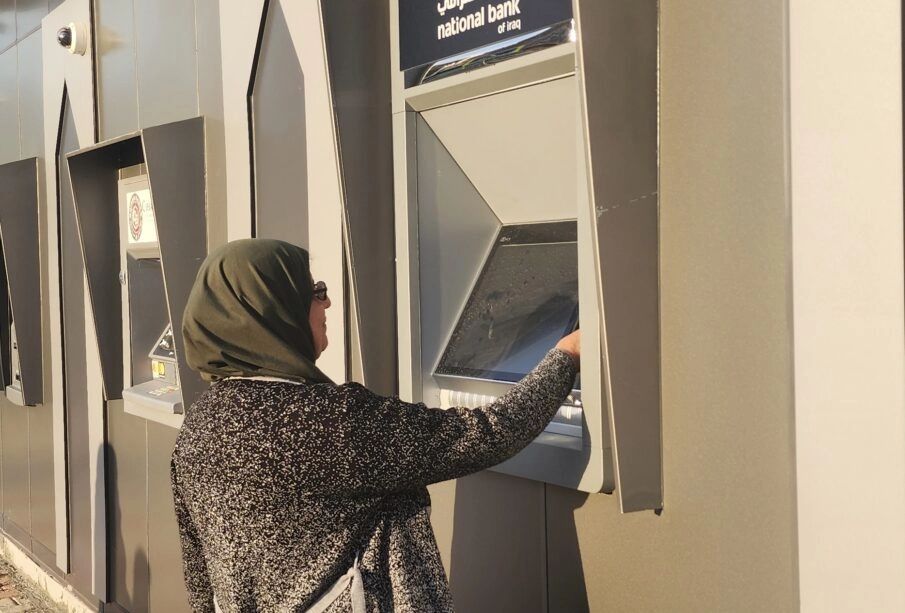
2. Banking: The Missing Link
In the modern global economic system, an emerging market cannot transcend into a developed economy without a functional banking system, with the central or de facto central bank at its core. This system not only facilitates immediate services such as depositing, retailing, and lending, but its greater importance lies in money creation and capital regulation, investment and saving, interest and exchange rates, borrowing and spending—all of which are crucial for efficiently utilizing available capital within the economy.
Contextually, it is rare for households or firms, regardless of their excessive assets, to fully utilize their economic capacities on a mass scale. Through banking, such expansion becomes feasible due to its ability to concentrate and centralize capital into megaprojects (i.e., the Kurdistan Railway or Development Road) and increase productive capabilities.
3. Monetary-Fiscal Interplay
From the monetary theory and fiscal policy standpoints, while neoclassical economics prioritize the supply of money, focusing on quantitative easing programs, Marxist Monetary Theory emphasizes the demand side. Demand plays a central role: even when supply stimulates demand, it is the demand from economic agents that ultimately determines the level of supply; otherwise, it can lead to inflation.
For instance, Iraq has relatively managed currency fluctuations, partially attributed to its central bank and small banking sector. Although the Iraqi dinar appreciates by injecting dollars into the market, the amount supplied by the Bank often does not meet demand. Still, it stimulates economic agents to sell their stored dollars, helping to alleviate dollar scarcity in the market.
4. Budget Crisis
Since the onset of the financial crisis in 2014, successive Kurdistan Regional Government cabinets have implemented various fiscal policies. However, the Region has continued to struggle with capital illiquidity, largely due to the absence of a de facto central bank and a developed banking sector capable of sustaining money circulation.
Most of the money—whether generated domestically or borrowed—quickly exits the market through offshore transactions and imports. What remains is often hoarded by economic agents in the form of dollars and gold or absorbed into the real estate bubble.
On the national scale, the federal government’s role aggravated the situation by exporting its crises to Kurdistan. Since 2014, Iraq has used budgetary manipulation to finance its deficits. A significant portion of the Region’s federal share has been liquidated by Baghdad to repay its debts, contributing to a drop in national debts, especially external ones, since 2022.
The federal government’s recent decision to completely halt budget transfers to Kurdistan from the second quarter onward—without any constitutional or administrative justification—not only supports this claim but also reflects the politicization of civil servant salaries in the Region.
5. Economy in Making
‘MyAccount’ stands out as an exemplary developmental initiative of the ninth cabinet. Beyond its immediate effects, such as digitizing payment methods and salary distribution to civil servants, along with facilitating international transactions, the most significant implications of the project lie in its medium and long-term trajectories.
It catalyzes the evolution of the banking sector, with the KRG taking the lead in pioneering its development. Maintaining the centrality of its position is crucial for the KRG to regulate and coordinate the banking sector and realize its potential in driving sustainable and inclusive economic growth.
As the banking system becomes operational, a small number of non-governmental employees and private firms begin depositing or investing in banks. When the broader public observes these groups benefiting from more reliable money storage, payment methods, dividends, access to loans, and increased investment opportunities, peer pressure encourages broader adoption. This shift in behavior leads to collective participation in the banking sector and results in increased capital accumulation and circulation.
6. Coordinated Market Economies (CMEs)
In small economies, achieving a comparative advantage in global markets requires institutional coordination. Successful examples of Coordinated Market Economies (CMEs) include Singapore and Qatar, on a larger scale, Germany and Japan. In these systems, regulation, coordination, and codetermination among firms, labor, and government help guide economic development. CMEs do not oppose free-market capitalism; rather, they enable institutions to supervise the system, manufacture collective consent, prevent systemic meltdowns, and redirect capital from inflated to capital-scarce sectors.
7. Mercantilist Financialization
Emulating Singapore’s model through what I term “mercantilist financialization” involves using financial capital to fund major developmental projects, boost industrial productivity, and promote competitive non-hydrocarbon exports. Predictably, this strategy leads to trade and budget surpluses, in contrast to the deficit-prone, import-driven Anglo-American model. The political economy of financialization’s outcomes depends on state policies and socio-cultural attitudes toward debt and capital flows.
8. Path Forward for Kurdistan
Kurdistan shares notable similarities with Singapore: a small-sized economy, colonial history, civil law system, communal social fabric, and limited industrial infrastructure, all within a challenging regional environment. These parallels suggest Kurdistan is better suited to adopting a centrally coordinated market economy model. By moving away from liberal financialization and toward CME-based banking reform, Kurdistan can mitigate risks like debt traps and stagnation, while unlocking sustainable and inclusive economic growth.
By Arez Barzinjyi