
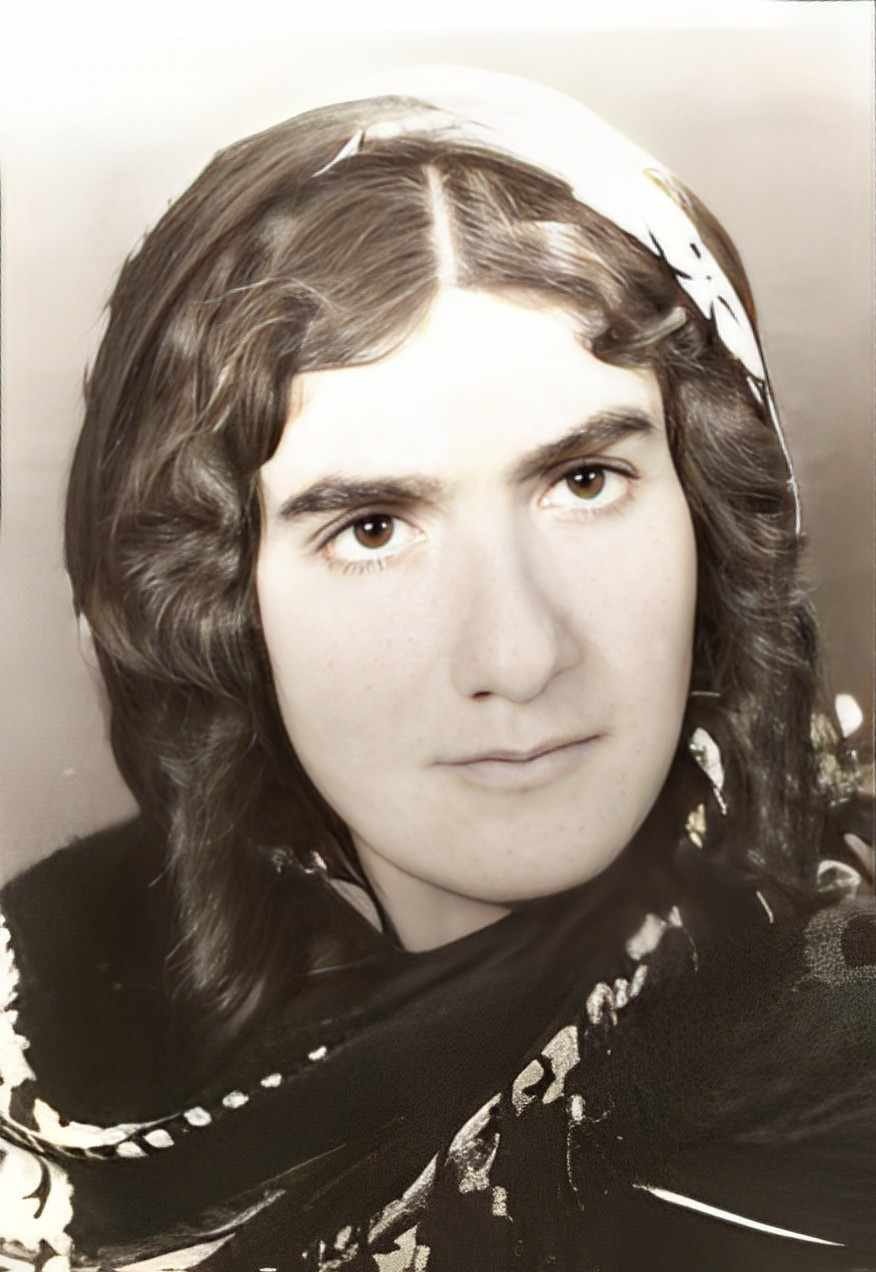
A fearless woman who broke barriers in classrooms and politics
There are many Kurdish women who have become symbols, role models, and pioneers in various fields. Among them, Najiba Jalizadah remains a shining example of intelligence, courage, and determination in the city of Koya. The girls’ school she founded through tireless effort and commitment still opens its doors to students today.
Najiba Jalizadah was born in 1917 in the Bayiz Agha neighborhood of Koya. She was the daughter of Mullah Mohammed Haji Abdullah, known as the “Great Mullah” of Koya, a respected religious scholar. Her mother was Habiba Sheikh Reza.
In 1924, at the age of seven, Najiba became the first girl in Koya to attend school, enrolling in a boys’ school—a bold and unprecedented step at the time. In an era when even many boys were not sent to school and non-religious learning was considered inappropriate, her enrollment marked a turning point in Kurdish society.
Her father, the Great Mullah, faced harsh criticism—even from his own close associates—who questioned how a religious figure could allow his daughter to attend a secular school. Despite this, he stood firm in his belief and accomplished two critical goals: opening the path for girls’ education and challenging gender discrimination in learning. As a result, Najiba’s school became the first co-educational school in Iraq, at a time when no girls were enrolled in boys’ schools elsewhere.
According to those who knew her, Najiba was not tall in stature, had a bright and kind face, always smiled, and carried herself with calmness, grace, and intelligence. “She was constantly seeking knowledge,” one account recalls. “She never stopped reading or writing. Before going to bed, she would write down notes, and she always tried to learn more about Kurdish history and the conditions of her people. She was sharp, curious, and intellectually driven from childhood.”
In 1933, the first official girls’ school in Koya was established, and Najiba Khan served as its supervisor for two years. Once the school was on stable ground, she stepped aside to give other women a chance to lead, while she focused on raising awareness and mobilizing women politically.
In 1940, she stepped into political life and became a member of the Hiwa Party, encouraging Kurdish women to fight for their rights. After the Kurdistan Democratic Party was formed in 1946, she continued her activism within the party. When the Republic of Kurdistan was declared in Mahabad, and the Kurdistan Women’s Union was created—supervised by Mina Khan in Mahabad and led by Hafsa Khan Naqib in Sulaymaniyah—Najiba led the Koya branch of the union in secret under the same name.
Najiba Khan never married, dedicating her entire life to education, her homeland, and social awakening. After the collapse of the September Revolution through the Algiers Agreement in 1975, she became a refugee in Iran, enduring hardship for two years.
In her later years, she developed osteoporosis and moved from Koya to Erbil for treatment. She endured her illness quietly and passed away at the age of 82.
Today, Najiba Khan’s legacy continues. Her written works remain valuable sources for Kurdish researchers and students. Among her most significant contributions are:
• History of Koya
• History of the Jalizadah Family
• Events of the September Revolution
• A Collection of Stories from Kurdish Folklore