
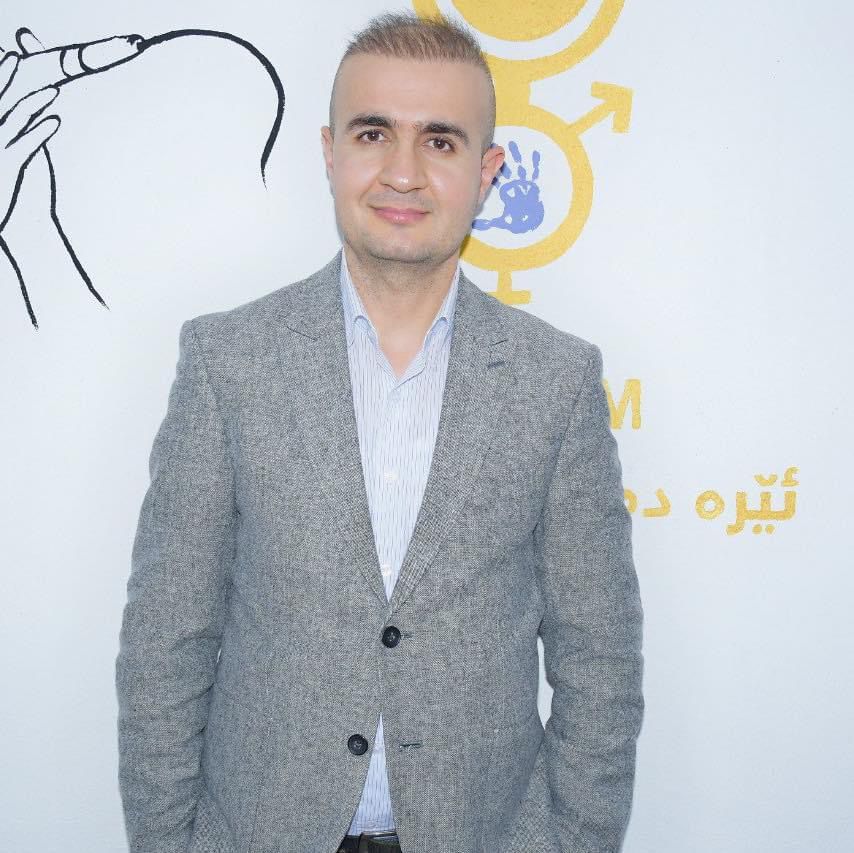
By Payraw Anwar
After more than four decades of conflict, the Kurdistan Workers’ Party (PKK) has taken a significant step toward peace by symbolically laying down their weapons in a ceremony held in the Jasana Cave near Sulaymaniyah, in the Kurdistan Region of Iraq. This act follows a call by the PKK’s imprisoned leader, Abdullah Öcalan, who in late February urged the dissolution of the PKK and the initiation of a peace process with Turkey. Just months ago, the PKK formally declared its dissolution—a pivotal move toward reconciliation.
This development marks the beginning of a new horizon in the region, occurring amid shifting power dynamics that have intensified since the end of last year. The recent disarmament gesture in Southern Kurdistan signals a potential end to the long-running conflict between the PKK and the Turkish state, which began in 1984. Now, the ball is in Turkey’s court. It is time for Ankara to move from a policy of “Confronting Terrorism” toward a genuine Peace Process with the Kurds.
These reciprocal steps could prove essential in transforming the situation from negative peace—the mere absence of violence—to positive peace, where deeper structural issues are addressed. Working on symbolic and practical levels can lay the groundwork for sustainable peacebuilding in a state historically structured to negate and assimilate Kurdish identity.
Encouragingly, Turkish President Recep Tayyip Erdoğan responded to the PKK’s initiative with a statement of support. He announced plans to establish a committee in the Turkish Parliament to develop legal measures for advancing peace and restoring security, stability, and prosperity in the country. In a landmark shift, Erdoğan publicly acknowledged that banning the Kurdish language in Turkey was a historical mistake. He formally recognized the Kurdish language and identity, and today, political parties across the spectrum—from the far right to the left—are acknowledging the Kurds’ cultural and linguistic rights. This marks a major paradigm shift in a country where Kurds were once not even recognized as an ethnic group.
-The Role of the Kurdistan Region in the Peace Process
The Kurdistan Region has consistently played a constructive role in the peace process. Since the first ceasefire declared by the PKK in 1993, the region has positioned itself as a mediator and facilitator, despite the failure of that early attempt due to complex regional and internal dynamics.
In 2013, when another peace process was initiated by both the PKK and the Turkish state, the Kurdistan Region again played a crucial diplomatic role, encouraging both sides to come to the negotiation table. Unfortunately, that process also broke down, and hostilities resumed. The Kurdistan Region, due to its geographical location, has suffered significant consequences from this prolonged conflict, often becoming the battleground under the pretext of combating PKK guerrillas.
Today, however, there is renewed hope. With the PKK’s symbolic disarmament and Turkey’s expressed willingness to recognize Kurdish rights, a new chapter may be opening. The Kurdistan Region is poised to act as a key hub and stabilizing force in guiding this fragile process back on track.
A particularly powerful moment came when the Kurdistan Region’s president officially received a delegation from the Peoples’ Equality and Democracy Party (DEM Party), which represents the Kurdish political movement in Turkey. This meeting was historic—not just diplomatically, but symbolically—as it represented Kurds from Southern (Iraqi) Kurdistan embracing their counterparts from Northern (Turkish) Kurdistan in a shared vision for peace and cultural recognition.
The recent moves toward disarmament and reconciliation, supported by both Turkish and Kurdish leadership, offer a unique opportunity to end one of the Middle East’s longest and most complex conflicts. With sustained dialogue, mutual recognition, and the continued mediation of the Kurdistan Region, this moment could be the beginning of a lasting peace built on justice, inclusion, and respect for Kurdish identity.