
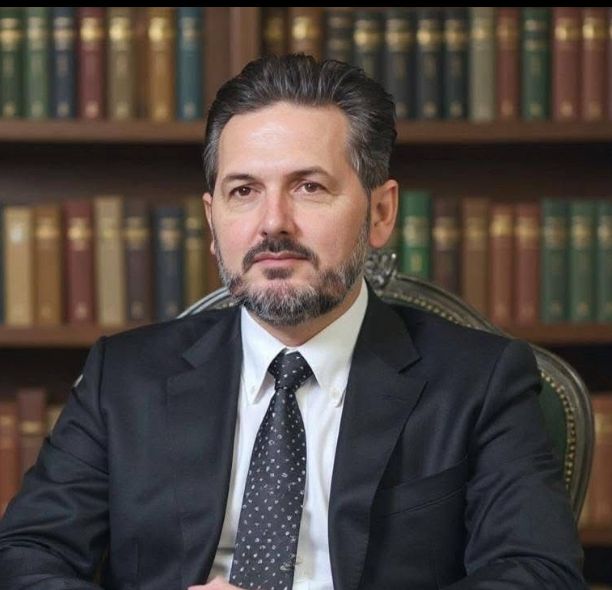
By Hewa Abdulkhaleq Ahmed
After the November 2025 Iraqi parliamentary elections, the political process in Iraq enters a new political phase. For the Kurdistan Region, this election was not only a voting process, but also a turning point in the direction of playing a more active role in reshaping Iraq’s political map and determining the shape of the future government in federal Iraq.
The satisfactory results achieved by the Kurdish factions in the Iraqi parliament, above all the Kurdistan Democratic Party (KDP) in the three provinces of the Kurdistan Region and the Kurdish areas outside the Kurdistan Regional Government, have increased the Kurdish weight in the equation, as well as increasing the task of the Kurdistan parties. This victory is considered a golden opportunity for the Kurds to demand a more sovereign and effective share in the negotiations for the formation of the next Iraqi government in addition to the post of President of the Republic as the Speaker of the Parliament. The ministries of oil or finance, which are directly related to decision-making on the fateful issues of the people of Kurdistan and the financial and economic merits of the region.
Due to the complexity of the seat-sharing system, no bloc can form a government on its own, which is an opportunity for the Kurds to be the “center of the balance” of forming a new cabinet. This situation forces the Iraqi parties to compromise on the Kurds’ demands in the new Iraqi government, and perhaps the best evidence to prove this view is the participation of Iraqi parties such as Iraqi Prime Minister Mohammed Shia al-Sudani, who won the most seats in parliament, as well as former prime ministers Mustafa al-Kadhimi and Mahmoud Mashhadani, former speaker of parliament, Khamis Khanjar and other stakeholders at the Middle East Peace and Security Forum (MEPS 2025) held at the American University in Duhok, was of particular significance because it came immediately after the Iraqi elections.
Here is an opportunity for the Kurds in general and the Kurdistan Democratic Party (KDP) as the first winner at the regional level in particular, to shift the role of the Kurds from “defending the region” to “participating in sensitive national decisions in which the rights of the Kurdistan people are protected.” This means that the Kurds will be able to participate as a key component in the formulation of security, economic and constitutional rights policies of the Kurdistan Region.
However, in addition to these opportunities, the formation of a new Iraqi government for the Kurds will not be without challenges. Perhaps the greatest threat to Kurdish gains is internal “fragmentation.” If the Kurdistan forces and parties do not go to Baghdad with one rhetoric and one team, their influence will be weakened and they may not be able to adequately exploit the opportunities that have arisen There is.
Ultimately, the post-election phase can be seen as a decisive test for the Kurds, in which the success of the Kurds depends on preserving the internal unity of the Kurds and realistic policies so that they can present themselves as part of the solutions in Baghdad, not as part of the crisis. If the Kurdistan parties use these powerful cards wisely, they can strengthen the position of the Kurdistan Region in Iraq’s political decision-making for the coming years and guarantee the constitutional, political and economic rights and entitlements of the Kurdistan Region as the only federal region in Iraq.