
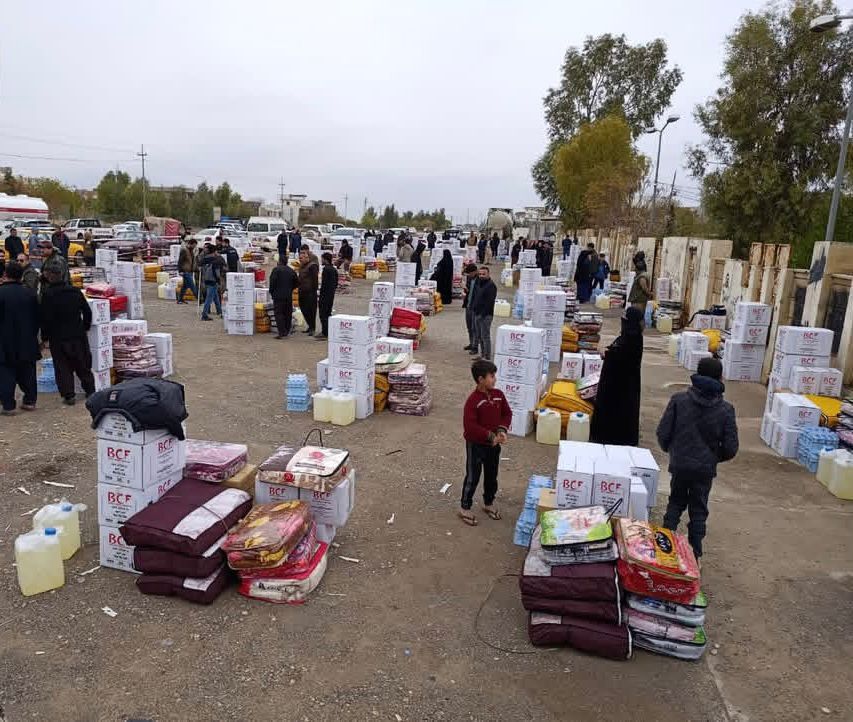
Severe floods struck Chamchamal district in Kurdistan, damaging homes and businesses and prompting a swift nationwide aid response.
President Masoud Barzani urged charitable organizations and citizens across the Kurdistan Region to provide urgent assistance to families affected by severe flooding in the Chamchamal area, highlighting solidarity and humanitarian responsibility as central Kurdish values.
When floodwater surged through Chamchamal on a cold December night, they did more than submerging homes and markets — they set in motion a nationwide response rooted in solidarity, urgency, and a shared sense of responsibility.
As reports of the damage spread on December 9, 2025, President Masoud Barzani moved quickly, calling on charitable organizations and the public to mobilize in support of families whose lives had been upended by the floods. His directive to the Barzani Charity Foundation to immediately deploy aid teams to Chamchamal became a catalyst for one of the most visible humanitarian responses in the region this year.
The flooding hit Chamchamal and the surrounding areas of Shorish and Takiya Kakmand with unusual force. Torrents of water swept through residential neighborhoods, destroying dozens of homes, inundating markets, and damaging small businesses that many families depend on for their livelihoods. For some residents, the water rose so fast that there was little time to salvage belongings.
Within hours of Barzani’s call, charitable organizations began coordinating with local authorities to identify the hardest-hit neighborhoods. Aid convoys followed, carrying food supplies, heating equipment, fuel, and basic shelter materials. What began as an emergency response soon grew into a broader humanitarian campaign.
Television channels launched fundraising drives, appealing directly to viewers across the Kurdistan Region. Donations poured in from Erbil, Duhok, Zakho, Akre, Halabja, and other cities, transforming public sympathy into tangible support. The funds were directed toward residents of Chamchamal, Shorish, and Takiya Kakmand, where entire families had been left with nothing after their homes were submerged.
For many volunteers, the response went beyond organized aid. Young people, shopkeepers, and local residents joined relief efforts, unloading supplies, distributing food, and helping families find temporary shelter. Charitable organizations continue to deliver household items daily, attempting to restore a sense of normalcy to homes where even basic necessities were washed away.
Yet the disaster also carried a human toll that could not be measured in damaged property alone.
Among those affected was Ahmed Hamid Atshan, an Arab engineer from Baghdad who worked at the Royal Can factory. He was swept away by floodwaters near the Bazyan–Bardaqarman area, and his fate remains unknown. Since then, teams from the Bazyan district administration, civil defense units, and around 100 volunteers from Bardaqarman have carried out repeated search operations, combing riverbeds, muddy valleys, and flooded waterways for hours at a time.
For Ahmed’s family, the search has been a painful wait marked by grief — and unexpected gratitude.
“What the people here have done for me, I will never forget as long as I live,” Ahmed’s father told The Kurdish Globe. He described how residents who had never met his son treated the search as a moral duty. “They are searching for my son as if he were their own,” he said, calling the solidarity he witnessed “rare in times of disaster.”
His words echo with a broader sentiment shared by many observers: that the response to the Chamchamal floods reflects something deeply embedded in Kurdish society. In moments of crisis, ethnic, religious, and regional distinctions recede, replaced by a collective impulse to help.
President Barzani’s call did not simply mobilize institutions; it galvanized people. From organized charities to ordinary citizens, the response demonstrated how leadership, when paired with public trust, can translate compassion into action.
As Chamchamal begins the long process of recovery, the flood remains a stark reminder of vulnerability. But for many affected families, it has also become a testament to resilience — and to a culture where standing together in times of hardship is not an exception, but an expectation.
BY: Farman Omar Saeed