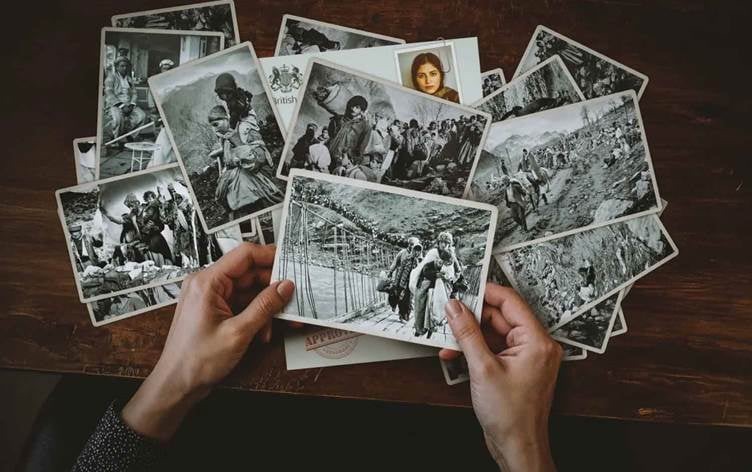
Preparations in London are underway for a moving theatrical production titled Safe Haven, a play that brings the Kurdish tragedy of 1991 onto the stage through a deeply human lens. Written by Chris Bowers, a British journalist and former diplomat who previously worked in the Kurdistan Region, the play revisits the aftermath of the Kurdish uprising and the brutal response of the Ba’ath regime, which forced nearly two million Kurds to flee their homes and triggered one of the region’s worst humanitarian crises.
Safe Haven does not focus only on the pain of displacement, exile, and loss experienced by the Kurdish people. It also turns the spotlight toward London, where crucial political decisions were being debated at the time. The story follows two British diplomats, supported by a Kurdish refugee, as they navigate Whitehall—the center of British political power—trying to persuade the government to intervene, take responsibility, and declare a safe haven for the Kurds.
Drawing on his own experience in Kurdistan, Chris Bowers presents the tension between moral duty and political calculation in a dramatic and accessible way. The play shows how hesitation, courage, and ethical choices within diplomatic circles can mean the difference between life and death for millions of people. It is a reminder that humanitarian disasters are shaped not only by violence on the ground, but also by decisions made far away.
The production features Bess Burrows as Catherine, alongside Mazlum Gul (Dilawer Ala’addin), Eugene Bouda (Nejat), Richard Linson (Clive), Lisa Zahra (Anne), and Stephen Kavana (Brett), who together give voice to both Kurdish experiences and international perspectives.
At its core, Safe Haven carries a clear humanitarian message about conscience and the responsibility of the international community toward peoples facing persecution and mass displacement. What gives the play added depth is that, following the performance, a discussion was held with the audience and political experts, including individuals who were directly involved in Operation Safe Haven in 1991. Their participation helped bridge the gap between history, lived experience, and artistic expression.
Through theatre, Safe Haven revives memory, raises difficult questions, and reminds audiences that silence and delay are also choices—ones that history never forgets.