
106 Years Since the Signing
of the Treaty of Sèvres
August 10 marks the 106th anniversary of the signing of the Treaty of Sèvres—a treaty that granted Kurds the right to establish an independent state but was never implemented. Three years later, it was replaced by the Treaty of Lausanne, which led to the complete marginalization of the Kurdish issue. Since then, all Kurdish efforts to establish a state have faced systemic challenges.
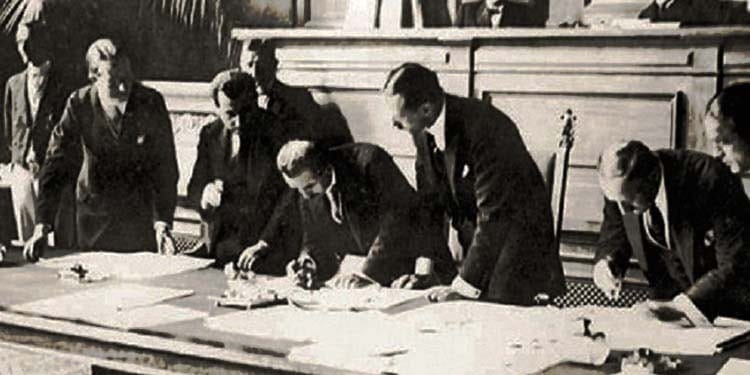
The Treaty of Sèvres was signed on August 10, 1920, following the end of World War I. It emerged at a time when the Ottoman Empire—which controlled the majority of Kurdish territories—was effectively dissolved. Britain, France, Italy, Japan, and other victorious Allied nations signed the agreement, while representatives of the defeated Ottoman state participated and approved its terms.
While many nations within the Ottoman Empire were being partitioned based on the interests of the Great Powers, the Kurds and their demands were included in an international text for the first time. Articles 62 to 64 of the treaty proposed a legal pathway for establishing autonomy in Kurdish-inhabited areas and left open the possibility of pursuing independence in the future. The Treaty of Sèvres was a comprehensive agreement that addressed most issues related to the collapsed empire through specific articles; for the Kurds, Articles 62, 63, and 64 were the most significant.
From a political science perspective, this shift was monumental. The Kurdish problem was transformed from a domestic matter into an international issue. This transition laid the foundation for the Kurdish cause to resurface periodically on the table of global negotiations and forums. In the legal realm, Sèvres holds a special importance. In international law, the mere recording of a nation’s cause in an official document creates a historical precedent for future dialogues and demands. Therefore, although Sèvres was never enacted, it remains a vital document in both legal and historical literature.
The impact of this treaty was not only political. From the perspective of social psychology, it instilled new hope in the hearts of a people who had lived under the weight of external powers for centuries. Having the Kurdish name included in an international document strengthened self-confidence and faith in the legitimacy of their aspirations. That hope did not fade even after the treaty was nullified; instead, it became a catalyst for the continuation of the political and diplomatic struggle.
Furthermore, Sèvres taught an important lesson: in the contemporary world, armed force is not the only solution. Diplomacy, dialogue, international law, and the ability to promote rights in global arenas are essential components of a nation’s struggle. This realization later influenced the political mindset of the Kurdish movement.
Although Sèvres failed to achieve a Kurdish state at that time, it cannot be considered a failed page in history. Its true significance lies in being the first formal step toward internationalizing the Kurdish issue, creating a historical and legal precedent for all subsequent demands. Thus, for the Kurds, Sèvres is not just a historical memory but evidence that while history is sometimes written incompletely, no legitimate hope is ever fully destroyed.
According to current statistics, there are more than fifty million Kurds who remain stateless, making them the largest stateless nation in the world. The establishment of a state and the sight of the Kurdistan flag flying at the United Nations is the dream of every Kurdish individual. Even if another 106 years pass since Sèvres, and even if all the genocides, oppression, and massacres inflicted upon the Kurds are repeated, they will never abandon the pursuit of that dream.