
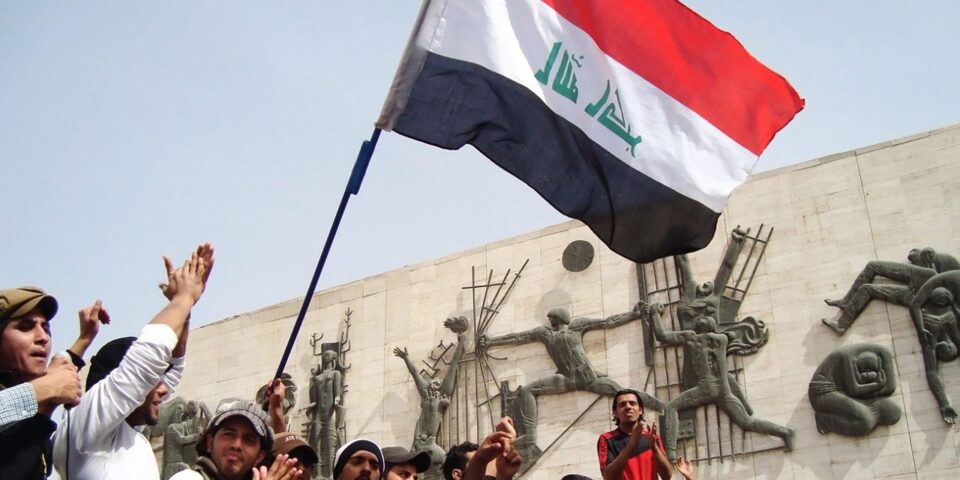
Militia dominance and foreign meddling erode governance, leaving Iraq’s institutions unable to serve citizens effectively.
After 2003, Iraq was re-established on the principles of democracy, federalism, and the rule of law. Yet, more than two decades later, these foundations remain weak and incomplete. Persistent political, security, economic, and social instability has prevented genuine democracy from taking root and laws from being applied effectively.
Dr. Aras Abdulla, a legal and political analyst speaking to The Kurdish Globe, said: “After 2003, Iraq saw a fundamental shift in its political system, moving away from Ba’athist rule and introducing governance based on democracy, federalism, the rule of law, and public participation, as set out in the 2005 permanent constitution. But after two decades, these pillars remain unrealized. Iraq is still beset by political, security, economic, and sectarian crises that threaten its democratic process, civic life, and constitutional legitimacy. In reality, the country has moved from the dictatorship of an individual to a form of religious dictatorship.”
Implementation Gap:
Constitutional principles and political reality
Despite the 2005 constitution’s emphasis on democracy, federalism, and the rule of law, these principles have rarely been translated into political practice. Dr. Abdulla identified several reasons for this persistent gap:
1. Colonial legacy in democratic governance – Decades of authoritarian rule left Iraq without a political culture rooted in democratic values. In the post-2003 environment, this vacuum allowed opportunistic actors to exploit democratic processes for political leverage, particularly against the Kurdistan Region, rather than to strengthen constitutional governance.
2. Weak constitutional mechanisms – The constitution lacked clear, enforceable mechanisms for implementing its core principles, fueling disputes over the division of powers and resources between Baghdad and the regions.
3. Sectarian and partisan political mindset – Power-sharing was shaped by sectarian and party quotas rather than constitutional principles, undermining institutional independence and stability.
4. External interference – Regional and international actors, particularly Iran and other neighbors, have repeatedly influenced Iraq’s internal politics, exacerbated sectarian divides and undermined the Kurdish vision for a federal Iraq.
According to Abdulla, Iraq’s political order since 2003 has relied on an ethno-sectarian formula for distributing posts and authority. This has led to:
• Disintegration of state institutions – Positions allocated by political loyalty rather than merit have weakened governance, with armed factions gaining influence in both civilian and military sectors.
• Lack of accountability – Political protection shields officials from legal scrutiny, reinforced by sectarian and party ties.
• Weak decision-making – Central authority has eroded, leaving political participation fragmented and disorganized.
• Erosion of the rule of law – Militias and armed groups outside state control, often tied to political parties, undermine legal authority and sovereignty.
• Militia-party alliances – Some militias operate under the protection of political parties within the government, using force to defend illicit assets and evade oversight.
• Limited state capacity – post-2003 governments have struggled to protect Iraq’s sovereignty due to political unwillingness, institutional weakness, and internal instability.
Abdulla argued that the state remains unable to guarantee equal rights and protections after decades of dictatorship. While Shi’a political factions gained dominance after 2003, they failed to build a democratic and federal state, perpetuating authoritarian tendencies in sectarian form. “The solution must involve changing Iraq’s political system itself,” he said.
Sovereignty under strain
Anwer Saeed Omar, a master’s degree holder in International Law, told The Kurdish Globe that sovereignty—the highest, independent authority over a state’s territory and people—is a cornerstone of statehood and international law.
He described two core dimensions of sovereignty:
• Internal sovereignty – The state’s exclusive authority over its domestic affairs, including legislation, law enforcement, and security. In Iraq, this is severely undermined by militias and armed groups wielding independent power, often backed by military force, a hallmark of failing states.
• External sovereignty – The ability to conduct foreign relations without external coercion. In Iraq, foreign interference has eroded this capacity, leading to decisions influenced—or dictated—by outside powers.
Since the fall of the Ba’ath regime, regional interference has become overt, with foreign states exerting influence over the appointment of presidents, ministers, and other top officials. Omar warned that continued interference risks turning Iraq into a proxy battleground for regional conflicts, worsening instability and further fragmenting the country.
The effects of this interference are deeply felt by citizens: economic decline, weakened public services, and growing insecurity erode trust in state institutions. In such conditions, societal stability and development are impossible, and the risk of state collapse rises sharply.
The way forward
Omar argued that Iraq’s federal system and constitution, as currently implemented, may weaken sovereignty if governance continues to be dominated by militias and groups operating outside legal authority. In such a context, external actors can use their local proxies to dictate state policy, deepening fragmentation.
He stressed that the international community—particularly through United Nations Security Council mechanisms—must play a role in supporting Iraq’s sovereignty and stability. Without this, he warned, external forces will continue to undermine the state’s foundations, leaving Iraq fragile, dependent, and vulnerable to escalating internal and regional conflict.
By: Frsat Sayyid Shkur