
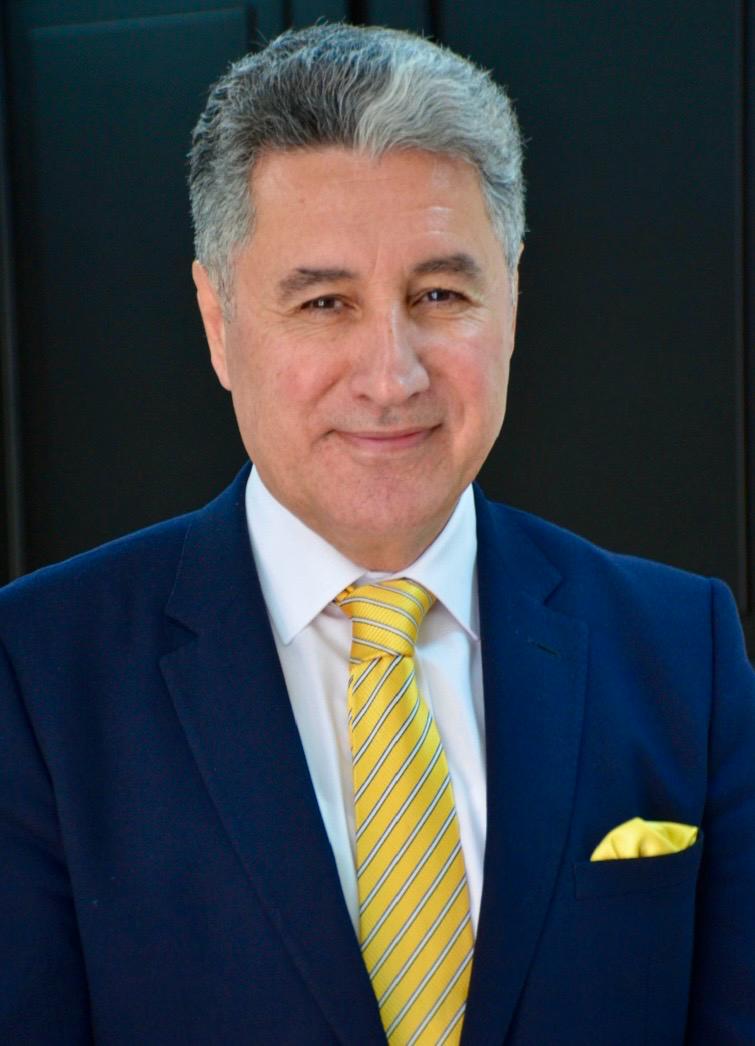
By Dr. Saman Sorani *
The Kurdistan Region, as a federal entity within the geographical framework of Iraq, holds a very advanced and special position at the regional and international levels.
Although the history of the Kurdish people dates back thousands of years BC, and at various stages, according to the needs of the objective situation and common interests, they have tried to build friendly and cooperative relations with the peoples of the region and the world. Currently, they have full faith in dialogue and diplomacy as two successful ways to resolve and settle disputes and conflicts between human societies and state systems, in order to establish security and stability and ensure a normal life, far from conflict and hostility. However, the foundation of this position goes back to the wise policy that President Barzani has formulated as a strategy for emphasizing democratic values, believing in calm diplomacy, and developing a culture of peace, which the Kurdistan Regional Government (KRG) adheres to. Therefore, the Kurdistan Region is constantly striving to be open to neighboring countries, the region, and the entire international community, without renouncing its independence in decision-making and the sovereignty of the region’s territory.
Due to its stability, security, peaceful coexistence among its components, richness in natural and mineral resources, and continuous development in the economic, industrial, agricultural, and commercial fields, the Kurdistan Region has attracted the attention of international investors and economic relations.
For example, from a future-building perspective, statesman Masrour Barzani believes that America is one of the biggest supporters of the region’s stability and development, and cooperation with American companies can provide the transfer of technology and knowledge from that country to the region.
In the recent past, the Kurdistan Regional Government signed contracts worth $110 billion in Washington with the two American companies, Western Zagros and HKN Energy. For this reason, the region is given an important role in the energy markets, more foreign investors are turning to the region, and international economic relations are becoming stronger. Ultimately, this step will lead to the creation of job opportunities, improvement of the standard of living for citizens, and the enhancement of stability in the region.
Today, there are more than 40 diplomatic missions of countries and international organizations in the capital of the region, and other countries intend to open their own representative offices in the region. The Kurdistan Region has its own representation in 14 countries around the world.
In reality, the KRG and the region’s diplomacy have achieved unexpected success in protecting the entity of the region, and serious work has been done to fill any gaps that may have existed in its system of diplomatic relations. The visits of famous political and economic figures and state leaders to the Kurdistan Region and their participation in the conferences organized in the region prove that the Kurdistan Region, in dealing with the crises that have gripped it, has not fallen into the dragon’s path of reactionary politics, nor has it slipped into the politics of polarization. Its balanced internal and external policy has been more successful than the diplomatic systems of some countries in the region, despite the fact that those countries are internationally recognized and have a great capacity to work and maneuver in dealing with issues, compared to the Kurdistan Region, which is still a part of federal Iraq and, as a result, has faced several internal obstacles and regional challenges.
The ninth cabinet of the KRG has given great importance to the environment, sustainable greenery, clean energy, and all projects that have created direct and indirect job opportunities. The members of this cabinet have been fully present in all economic forums with new projects, ideas, and initiatives in the world, and in the near future, these efforts and activities will be reflected internally. It is true that the foundation of economic development is obtaining more productive information, and the philosophy of the Prime Minister has become a new tool for strengthening trade, public policy, economic development, profit, and promoting the public interest. The Prime Minister’s big dream has been to connect the road and transportation network, raise its operational level according to technical and safety standards, and develop the user experience to achieve the great goals of the national strategy in the field of transport and logistics services and to move towards achieving the goals of the people of Kurdistan. But today, fortunately, this dream has been reflected in reality.
The tireless work of the Prime Minister to create a favorable atmosphere, his commitment to the values of democracy, and his belief in the peaceful coexistence between components and religions, to advance stability and prosperity in the region, and his readiness at this sensitive stage to uphold the identity of Kurdistan in an effective way has proven the belief that the Kurdistan Region is part of this world in which we live. It has created the feeling among the citizens of the region that attachment to the land, the intertwining of the economic and cultural interests of human society, and the removal of artificial borders will be helpful for the growth of the region and the development of the political and social consciousness of the citizens of Kurdistan. That is what makes it possible to learn from the past and history, and for the people of Kurdistan to stand against any system that does not respect pluralism, the right to self-determination, and the aspiration for a better life.
*Senior Advisor for Political and Diplomatic Affairs