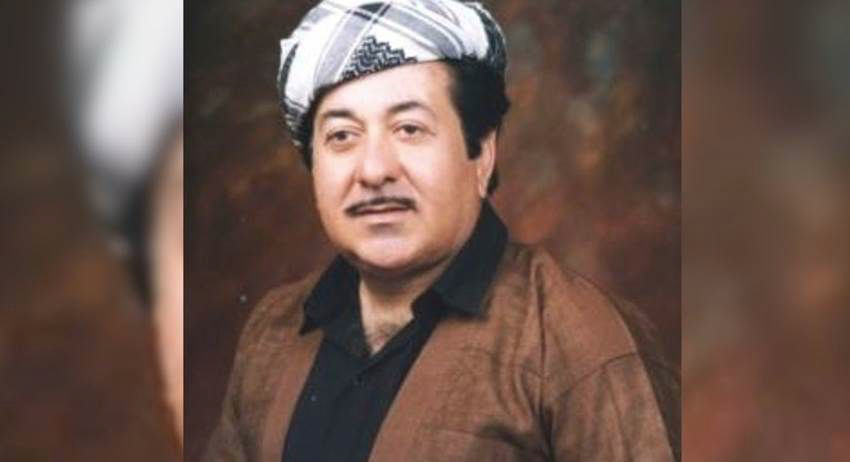
Born in 1941 in the town of Amedi, Tahseen Taha emerged as one of the most influential figures in Kurdish music and cultural life. Raised in a patriotic, art-loving family, he inherited a passion for poetry and music from his father, whose melodic voice and poetic talent often shone at social gatherings.
Tahseen’s artistic journey began early. By the 1960s, he had moved to Baghdad to study at the Theater Department of the Fine Arts Institute, where he learned to play the oud and began composing and performing his own songs. Despite political challenges — including multiple arrests and a period of imprisonment in Baghdad’s Khalaf al-Sadd prison in 1963 — he remained committed to using art as a form of cultural expression and resistance.
Between 1960 and 1971, Taha recorded nearly 120 songs through the Kurdish section of Baghdad Radio, many of which became iconic. He collaborated with other legendary Kurdish artists such as Aysha Shan, Said Gabari, Salim Halabi, and Ardawan Zakhoyi. His warm, emotional voice resonated deeply with the Kurdish public, earning him national recognition.
After completing his studies in 1964, Taha worked as an art teacher at Makmur Elementary School in Erbil province. He remained deeply engaged in music, turning his home into a creative space for musicians and artists. In 1968, he co-founded the Erbil Artistic Troupe, significantly contributing to the development of Kurdish musical and theatrical arts.
Forced into exile during a period of hardship for Kurdistan, Taha lived in the Netherlands for several years. While in exile, he continued to produce powerful works, including songs that reflected the pain of the Kurdish people during the Anfal campaign and the chemical bombing of Halabja. Notable songs from this period include D Gerya Minda Hishk Buun, Hey Barane, Min Khem Deryayeka Kuyre, and Wey Dinyayi, which were released in 1991.
Throughout his career, Taha released eight albums and created a legacy of enduring melodies. Some of his most beloved songs include Guli Min Weri, Be Teniya, Chawresh, Amedi Berze, Buki Badinan, Dilber, Erey Yan Na, and Khweni Dilan — each reflecting his deep love for his homeland and people.
On May 28, 1995, Tahseen Taha passed away from heart disease in the Netherlands. His body was brought back to Kurdistan and laid to rest in his hometown of Amedi on June 4. Though he has been gone for 30 years, his voice continues to echo in the hearts of Kurds, preserving a vital chapter in the story of Kurdish art and identity.